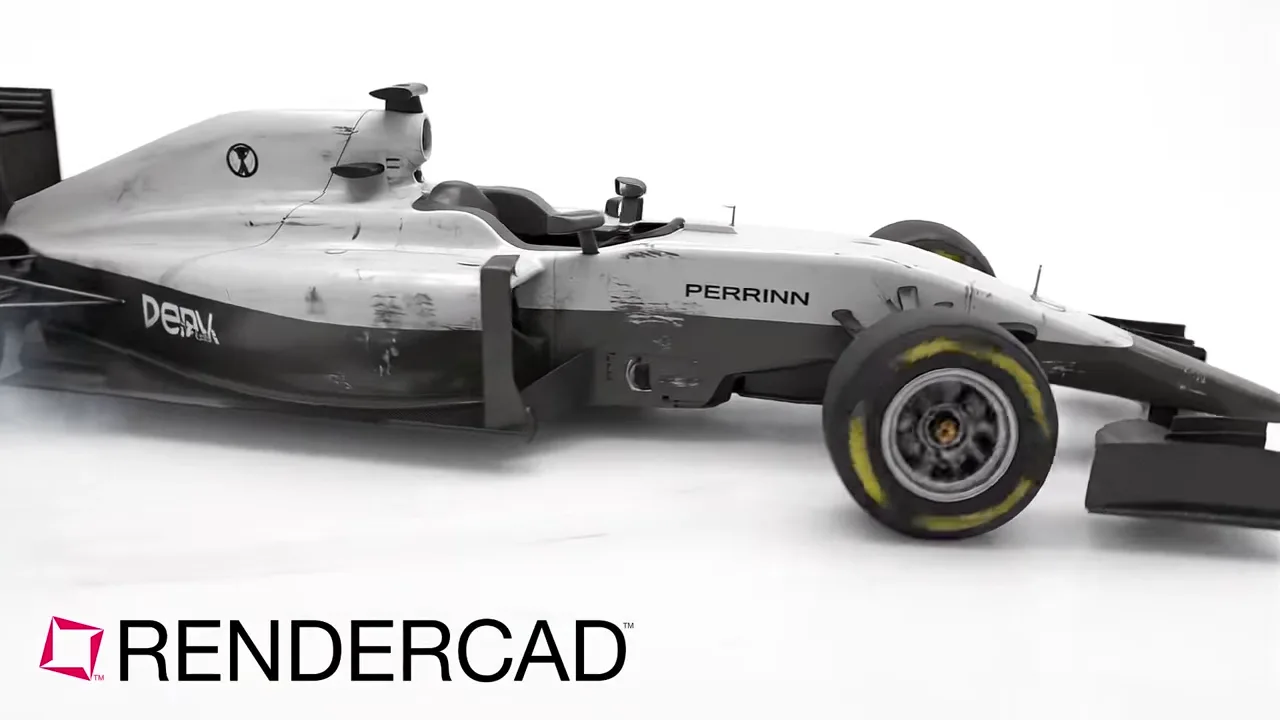
AI visual concepts from Vectorworks cameras, render styles, and sheet layer viewports.
Turn a well-composed Vectorworks camera or sheet layer viewport into focused visual concepts while preserving the design model as the source of truth.


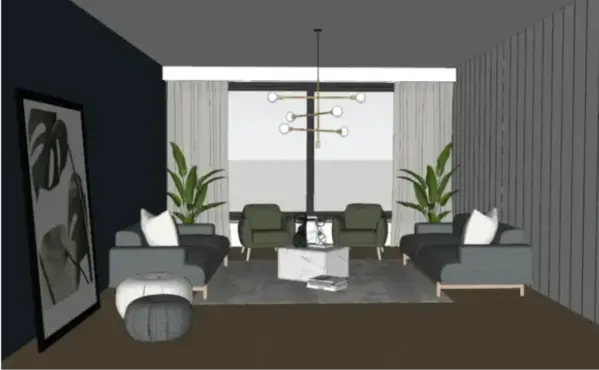
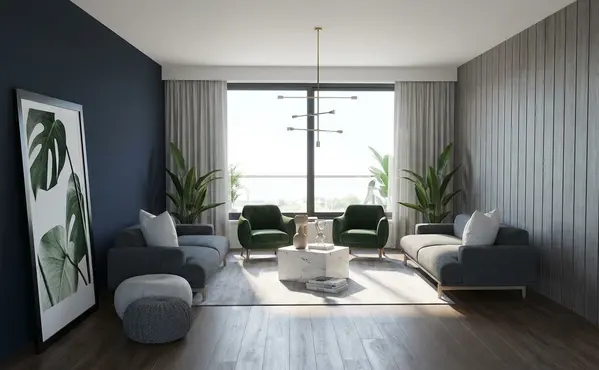
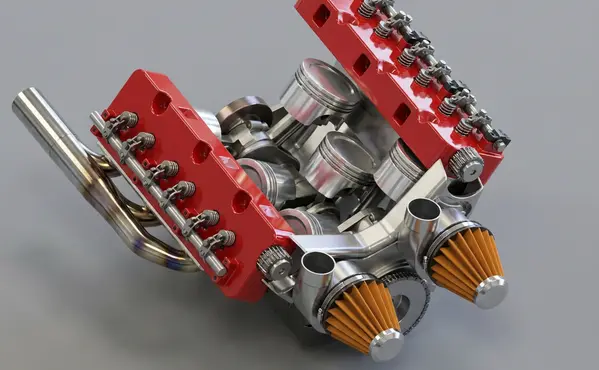


Turn a well-composed Vectorworks camera or sheet layer viewport into focused visual concepts while preserving the design model as the source of truth.
Vectorworks Renderworks is useful when an architect, landscape designer, or interior designer needs to present the same model that supports design development and drawing coordination. A Renderworks camera can establish the view's projection, aspect ratio, focal length, and composition, and that camera can be linked to a sheet layer viewport. Class and design-layer visibility then let the team make the intended scope legible before the image leaves Vectorworks. RENDERCAD can use that clean view as a starting point for alternatives such as an exterior with a different sky and planting mood, an interior with warmer light and more tactile finishes, or a more developed material direction for a client conversation. It is best for testing visual intent and selecting a presentation direction, not for changing dimensions, construction details, or documented design decisions. Keep Vectorworks as the authority for geometry, classes, materials, viewport settings, and coordinated sheets.
Start with a deliberate Renderworks camera or a sheet layer viewport. Set the needed class and design-layer visibility, crop, projection, materials, lights, and Renderworks background so the building, room, or site reads clearly. Apply a render style or use Shaded mode to check framing and major design cues before exporting a still image for RENDERCAD. Ask for one focused change at a time: soft overcast daylight, a warmer hospitality interior, more believable glazing, richer planting context, or a restrained alternate finish palette. Compare the resulting directions with the Vectorworks view, then update the model and viewport when a choice affects the actual deliverable. Use native Vectorworks rendering and viewport updates for repeatable sheet output, model accuracy, and drawing coordination.
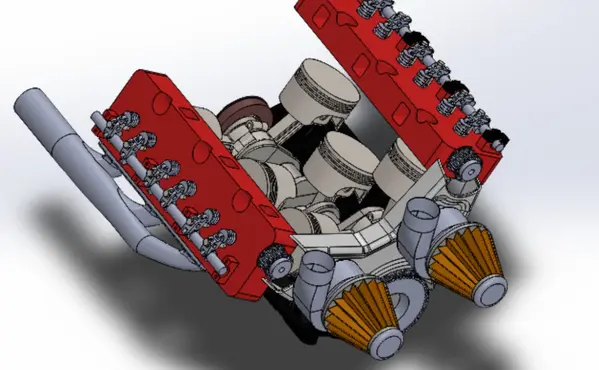
Modeled by CADSharp in Onshape. Rendered with RENDERCAD.
Add | Change | or Remove referenced objects with the stroke of a brush.
RENDERCAD uses a maintained selection of image-generation models for different rendering tasks. Results can vary by model and input, so compare generated output with the source design before relying on geometry, materials, or dimensions.
| Feature | RENDERCAD | Vectorworks Renderworks |
|---|---|---|
| Engine | Generative AI | Vectorworks rendering includes Shaded views and configurable render styles, with artistic and realistic rendering options; available options depend on the Vectorworks release and hardware |
| Output | Images + Video | Design layer previews, sheet layer viewport renders, render bitmaps, and exported still images |
| Resolution | HD / 4K | Controlled by viewport, export, sheet, and render settings; practical limits depend on scene complexity, hardware, and memory |
| Image Speed | Image renders complete in 60 seconds. | Depends on the selected render style, scene geometry, textures, lighting, effects, and available hardware |
| Video Speed | Videos complete in 2-5 minutes. | Animation rendering time depends on frame count, render settings, scene complexity, and available hardware |
| Scene Set Up | No separate local scene | Set a camera or viewport, control class and design-layer visibility, assign materials and textures, configure lighting and a Renderworks background, then apply render settings or a saved render style |
| Input | Screen Snip | Vectorworks design layers, 3D models, sheet layer viewports, class and layer visibility, textures, lights, cameras, Renderworks backgrounds, and render style resources |
| Hardware | Cloud GPU | Vectorworks desktop on supported Windows and macOS systems; rendering capabilities vary with the Vectorworks release and hardware |
| Install | None | Available within Vectorworks rendering workflows; some rendering capabilities depend on the installed release and hardware support |
| Cost | from $9/mo | Availability depends on the Vectorworks license and product configuration |
Read the numbers. We trust you to know theirs.
Skip a separate local scene build. Pick a condition, material, and background while RENDERCAD handles the image-generation step. Image renders complete in 60 seconds.
 ™
RENDERCAD™
™
RENDERCAD™
Use the browser workflow directly, capture a selected view with the desktop app, or start from the browser extension.
Get StartedCommon solutions for Vectorworks Renderworks users
Add a familiar scale cue such as a person, hand, or furniture item, then verify the generated relationship against known dimensions in the source model.
The core workflow starts from a selected 2D view, so it does not require native CAD-file conversion or source-model upload.
Reuse a clear history image and change the color instruction or reference. Treat the results as visual options rather than color-managed proof.
Describe the finish, gloss, grain direction, and lighting, or provide an authorized material reference. Generated reflections are visual approximations rather than physically verified material behavior.
It uses generative image models with screenshot or image inputs. Models and features can change over time, so current product documentation is the source of truth.
Video jobs consume credits based on current duration and model settings. Check the pricing page for current costs rather than comparing with an assumed outsourcing price.
Yes. An authorized location photo can guide a background option. Verify scale, placement, perspective, and site conditions before using the generated image.
Yes. Mask each region and assign an authorized texture reference or instruction. Review material boundaries, scale, and product fidelity after generation.
Yes. Save successful reference images in organized folders. Over time, you build a personal material and style library for consistent rendering.
Describe the intended anodized color and matte or satin finish, then review the generated metal appearance against an authorized material reference when color and finish matter.
Add phrases like "Light from left," "Backlit," or "Top down lighting" to your custom prompt in RENDERCAD.
Choose the Seamless loop end-frame option to guide the clip toward a looping transition. Review the exported loop because continuity can vary by model and source image.