AI render concepts from populated SketchUp scene views.
Create AI render concepts from SketchUp scenes populated with Podium Browser furniture, light fixtures, plants, assemblies, and materials. The library is useful for turning a massing model or sparse room into a readable interior, landscape, retail, or product-context view before presentation rendering. RENDERCAD can build on a clean SketchUp viewport to explore lighting, atmosphere, and finish direction while the placed Browser content continues to communicate scale, use, and design intent.


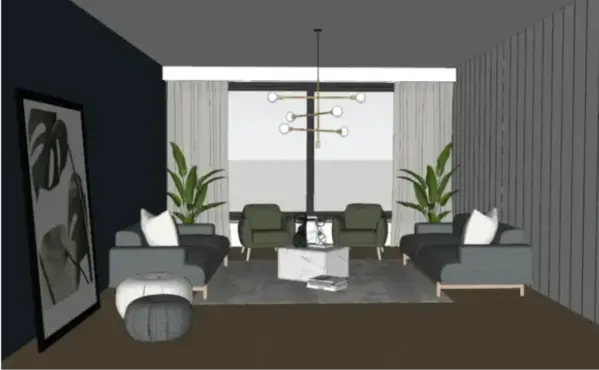
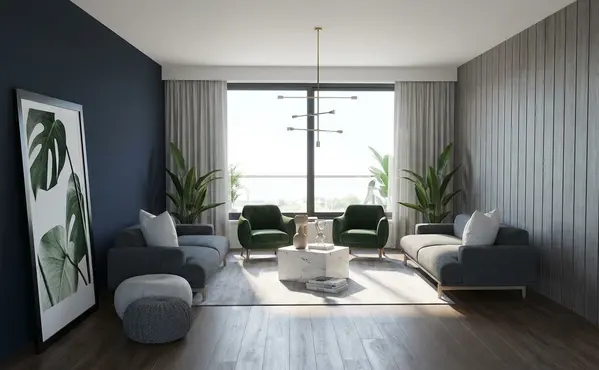


Create AI render concepts from SketchUp scenes populated with Podium Browser furniture, light fixtures, plants, assemblies, and materials. The library is useful for turning a massing model or sparse room into a readable interior, landscape, retail, or product-context view before presentation rendering. RENDERCAD can build on a clean SketchUp viewport to explore lighting, atmosphere, and finish direction while the placed Browser content continues to communicate scale, use, and design intent.
Podium Browser gives SketchUp users a practical way to populate a design view with furniture, light fixtures, plants, assemblies, and materials that are intended for visualization. That makes it especially helpful when an early model has the right architecture but lacks the objects that explain circulation, room purpose, human scale, or the character of a proposed space. A furnished kitchen, lobby, patio, showroom, or product setting is a stronger starting point for a visual discussion than an empty model. Use the saved SketchUp scene or viewport that best preserves the composition: major walls and openings, the selected Browser assets, important material zones, and the camera angle. Send that view to RENDERCAD to explore presentation directions such as soft daylight, evening hospitality lighting, a restrained editorial look, planting density, or a more finished material mood. The result is useful for design reviews, option boards, early client conversations, and marketing-image concepts where the question is how the scene could feel rather than whether every modeled item is final. Keep SketchUp and Podium Browser as the source of truth for component selection, dimensions, placement, dynamic-component settings, and any exact material behavior. RENDERCAD is not a replacement for a controlled SketchUp or SU Podium final render when the deliverable requires exact objects, lighting values, or repeatable technical output.
Start in SketchUp by using Podium Browser categories or search to find the furnishings, fixtures, vegetation, assemblies, or materials that make the proposed setting legible. Insert the items into the model, then adjust scale, orientation, spacing, and visibility so the scene reads clearly from the chosen camera. If a Browser component offers options, settle the useful state before capture. Apply materials where they help distinguish surfaces, but avoid crowding the frame with objects that do not support the design story. Save a scene with the primary geometry, openings, asset placement, and material cues visible. Capture the SketchUp viewport and upload it to RENDERCAD with a focused prompt for lighting, atmosphere, finish direction, or the intended audience. Generate a small set of visual directions, compare them against the source view, and bring the preferred lessons back to SketchUp by refining the composition, selected assets, or finish palette. For repeatable capture-to-render workflows, see RENDERCAD developer documentation.
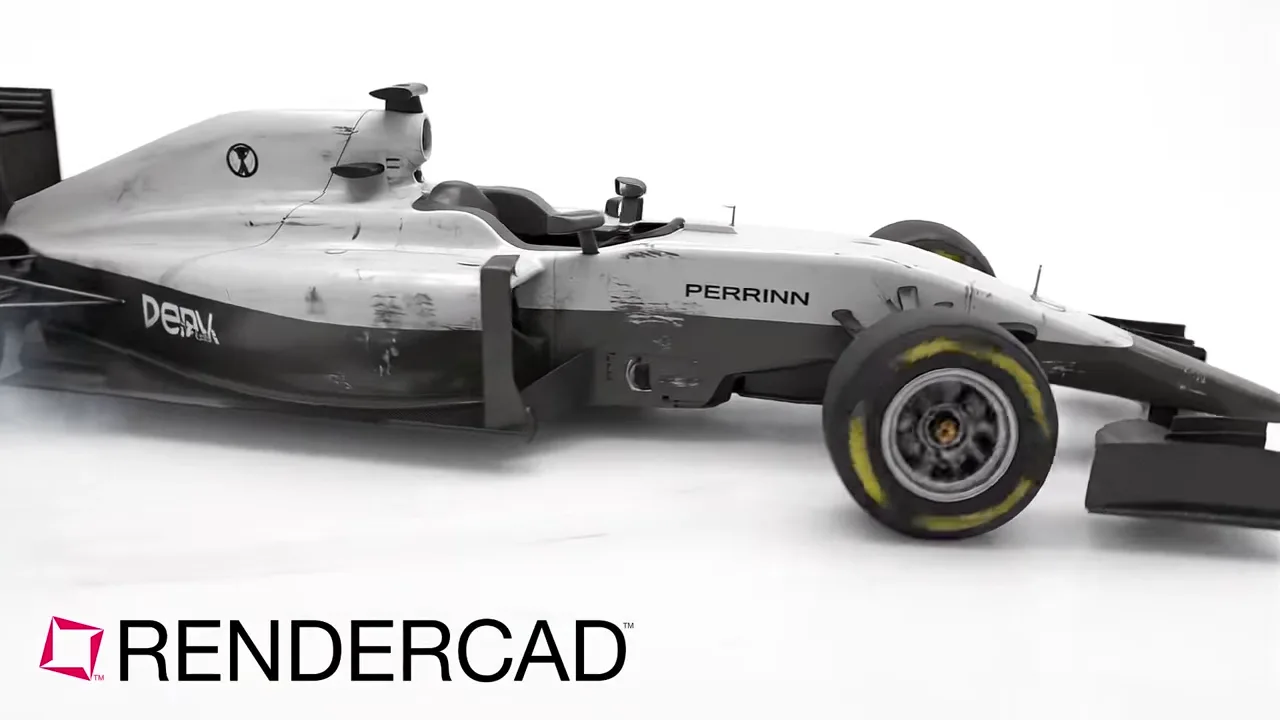
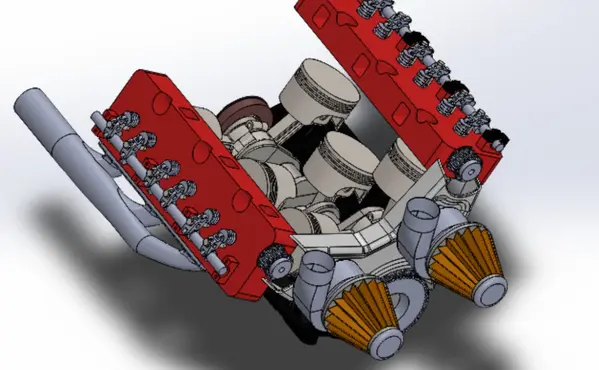
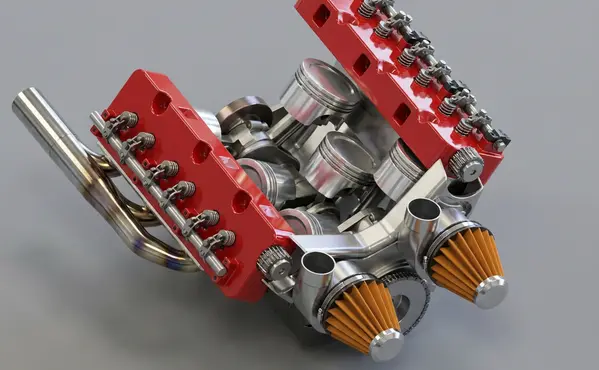
Modeled by CADSharp in Onshape. Rendered with RENDERCAD.
Add | Change | or Remove referenced objects with the stroke of a brush.
RENDERCAD uses a maintained selection of image-generation models for different rendering tasks. Results can vary by model and input, so compare generated output with the source design before relying on geometry, materials, or dimensions.
| Feature | RENDERCAD | Podium Browser |
|---|---|---|
| Engine | Generative AI | SketchUp content browser for render-ready components and materials configured for SU Podium rendering |
| Output | Images + Video | SketchUp scenes populated with downloaded components and materials, including furnishings, light fixtures, plants, assemblies, and decor |
| Resolution | HD / 4K | Not a renderer; final image size is determined by the rendering workflow used after the assets are placed |
| Image Speed | Image renders complete in 60 seconds. | Not applicable for asset browsing; render time depends on the SketchUp renderer and scene complexity |
| Video Speed | Videos complete in 2-5 minutes. | Not a video renderer; animation speed depends on separate SketchUp or rendering tools |
| Scene Set Up | No separate local scene | Browse or search the library, insert components into SketchUp, place them in the model, adjust available component options, and apply downloaded materials to model surfaces before rendering |
| Input | Screen Snip | A SketchUp model and access to the Podium Browser content library |
| Hardware | Cloud GPU | SketchUp extension workflow on supported desktop SketchUp installations |
| Install | None | Included with SU Podium or installed as a standalone RBZ extension through SketchUp Extension Manager |
| Cost | from $9/mo | A limited selection of content is available without full library access; broader library access is available through eligible SU Podium licensing or a separate Browser license |
Read the numbers. We trust you to know theirs.
Skip a separate local scene build. Pick a condition, material, and background while RENDERCAD handles the image-generation step. Image renders complete in 60 seconds.
 ™
RENDERCAD™
™
RENDERCAD™
Use the browser workflow directly, capture a selected view with the desktop app, or start from the browser extension.
Get StartedCommon solutions for Podium Browser users
It lets you describe motion, steam, lighting changes, or atmosphere for a generated clip. Added details may not exist in the source model.
Yes, if you are authorized to use them. Catalog images can guide a visual direction, but generated quality and product fidelity vary.
Mask individual components and assign color prompts or authorized references. Verify brand color in a color-managed workflow rather than relying on generated accuracy.
Reuse the same authorized lighting, material, and style references, then review every output against the brand system. References can help consistency but do not guarantee it.
Capture the model, describe the wood species and grain direction, and add an authorized material reference when needed. Generated grain varies and should be reviewed for scale and orientation.
Choose a suitable background and describe a reflective floor. Inspect the generated reflection for alignment, product fidelity, and unintended details.
Upload a CAD screenshot, real photo, or hand drawing, open the Video panel, and choose an available duration, camera preset, and product motion. Videos complete in 2-5 minutes.
If the source viewport is visible but a local renderer fails, capture a clear screenshot and use it as a RENDERCAD input. Image renders complete in 60 seconds.
Yes. Upload a photo of a foam model and prompt "Finished plastic product" to visualize the final look.
Start with a clear, well-framed viewport and describe the intended material and lighting. Image renders complete in 60 seconds, and you can iterate or mask a region when an artifact remains.
Image renders complete in 60 seconds.
Generation runs on cloud infrastructure, so a local rendering GPU is not required. The device still needs sufficient resources for the source application, browser, and network connection.