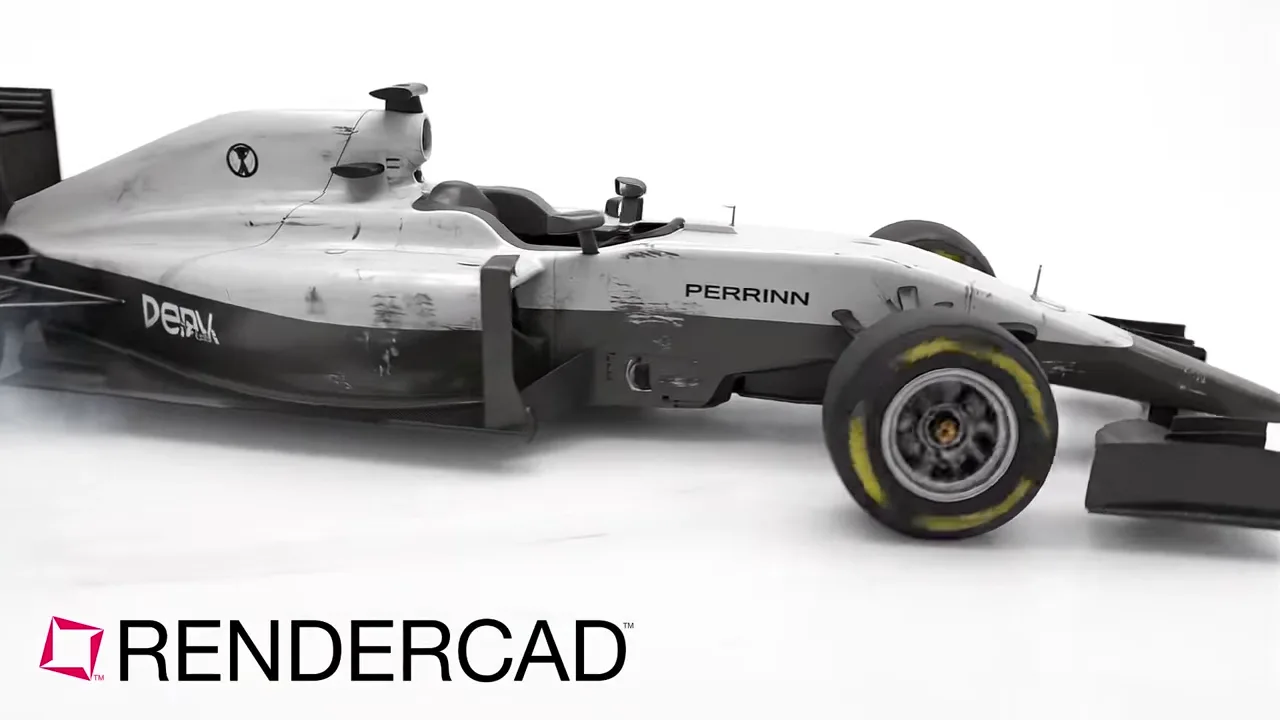
Presentation-ready stills from 3DCoat voxel and Surface mode sculpts.
RENDERCAD helps 3DCoat Sculpt artists turn clean Sculpt Room captures of voxel forms and Surface mode detail into focused presentation stills for design review.


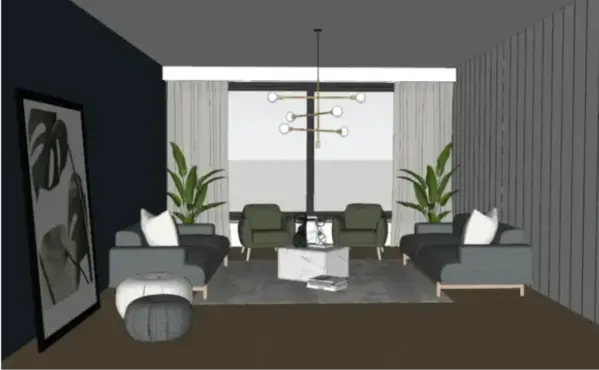

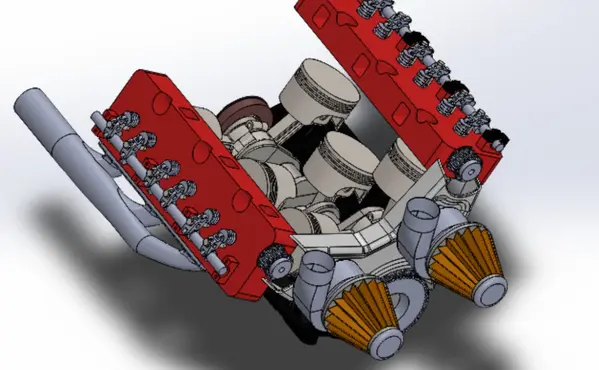
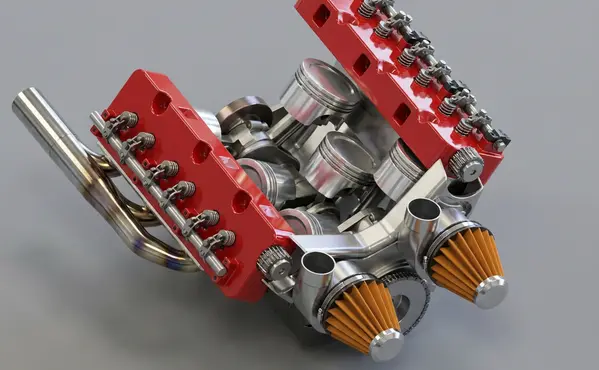


RENDERCAD helps 3DCoat Sculpt artists turn clean Sculpt Room captures of voxel forms and Surface mode detail into focused presentation stills for design review.
3DCoat Sculpt is a practical RENDERCAD workflow when a volume-based blockout or a detailed Surface mode asset needs to be shown clearly before the next production step. In the Sculpt Room, artists can establish a creature, prop, damaged panel, or hard-surface form in voxels, then move to Surface mode when the review depends on sharper planes, local refinement, or layered deformation detail. A well-framed viewport view can show whether the silhouette, proportions, cut lines, and focal surface treatment are working before retopology, baking, paint work, or a final scene is built. RENDERCAD can develop that capture into a more intentional art-review still with controlled lighting, background separation, and a presentation context suited to a concept deck, internal critique, approval discussion, or portfolio layout. It is most useful for communicating visual direction from an already-authored sculpt, not for deciding technical mesh quality.
In 3DCoat, select a camera angle that makes the silhouette and the specific decision under review easy to read. For a voxel sculpt, show the primary massing, merged forms, or booleaned construction at a useful distance. For Surface mode work, set the visible sculpt layers to the intended variation and use viewport shading that reveals planes, cavities, and fine deformation without hiding the form. Remove brushes, gizmos, masks, panels, and unrelated objects, then capture a clean image with enough space around the model for its outline to read. Upload that capture to RENDERCAD and describe the desired lighting, backdrop, and visual mood. Use the resulting stills to compare presentation directions for a creature concept, collectible, game asset, product-style prop, or hard-surface study. Keep 3DCoat as the source of truth for the editable sculpt, layer state, topology, retopology, and baked texture data; use the RENDERCAD image as a visual communication and presentation aid.
Modeled by CADSharp in Onshape. Rendered with RENDERCAD.
Add | Change | or Remove referenced objects with the stroke of a brush.
RENDERCAD uses a maintained selection of image-generation models for different rendering tasks. Results can vary by model and input, so compare generated output with the source design before relying on geometry, materials, or dimensions.
| Feature | RENDERCAD | Competitor |
|---|---|---|
| Engine | Generative AI | Varies by tool |
| Output | Images + Video | Varies by tool |
| Resolution | HD / 4K | Varies by workflow |
| Image Speed | Image renders complete in 60 seconds. | Varies by scene/tool |
| Video Speed | Videos complete in 2-5 minutes. | Varies by workflow |
| Scene Set Up | No separate local scene | Varies by workflow |
| Input | Screen Snip | Varies by tool |
| Hardware | Cloud GPU | Often local GPU/CPU |
| Install | None | Varies (web or app) |
| Cost | from $9/mo | Varies widely |
Read the numbers. We trust you to know theirs.
Skip a separate local scene build. Pick a condition, material, and background while RENDERCAD handles the image-generation step. Image renders complete in 60 seconds.
 ™
RENDERCAD™
™
RENDERCAD™
Use the browser workflow directly, capture a selected view with the desktop app, or start from the browser extension.
Get StartedCommon solutions for 3DCoat Sculpt users
Photograph or scan an authorized material swatch and upload it as a reference. Verify the generated texture's scale, direction, and color against the physical sample.
Mask the visible label area and attach authorized artwork as a reference to guide the generated mockup. Verify spelling, shape, color, placement, and perspective; add exact production artwork afterward in a graphics or packaging-design tool.
A reference can communicate palette, material, lighting, or composition more directly than text alone. Generated results still require review and may need additional iterations.
Upload a clear image or use a current capture tool, describe carbon fiber, and add an authorized material reference when a specific visual direction matters. Image renders complete in 60 seconds.
Upload a clear image, choose the Realistic engine, and describe a large soft light source or overcast lighting. Generated shadows are visual approximations, not a physical lighting calculation.
Yes. Choose the Dolly In or Dolly Out camera preset in the Video panel, then review the clip for product and geometry fidelity.
No local NVIDIA rendering GPU is required. Use a supported browser to upload an image or a current capture tool to select a screenshot; generation runs on cloud infrastructure.
The Render History page lets you browse and download retained images and videos. Storage duration depends on the account plan, so download assets you need before they expire.
Prompt "1950s appliance style, retro photography."
The core workflow starts from a selected 2D view, so it does not require native CAD-file conversion or source-model upload.
Reuse a clear history image and change the color instruction or reference. Treat the results as visual options rather than color-managed proof.
Describe the finish, gloss, grain direction, and lighting, or provide an authorized material reference. Generated reflections are visual approximations rather than physically verified material behavior.