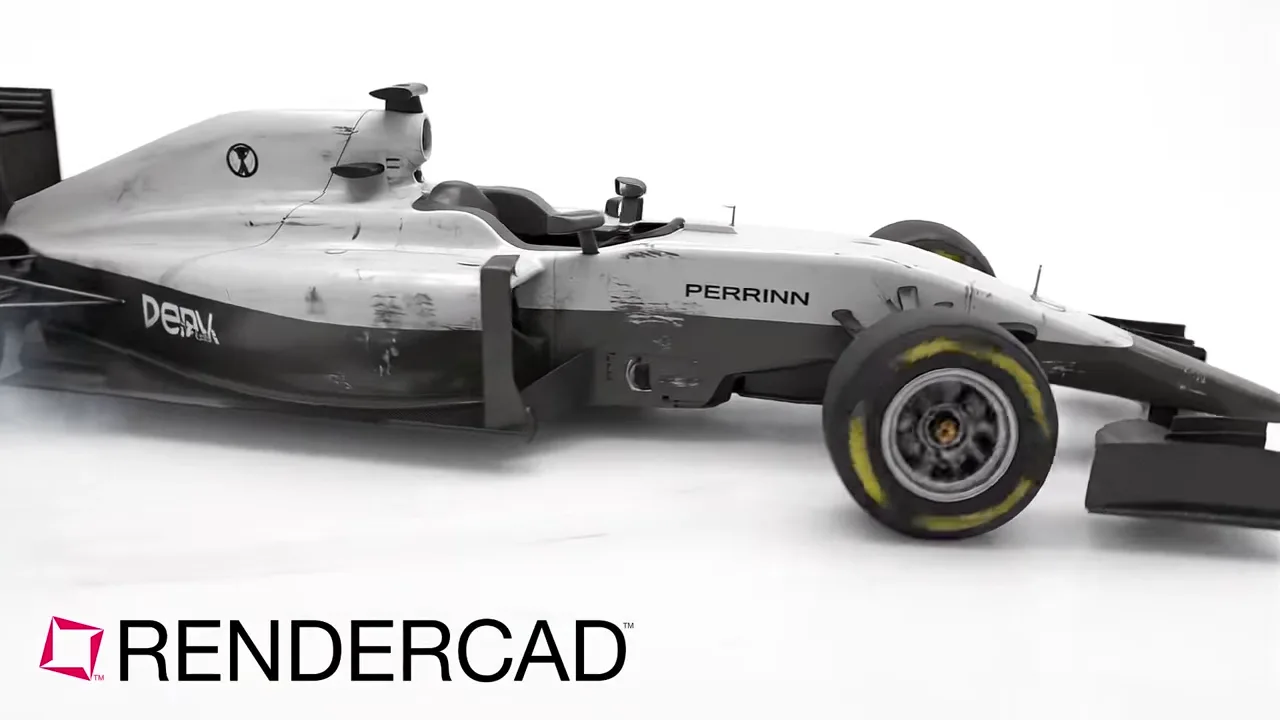
Develop Redshift RenderView ideas into focused visual directions before final frames.
Redshift is Maxon's biased production renderer for 3D scenes, with interactive RenderView and IPR workflows for developing an image before final output. Artists use it inside supported DCC applications to evaluate a camera, lighting, node-based materials, geometry, and effects together. Its preview is a strong starting point for visual discussion because it preserves the actual model and chosen view while the presentation direction is still flexible.


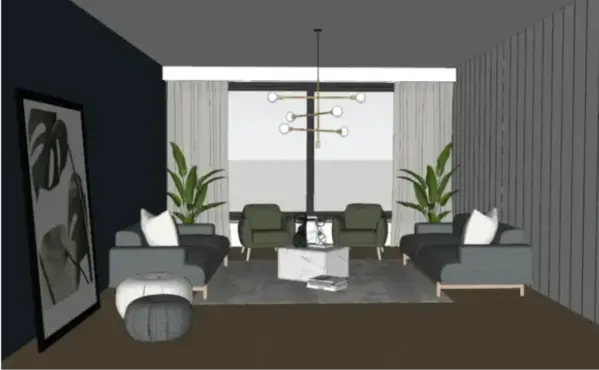
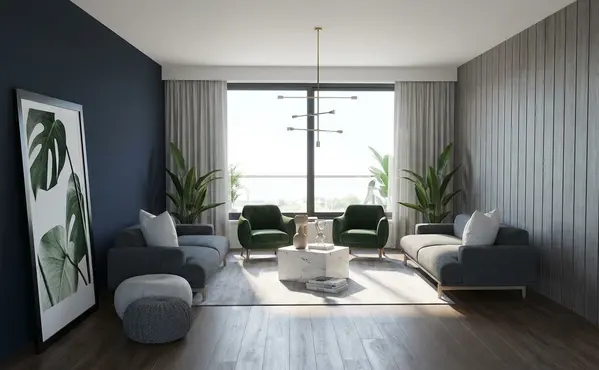


Redshift is Maxon's biased production renderer for 3D scenes, with interactive RenderView and IPR workflows for developing an image before final output. Artists use it inside supported DCC applications to evaluate a camera, lighting, node-based materials, geometry, and effects together. Its preview is a strong starting point for visual discussion because it preserves the actual model and chosen view while the presentation direction is still flexible.
Use RENDERCAD alongside Redshift when RenderView or an IPR preview has established the product, object, interior, or shot composition but the creative direction is still open. A clean beauty preview can be used to explore a different studio mood, backdrop, environment, surface character, or campaign treatment while holding onto the key silhouette and camera read. A clay render is often more useful when the review is about form, massing, or light placement rather than the current texture work. This lets a product visualization artist, motion designer, or architectural artist bring several credible visual directions to a review before spending time refining every shader and final-frame setting. Treat the resulting image as an art-direction reference, then reproduce approved choices in the Redshift scene. RENDERCAD does not replace the Redshift source scene when the deliverable needs reliable geometry, camera matching, physically controlled materials, render passes, compositing, or repeatable animation frames.
In the supported host application, select the production camera or create a dedicated review camera, then open Redshift RenderView and run IPR until the subject, framing, and basic light direction are readable. Capture a clean low-sample beauty render when existing materials help communicate the idea, or capture a clay view when only the form and illumination should guide the exploration. Avoid selection outlines, UI panels, and crops that hide important product or architectural edges. Upload the view to RENDERCAD with a focused brief describing the intended audience and the few presentation choices to test, such as a softer studio setup, editorial contrast, a new setting, or a finish direction. Compare the generated concepts with the team, select the strongest visual brief, and return to Redshift to adjust lights, node materials, camera, effects, sampling, and any required AOVs. Use the controlled Redshift scene and its final-output workflow for final stills, compositing, and animation delivery.
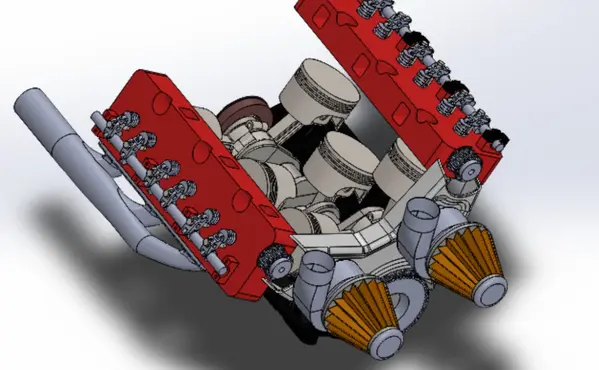
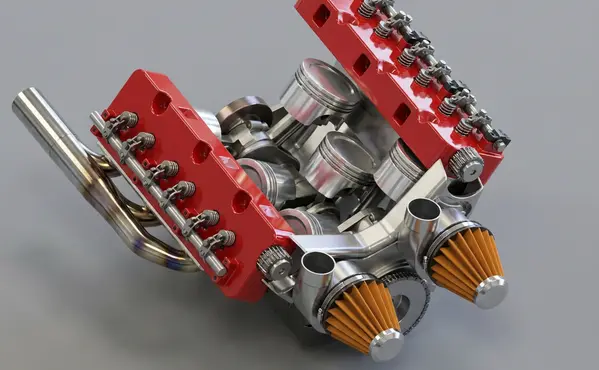
Modeled by CADSharp in Onshape. Rendered with RENDERCAD.
Add | Change | or Remove referenced objects with the stroke of a brush.
RENDERCAD uses a maintained selection of image-generation models for different rendering tasks. Results can vary by model and input, so compare generated output with the source design before relying on geometry, materials, or dimensions.
| Feature | RENDERCAD | Redshift |
|---|---|---|
| Engine | Generative AI | Biased production renderer with GPU, CPU, and hybrid rendering options |
| Output | Images + Video | Still images, animation frames, AOVs, and render passes |
| Resolution | HD / 4K | Set by host scene, camera, output, hardware, and delivery settings |
| Image Speed | Image renders complete in 60 seconds. | Depends on scene complexity, samples, effects, hardware, and render settings |
| Video Speed | Videos complete in 2-5 minutes. | Animation is rendered frame by frame; speed depends on sampling, effects, scene complexity, and render hardware |
| Scene Set Up | No separate local scene | A 3D scene with Redshift materials, lights, cameras, render settings, optional global illumination, and optional AOVs |
| Input | Screen Snip | 3D scenes in supported host applications, with interactive previews available through Redshift workflows |
| Hardware | Cloud GPU | Desktop software and integrations for supported 3D applications |
| Install | None | Available through the Maxon App or a Redshift installer for supported host applications |
| Cost | from $9/mo | Subscription licensing managed through Maxon, with licensing options depending on entitlement |
Read the numbers. We trust you to know theirs.
Skip a separate local scene build. Pick a condition, material, and background while RENDERCAD handles the image-generation step. Image renders complete in 60 seconds.
 ™
RENDERCAD™
™
RENDERCAD™
Use the browser workflow directly, capture a selected view with the desktop app, or start from the browser extension.
Get StartedCommon solutions for Redshift users
Submit a clear viewport screenshot to the web workflow instead of running a local scene render. The generation request runs in the cloud while your source application remains separate.
Open the current desktop app or browser extension, select the viewport region, and send the captured image into the screenshot-based workflow. Availability and device requirements are documented on the current download pages.
Start with a clear, well-framed viewport and describe the intended material and lighting. Image renders complete in 60 seconds, and you can iterate or mask a region when an artifact remains.
It supports fast visual feedback from a clear viewport capture. Image renders complete in 60 seconds.
The current desktop app or browser extension can capture a selected viewport region and send that screenshot into the image workflow. The web upload path remains available without a CAD plugin.
Choose a background or describe the intended environment and lighting. Generated reflections and illumination are visual interpretations, not a scene-based light simulation.
4K is an optional output-resolution step. It increases pixel dimensions but does not restore missing source detail or guarantee print suitability.
It guides the video toward a looping transition. Review continuity after export because the first and last frames may still need editing.
Yes, if you are authorized to use them. Catalog images can guide a visual direction, but generated quality and product fidelity vary.
Yes. Use a mask to target the background separately from the foreground product. Review both regions because generation can still alter unmasked content.
Yes. Mask the product and direct the background with an authorized environment reference. Review the full result because product details can still drift.
Capture a clear view and describe the intended glow color, brightness, and surrounding light spill. Review the generated image because bloom and illumination can vary.