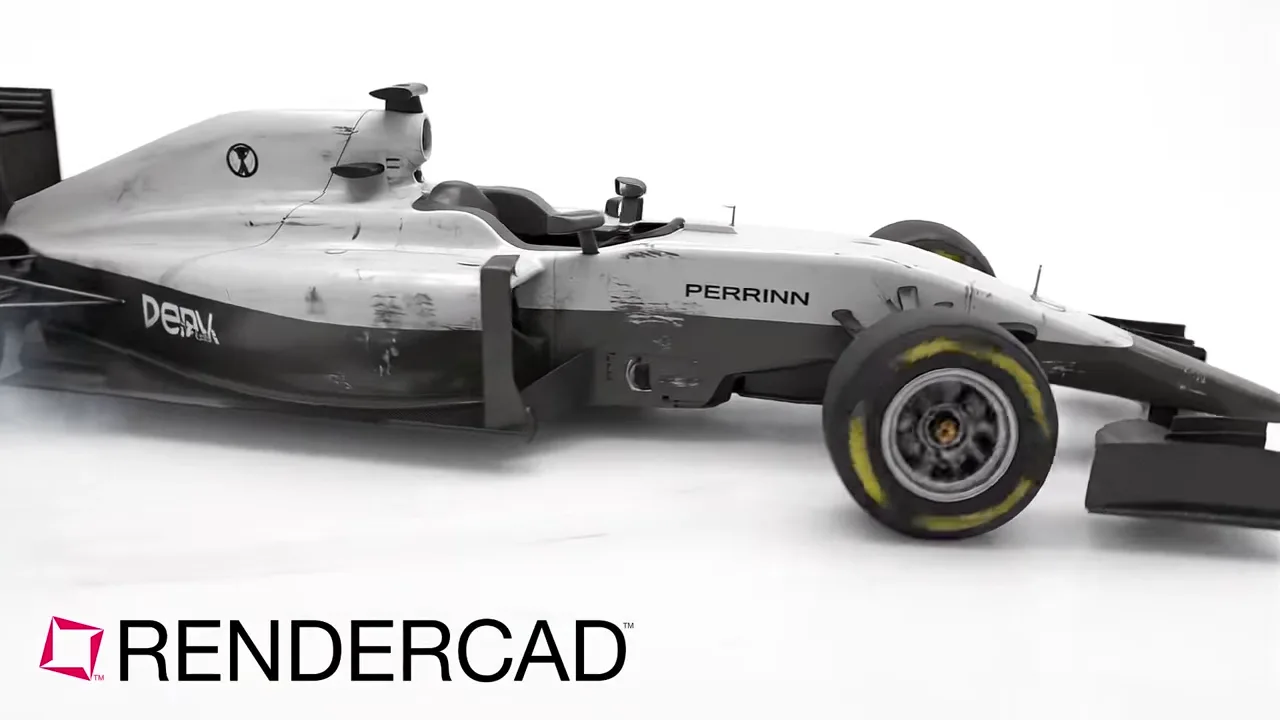
Polished AI stills from Houdini and Octane IPR lookdev views.
OctaneRender for Houdini is a GPU rendering plugin for Houdini look development, interactive IPR previews, volumes, instanced effects, and final image or sequence output. Artists can build procedural scenes in Houdini, assign Octane materials, choose a render camera, and use the Octane Render Setup or ROP controls to judge the image before committing a production render.


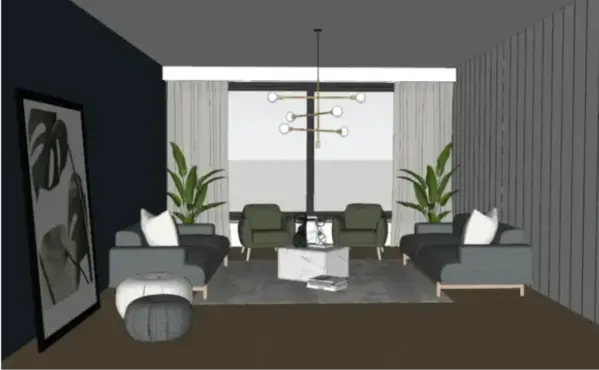
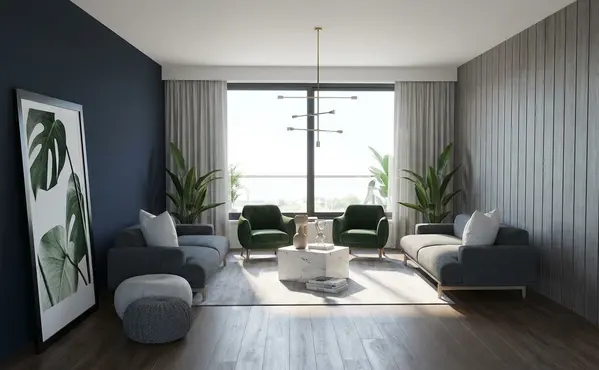


OctaneRender for Houdini is a GPU rendering plugin for Houdini look development, interactive IPR previews, volumes, instanced effects, and final image or sequence output. Artists can build procedural scenes in Houdini, assign Octane materials, choose a render camera, and use the Octane Render Setup or ROP controls to judge the image before committing a production render.
Octane Render for Houdini brings Octane materials, an interactive IPR window, and ROP-based output to Houdini scenes. It suits procedural assets, point-instanced environments, particle effects, product-style hero shots, and smoke, fog, or fire work prepared as Houdini volumes or OpenVDB grids. A useful RENDERCAD input is a clean camera view or Octane IPR capture that already communicates the intended silhouette, density, lighting direction, and material cues. That makes it practical to turn a WIP FX frame, scatter study, or lookdev render into a polished still for an art-direction board, client concept, pitch image, or lighting review.
In Houdini, select the render camera and open Octane IPR from the Octane shelf or ROP while refining the frame you need to discuss. For a procedural asset or instanced environment, capture a moment where the distribution and scale are legible; for a volume, choose a frame where the density and light interaction are readable. Keep the subject, major light direction, and useful material information visible, then hide node overlays, selection outlines, and construction guides before exporting the reference image. Upload that camera or IPR capture to RENDERCAD for a polished still that can help test presentation, mood, and composition. Use the result as a visual direction reference, then return to Houdini and Octane Render Setup or the Octane ROP to finalize the authored camera, geometry, simulations, material assignments, render target settings, passes, resolution, and frame range. RENDERCAD does not replace Houdini scene data or the final Octane render when animation continuity, volumetric behavior, render passes, or exact material and lighting control are required.
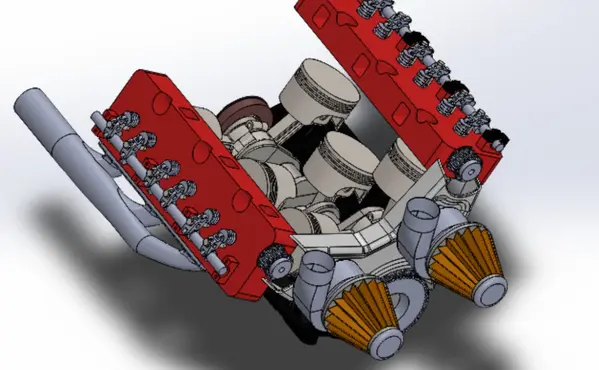
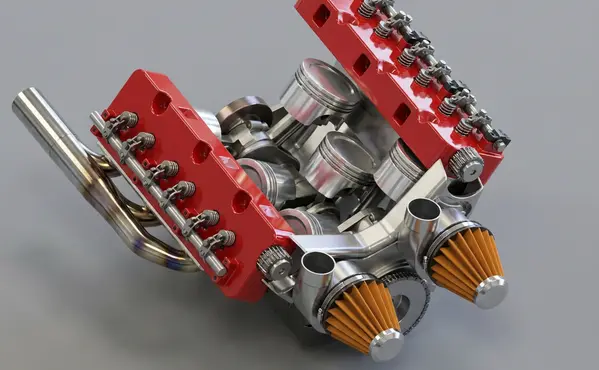
Modeled by CADSharp in Onshape. Rendered with RENDERCAD.
Add | Change | or Remove referenced objects with the stroke of a brush.
RENDERCAD uses a maintained selection of image-generation models for different rendering tasks. Results can vary by model and input, so compare generated output with the source design before relying on geometry, materials, or dimensions.
| Feature | RENDERCAD | Octane Render for Houdini |
|---|---|---|
| Engine | Generative AI | GPU renderer integrated with Houdini through the OctaneRender plugin |
| Output | Images + Video | Still images, frame sequences, render passes, and multilayer image output |
| Resolution | HD / 4K | Set through camera and Octane ROP output settings; practical limits depend on the scene and available hardware |
| Image Speed | Image renders complete in 60 seconds. | Depends on scene complexity, render settings, volumes, and available GPU resources |
| Video Speed | Videos complete in 2-5 minutes. | Renders animation as a frame range; speed depends on the scene and render settings |
| Scene Set Up | No separate local scene | Houdini scene with a camera, Octane materials, Render Setup or ROP settings, and optional volume or OpenVDB configuration |
| Input | Screen Snip | Houdini scene through the Octane Render for Houdini plugin |
| Hardware | Cloud GPU | Houdini desktop plugin; supported operating systems and Houdini builds vary by plugin release |
| Install | None | Install the OctaneRender for Houdini build that matches the Houdini installation, then activate and configure it in Houdini |
| Cost | from $9/mo | Access and licensing terms vary; review current OctaneRender terms |
Read the numbers. We trust you to know theirs.
Skip a separate local scene build. Pick a condition, material, and background while RENDERCAD handles the image-generation step. Image renders complete in 60 seconds.
 ™
RENDERCAD™
™
RENDERCAD™
Use the browser workflow directly, capture a selected view with the desktop app, or start from the browser extension.
Get StartedCommon solutions for Octane Render for Houdini users
Choose the Seamless loop end-frame option to guide the clip toward a looping transition. Review the exported loop because continuity can vary by model and source image.
Use the RENDERCAD Overlay to capture a clear viewport without rebuilding a separate render scene. Image renders complete in 60 seconds.
Yes. A current desktop capture app and browser extension are available, and the browser upload workflow remains available without either tool.
Start with a sharp input, choose the Realistic engine, and use 4K when additional output resolution is needed. Higher resolution does not recover source detail that is missing or guarantee geometry fidelity.
Generation runs on cloud infrastructure, so a local rendering GPU is not required. The laptop still needs a supported browser, network access, and enough resources for the source application and image upload.
The core workflow is available in a supported browser and accepts a selected 2D image, so it does not require a rendering plugin in the source application.
The model can reinterpret curves and surface transitions from the 2D input. Compare the result with the source because edges and geometry can drift.
It accepts a clear viewport screenshot, so a separate local material, light, and camera scene is not required for the image-generation workflow.
It lets you describe motion, steam, lighting changes, or atmosphere for a generated clip. Added details may not exist in the source model.
Yes. A sketch can guide lighting direction, color zones, or composition. The generated interpretation may add or change details, so review it against the source.
Mask visible components separately when they need different material or color direction. Keep the source model or drawing beside the output because generated boundaries and part relationships can drift.
Reuse the same authorized lighting, material, and style references, then review every output against the brand system. References can help consistency but do not guarantee it.