Turn Kaledo textile views into clear fashion presentation concepts.
Lectra Kaledo is a fashion and textile design suite for developing original prints, knitted fabrics, woven fabrics, colorways, and collection assets. Its focused textile views help designers examine motif placement, repeat scale, yarn or fabric character, and color direction before a collection story is presented more broadly.




Lectra Kaledo is a fashion and textile design suite for developing original prints, knitted fabrics, woven fabrics, colorways, and collection assets. Its focused textile views help designers examine motif placement, repeat scale, yarn or fabric character, and color direction before a collection story is presented more broadly.
Lectra Kaledo supports fashion and textile teams developing print, knit, weave, colorway, and collection directions. A useful RENDERCAD input is not a busy working screen but a deliberate Kaledo visual: for example, a clean fabric simulation, a repeat shown at an understandable scale, a placed motif on a garment or product view, or a selected colorway that has already been reviewed by the design team. This lets RENDERCAD turn the design intent into a studio image, editorial fashion concept, merchandise story, collection board, or retail-oriented visual for internal line review and early marketing discussion.
The generated image is most useful for communicating atmosphere and use context around the textile. It can help a team see how a botanical print reads in a resortwear story, how a knitted texture supports a seasonal mood, or how a woven surface might be framed in a product presentation. It should not replace Kaledo when the question is technical. Keep repeat dimensions, motif placement, yarn and weave structure, color specifications, asset management, and production approval in Kaledo and the established product-development workflow. Compare any generated presentation with the approved Kaledo source before sharing it, especially where a crop, fold, lighting treatment, or generated garment can change the apparent scale or color of a textile.
In Kaledo, choose a print, knit, weave, or collection view that communicates one approved direction clearly. Set the intended colorway and export a clean image with the important motif, fabric texture, or product silhouette large enough to read; remove palettes, rulers, cursor states, and unrelated interface panels. For repeat artwork, include enough of the pattern to show its rhythm without making the image too dense.
Upload that export to RENDERCAD and state the visual purpose and what must remain recognizable. Prompts can ask for a restrained studio apparel image, a close product-material detail, an editorial setting, or a collection presentation, while preserving the selected color family and the visible textile identity. Review outputs beside the Kaledo source, reject versions that distort repeat scale, placement, texture, or color direction, and use selected visuals in concept decks, range reviews, merchandising conversations, or early campaign exploration. Return to Kaledo and the product-development process for all textile specifications and approvals.
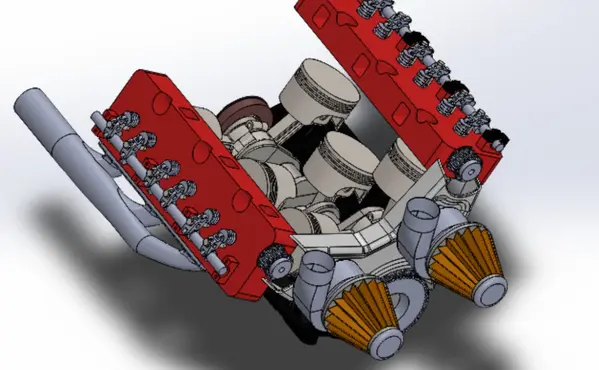
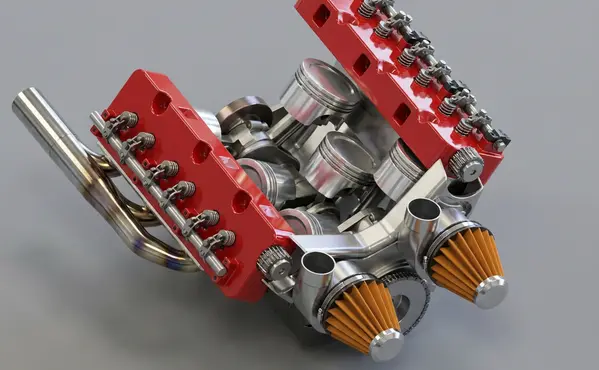
Modeled by CADSharp in Onshape. Rendered with RENDERCAD.
Add | Change | or Remove referenced objects with the stroke of a brush.
RENDERCAD uses a maintained selection of image-generation models for different rendering tasks. Results can vary by model and input, so compare generated output with the source design before relying on geometry, materials, or dimensions.
| Feature | RENDERCAD | Competitor |
|---|---|---|
| Engine | Generative AI | Varies by tool |
| Output | Images + Video | Varies by tool |
| Resolution | HD / 4K | Varies by workflow |
| Image Speed | Image renders complete in 60 seconds. | Varies by scene/tool |
| Video Speed | Videos complete in 2-5 minutes. | Varies by workflow |
| Scene Set Up | No separate local scene | Varies by workflow |
| Input | Screen Snip | Varies by tool |
| Hardware | Cloud GPU | Often local GPU/CPU |
| Install | None | Varies (web or app) |
| Cost | from $9/mo | Varies widely |
Read the numbers. We trust you to know theirs.
Skip a separate local scene build. Pick a condition, material, and background while RENDERCAD handles the image-generation step. Image renders complete in 60 seconds.
 ™
RENDERCAD™
™
RENDERCAD™
Use the browser workflow directly, capture a selected view with the desktop app, or start from the browser extension.
Get StartedCommon solutions for Lectra Kaledo users
4K is an optional output-resolution step. It increases pixel dimensions but does not restore missing source detail or guarantee print suitability.
It guides the video toward a looping transition. Review continuity after export because the first and last frames may still need editing.
Use an authorized photo with the intended studio, outdoor, or dramatic lighting as a reference. It guides the look but does not reproduce a measured lighting setup.
Yes. Mask each region and assign an authorized texture reference or instruction. Review material boundaries, scale, and product fidelity after generation.
Share only reference images your team is authorized to use, together with the instructions and review criteria that produced a useful result. Reusing a reference can guide consistency but does not guarantee identical output.
Upload a clear image, describe denim, cotton, velvet, or another fabric, and add a material reference when available. Check the generated weave scale and direction against the intended product.
Choose the Dusty condition and describe the intended atmosphere. Generated dust is illustrative, so review how it affects important product details.
Yes, use the "Details" field in the video tab to describe elements like "Steam rising" or "Lights flickering."
Use the RENDERCAD Overlay to capture a clear viewport without rebuilding a separate render scene. Image renders complete in 60 seconds.
Yes. A current desktop capture app and browser extension are available, and the browser upload workflow remains available without either tool.
Start with a sharp input, choose the Realistic engine, and use 4K when additional output resolution is needed. Higher resolution does not recover source detail that is missing or guarantee geometry fidelity.
Generation runs on cloud infrastructure, so a local rendering GPU is not required. The laptop still needs a supported browser, network access, and enough resources for the source application and image upload.