Presentation-ready apparel visuals from Lectra 3D prototypes.
Lectra supports fashion product development, including apparel patternmaking, grading, 2D and 3D prototyping, collection work, and production preparation. In Modaris, teams can develop patterns and inspect 3D garment prototypes with materials, colors, and mannequins before final pattern approval. That makes a carefully framed prototype view useful source material for a separate presentation image when a collection team needs to communicate silhouette, colorway, textile mood, or a key design detail beyond the pattern room.





Lectra supports fashion product development, including apparel patternmaking, grading, 2D and 3D prototyping, collection work, and production preparation. In Modaris, teams can develop patterns and inspect 3D garment prototypes with materials, colors, and mannequins before final pattern approval. That makes a carefully framed prototype view useful source material for a separate presentation image when a collection team needs to communicate silhouette, colorway, textile mood, or a key design detail beyond the pattern room.
Lectra and Modaris users can use an approved 3D garment prototype as the starting point for a more considered collection or merchandising visual. The most useful input is a clean, front, back, or three-quarter view that makes the intended silhouette, drape, colorway, and important construction details legible. A RENDERCAD image can help a design, buying, or marketing audience discuss the garment in a campaign-like setting, on a neutral studio background, or in a format suited to line sheets and early e-commerce planning. It is particularly helpful when the team wants a consistent visual direction across several styles or colorways while physical samples are still being developed. The generated image should be treated as presentation material, not evidence of fit, fabric performance, grading, seam allowance, or manufacturability. Lectra remains the source of truth for the pattern, 3D prototype, product data, and production approval decisions.
In Modaris, select a 3D prototype whose pattern and fit are ready for visual communication, then choose a view that clearly shows the garment's shape and the details the audience needs to see. Use a clean viewport capture or exported image in RENDERCAD and describe the intended setting, lighting, styling, background, and output audience. Keep the prompt anchored to visible source details rather than using it to invent construction or performance claims. Create alternate presentation treatments for collection reviews, wholesale decks, line sheets, or early product storytelling, then compare each result against the Lectra source before sharing. Return to Lectra for pattern changes, grading, material decisions, technical specifications, and manufacturing approval. For repeatable image workflows, see RENDERCAD developer documentation for current RENDERCAD API guidance.
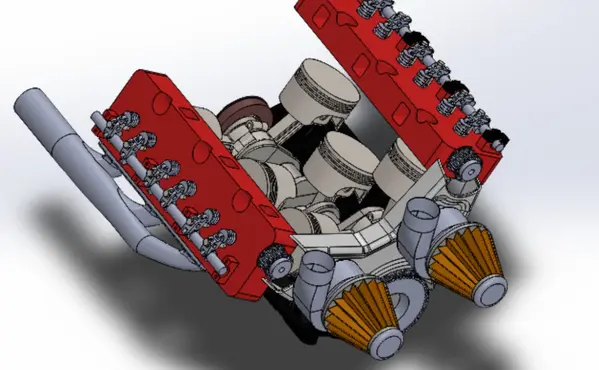
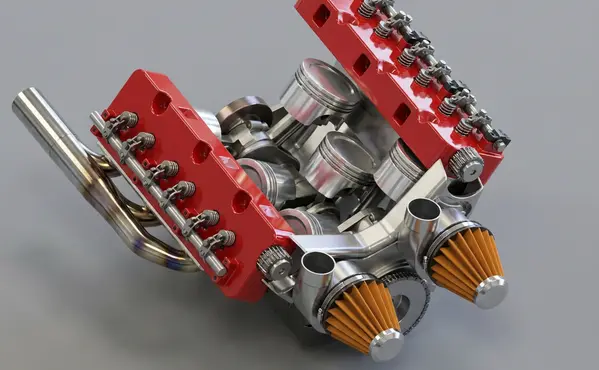
Modeled by CADSharp in Onshape. Rendered with RENDERCAD.
Add | Change | or Remove referenced objects with the stroke of a brush.
RENDERCAD uses a maintained selection of image-generation models for different rendering tasks. Results can vary by model and input, so compare generated output with the source design before relying on geometry, materials, or dimensions.
| Feature | RENDERCAD | Competitor |
|---|---|---|
| Engine | Generative AI | Varies by tool |
| Output | Images + Video | Varies by tool |
| Resolution | HD / 4K | Varies by workflow |
| Image Speed | Image renders complete in 60 seconds. | Varies by scene/tool |
| Video Speed | Videos complete in 2-5 minutes. | Varies by workflow |
| Scene Set Up | No separate local scene | Varies by workflow |
| Input | Screen Snip | Varies by tool |
| Hardware | Cloud GPU | Often local GPU/CPU |
| Install | None | Varies (web or app) |
| Cost | from $9/mo | Varies widely |
Read the numbers. We trust you to know theirs.
Skip a separate local scene build. Pick a condition, material, and background while RENDERCAD handles the image-generation step. Image renders complete in 60 seconds.
 ™
RENDERCAD™
™
RENDERCAD™
Use the browser workflow directly, capture a selected view with the desktop app, or start from the browser extension.
Get StartedCommon solutions for Lectra users
Choose a background or describe the intended environment and lighting. Generated reflections and illumination are visual interpretations, not a scene-based light simulation.
4K is an optional output-resolution step. It increases pixel dimensions but does not restore missing source detail or guarantee print suitability.
It guides the video toward a looping transition. Review continuity after export because the first and last frames may still need editing.
A material photo can communicate grain, color, and finish more directly than text alone. Compare the result with the intended material because scale and orientation can drift.
Mask individual components and assign color prompts or authorized references. Verify brand color in a color-managed workflow rather than relying on generated accuracy.
Share only reference images your team is authorized to use, together with the instructions and review criteria that produced a useful result. Reusing a reference can guide consistency but does not guarantee identical output.
Describe the velvet color, pile direction, and lighting, or add an authorized material reference. Review the generated texture because fiber scale and light response can vary.
Choose the Dusty condition and describe the intended atmosphere. Generated dust is illustrative, so review how it affects important product details.
Choose the Orbit camera preset in the Video panel. Review the generated clip because viewpoint changes and product details can vary from a single-image input.
Use the RENDERCAD Overlay to capture a clear viewport without rebuilding a separate render scene. Image renders complete in 60 seconds.
Yes. A current desktop capture app and browser extension are available, and the browser upload workflow remains available without either tool.
Describe the color code name (e.g., "Traffic Red") in the prompt.