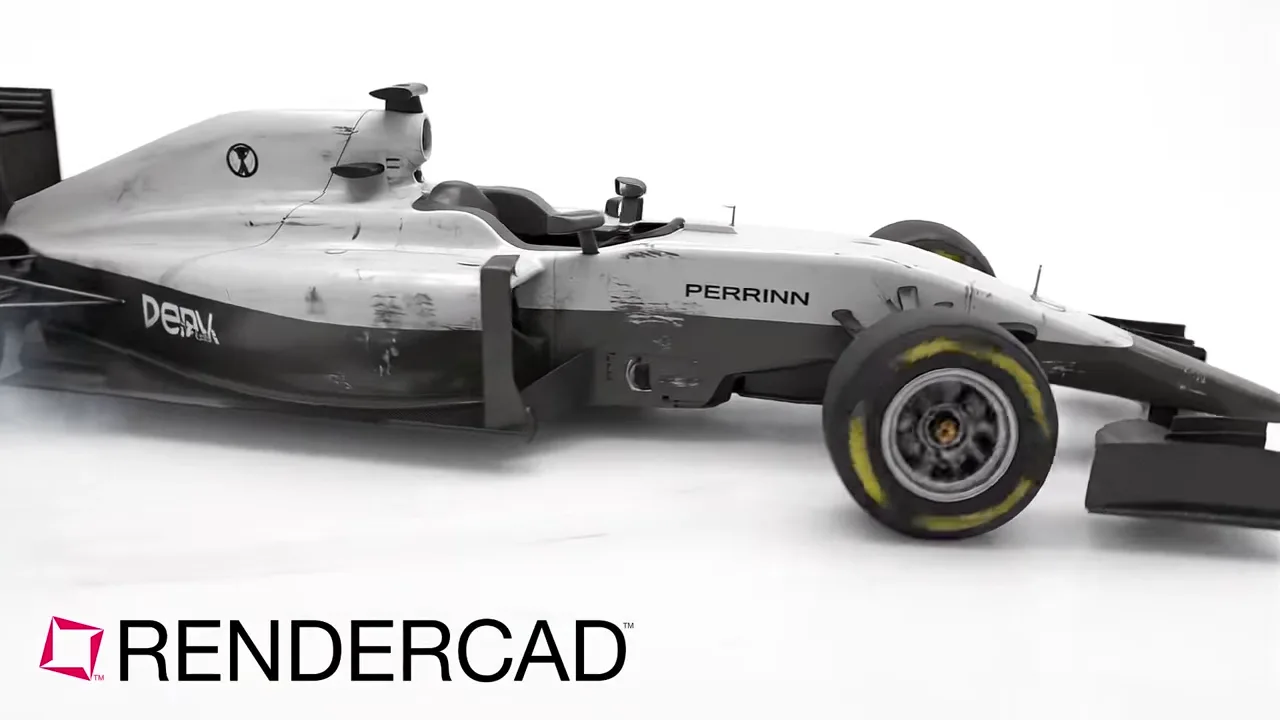
Presentation-ready visuals from KeyCreator Professional CAD views.
Turn a prepared KeyCreator Professional direct CAD view into a clearer visual for tooling, machinery, and imported mechanical-model reviews.


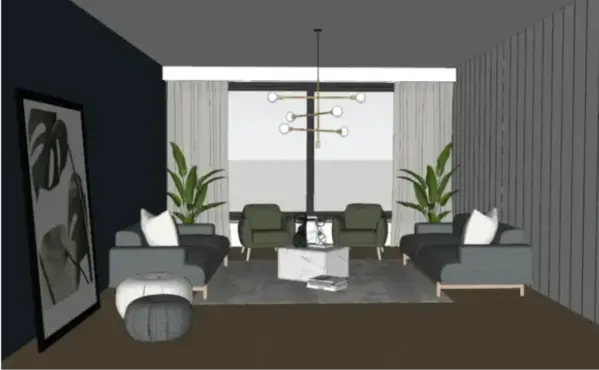

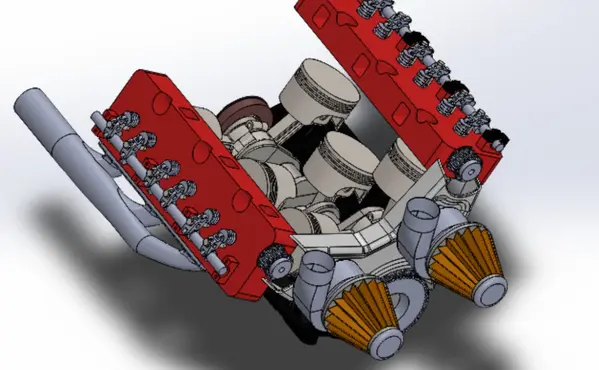
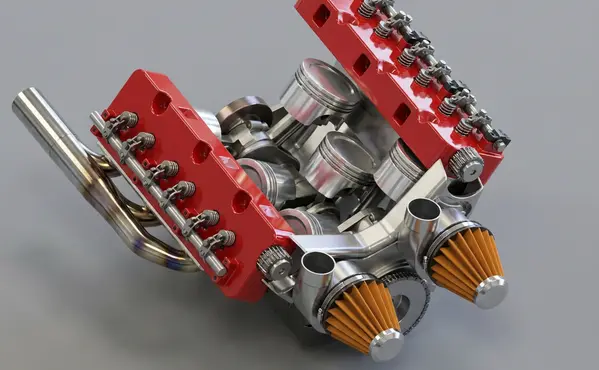


Turn a prepared KeyCreator Professional direct CAD view into a clearer visual for tooling, machinery, and imported mechanical-model reviews.
KeyCreator Professional is a direct CAD environment for people who revise mechanical models without depending on a feature history, particularly when working with imported customer geometry, tooling, fixtures, mold components, production equipment, or custom assemblies. Its level organization, shaded display modes, and clipping views can help an engineer isolate the geometry that matters before sharing it. RENDERCAD is useful once that KeyCreator view already explains the design intent but needs a more legible, presentation-oriented image for a design review, quotation, customer discussion, sales reference, or product documentation. For example, use a shaded isometric view of a fixture, a cleaned-up supplier-model assembly, or a section that reveals an internal mechanism as the starting image. It supports visual communication around the approved view while the underlying design may still be evolving. Treat the KeyCreator model, measurements, drawings, and engineering review process as the source of truth; a RENDERCAD result should not replace dimensional verification, interference checking, or manufacturing documentation.
In KeyCreator Professional, open the direct model or imported assembly and prepare a view for the specific decision being discussed. Display only the relevant levels, choose a shaded view that keeps the silhouette clear, and use a clipping or section view if the mechanism, cavity, or internal clearance is central to the conversation. Keep useful face colors or part separation visible, then capture the selected viewport at a purposeful camera angle. Send that image to RENDERCAD with a concise description of the intended presentation, such as a clean manufacturing visual for a fixture review or a product-facing image for a custom machine proposal. Use the resulting visual alongside the original CAD view, returning to KeyCreator whenever geometry, dimensions, tolerances, or technical visibility must be checked. For implementation details and automation options, technical teams can consult RENDERCAD developer documentation.
Modeled by CADSharp in Onshape. Rendered with RENDERCAD.
Add | Change | or Remove referenced objects with the stroke of a brush.
RENDERCAD uses a maintained selection of image-generation models for different rendering tasks. Results can vary by model and input, so compare generated output with the source design before relying on geometry, materials, or dimensions.
| Feature | RENDERCAD | Competitor |
|---|---|---|
| Engine | Generative AI | Varies by tool |
| Output | Images + Video | Varies by tool |
| Resolution | HD / 4K | Varies by workflow |
| Image Speed | Image renders complete in 60 seconds. | Varies by scene/tool |
| Video Speed | Videos complete in 2-5 minutes. | Varies by workflow |
| Scene Set Up | No separate local scene | Varies by workflow |
| Input | Screen Snip | Varies by tool |
| Hardware | Cloud GPU | Often local GPU/CPU |
| Install | None | Varies (web or app) |
| Cost | from $9/mo | Varies widely |
Read the numbers. We trust you to know theirs.
Skip a separate local scene build. Pick a condition, material, and background while RENDERCAD handles the image-generation step. Image renders complete in 60 seconds.
 ™
RENDERCAD™
™
RENDERCAD™
Use the browser workflow directly, capture a selected view with the desktop app, or start from the browser extension.
Get StartedCommon solutions for KeyCreator Professional users
Yes, if you are authorized to use it. A reference guides visual direction but does not guarantee style replication or geometry preservation.
Mask individual components and assign color prompts or authorized references. Verify brand color in a color-managed workflow rather than relying on generated accuracy.
Reuse the same source image with authorized daytime and night lighting references or instructions. Compare both outputs with the source because lighting changes can also alter generated details.
Capture the model, describe the wood species and grain direction, and add an authorized material reference when needed. Generated grain varies and should be reviewed for scale and orientation.
Add phrases like "Light from left," "Backlit," or "Top down lighting" to your custom prompt in RENDERCAD.
Yes, use the "Details" field in the video tab to describe elements like "Steam rising" or "Lights flickering."
Submit a clear viewport screenshot to the web workflow instead of running a local scene render. The generation request runs in the cloud while your source application remains separate.
Open the current desktop app or browser extension, select the viewport region, and send the captured image into the screenshot-based workflow. Availability and device requirements are documented on the current download pages.
Describe cinematic depth of field and the intended focus area. Check that important product details remain sharp after generation.
It supports fast visual feedback from a clear viewport capture. Image renders complete in 60 seconds.
The current desktop app or browser extension can capture a selected viewport region and send that screenshot into the image workflow. The web upload path remains available without a CAD plugin.
Choose a background or describe the intended environment and lighting. Generated reflections and illumination are visual interpretations, not a scene-based light simulation.