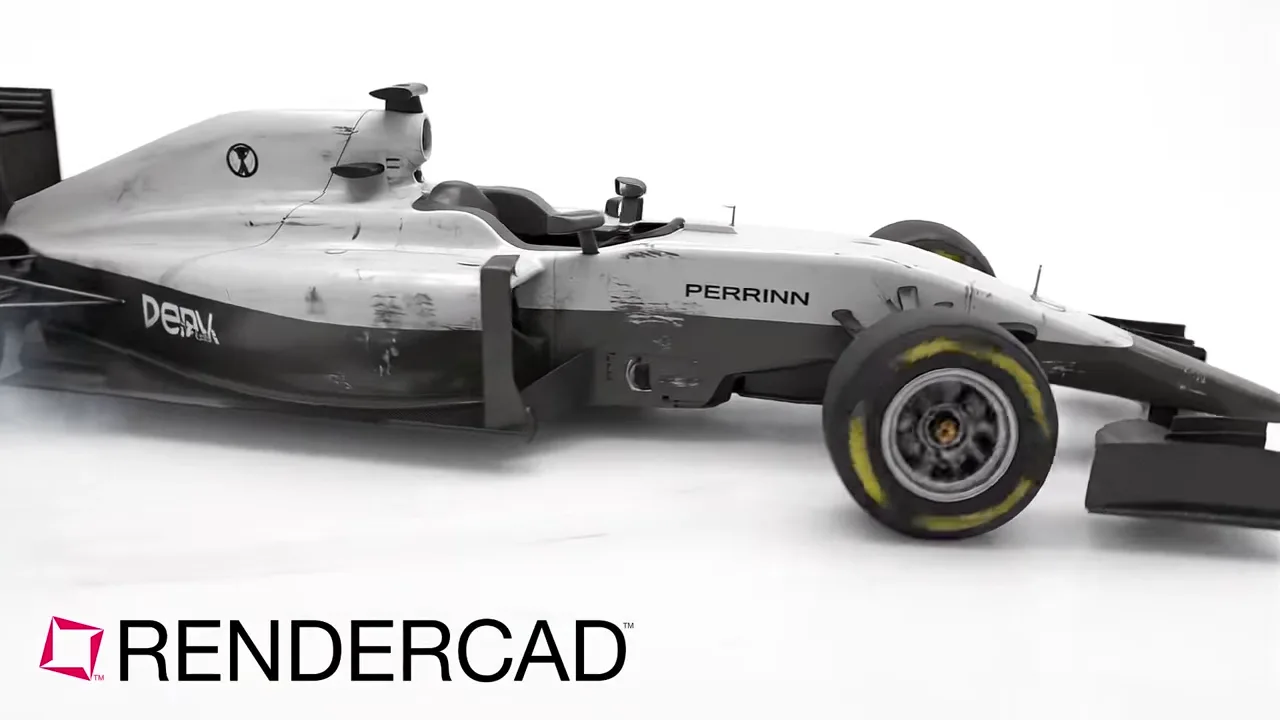
Clearer rail corridor visuals from Bentley OpenRail model views.
Rail design and BIM software for modeling and documenting track geometry, corridors, stations, yards, drainage, signaling, terrain, and overhead line work in a 3D project context.


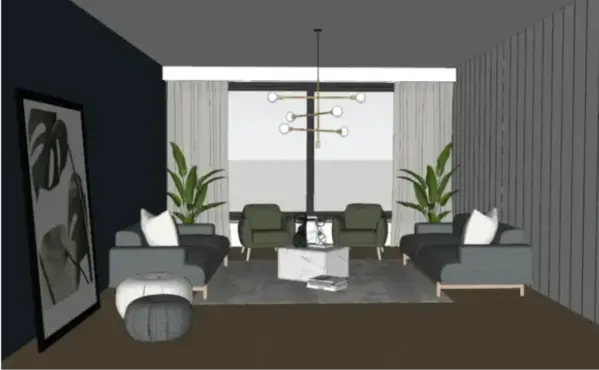
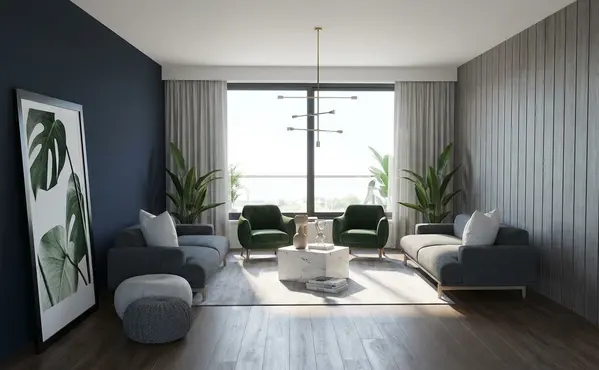


Rail design and BIM software for modeling and documenting track geometry, corridors, stations, yards, drainage, signaling, terrain, and overhead line work in a 3D project context.
Bentley OpenRail is used to develop rail corridors and the connected assets around them, including track geometry, turnouts, stations, yards, drainage, signals, terrain, and overhead line equipment. Those coordinated 3D views are useful evidence during engineering, but they can be visually dense for an owner, planning group, or community audience. RENDERCAD can develop a carefully framed OpenRail viewport capture into a clearer concept image for a station approach, junction, turnout throat, depot, bridge interface, tunnel portal, or electrified corridor. Keep the elements that explain the proposal in view: track alignment, platforms, structures, embankments, drainage paths, terrain, and neighboring roads or buildings. The resulting image can help compare options, support a review board, or explain how a rail scheme sits in its setting. It is a communication asset, not a substitute for OpenRail geometry, rail clearances, quantities, construction documentation, or engineering review.
In OpenRail, start with a saved 3D view that answers one project question rather than showing the whole federation. A useful frame might follow a station approach, show a turnout and its adjacent yard, look across a bridge transition, or view an overhead line zone against the terrain. Use display controls to remove sheet annotations, construction aids, and unrelated reference geometry. Retain enough of the modeled corridor, ground, platforms, retaining elements, drainage, signals, wires or masts, and nearby context to make scale and route direction understandable. Capture the clean viewport at a human-readable angle, then use RENDERCAD to explore materials, ballast and sleeper definition, landscape, weather, lighting, and surrounding urban or rural context. Review the generated visual against the OpenRail view before using it in a proposal, options meeting, public-facing board, or design presentation. Return to OpenRail whenever the image must represent an exact location, dimension, clearance, standard, or current design revision.
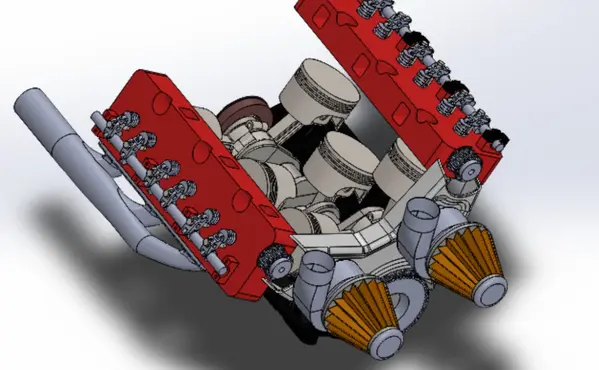
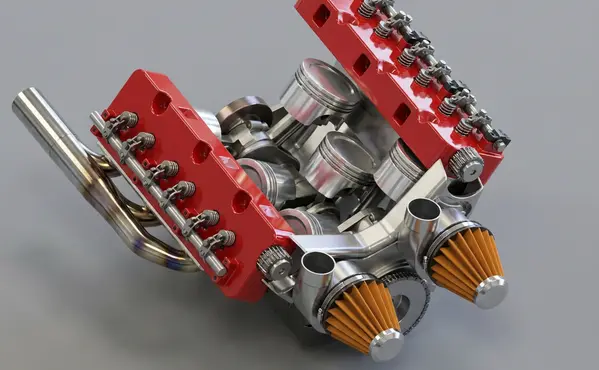
Modeled by CADSharp in Onshape. Rendered with RENDERCAD.
Add | Change | or Remove referenced objects with the stroke of a brush.
RENDERCAD uses a maintained selection of image-generation models for different rendering tasks. Results can vary by model and input, so compare generated output with the source design before relying on geometry, materials, or dimensions.
| Feature | RENDERCAD | Competitor |
|---|---|---|
| Engine | Generative AI | Varies by tool |
| Output | Images + Video | Varies by tool |
| Resolution | HD / 4K | Varies by workflow |
| Image Speed | Image renders complete in 60 seconds. | Varies by scene/tool |
| Video Speed | Videos complete in 2-5 minutes. | Varies by workflow |
| Scene Set Up | No separate local scene | Varies by workflow |
| Input | Screen Snip | Varies by tool |
| Hardware | Cloud GPU | Often local GPU/CPU |
| Install | None | Varies (web or app) |
| Cost | from $9/mo | Varies widely |
Read the numbers. We trust you to know theirs.
Skip a separate local scene build. Pick a condition, material, and background while RENDERCAD handles the image-generation step. Image renders complete in 60 seconds.
 ™
RENDERCAD™
™
RENDERCAD™
Use the browser workflow directly, capture a selected view with the desktop app, or start from the browser extension.
Get StartedCommon solutions for Bentley OpenRail users
Yes. Use a mask to target the background separately from the foreground product. Review both regions because generation can still alter unmasked content.
You can layer a material reference, a lighting reference, and a background reference together. Each guides a different aspect of the final render.
Describe the tint, transparency, thickness, and lighting direction. Generated absorption and reflections are visual approximations and should not be treated as material simulation.
Add phrases like "Light from left," "Backlit," or "Top down lighting" to your custom prompt in RENDERCAD.
Yes. Choose the Dolly In or Dolly Out camera preset in the Video panel, then review the clip for product and geometry fidelity.
Submit a clear viewport screenshot to the web workflow instead of running a local scene render. The generation request runs in the cloud while your source application remains separate.
Open the current desktop app or browser extension, select the viewport region, and send the captured image into the screenshot-based workflow. Availability and device requirements are documented on the current download pages.
Add a familiar scale cue such as a person, hand, or furniture item, then verify the generated relationship against known dimensions in the source model.
It supports fast visual feedback from a clear viewport capture. Image renders complete in 60 seconds.
The current desktop app or browser extension can capture a selected viewport region and send that screenshot into the image workflow. The web upload path remains available without a CAD plugin.
Choose a background or describe the intended environment and lighting. Generated reflections and illumination are visual interpretations, not a scene-based light simulation.
4K is an optional output-resolution step. It increases pixel dimensions but does not restore missing source detail or guarantee print suitability.