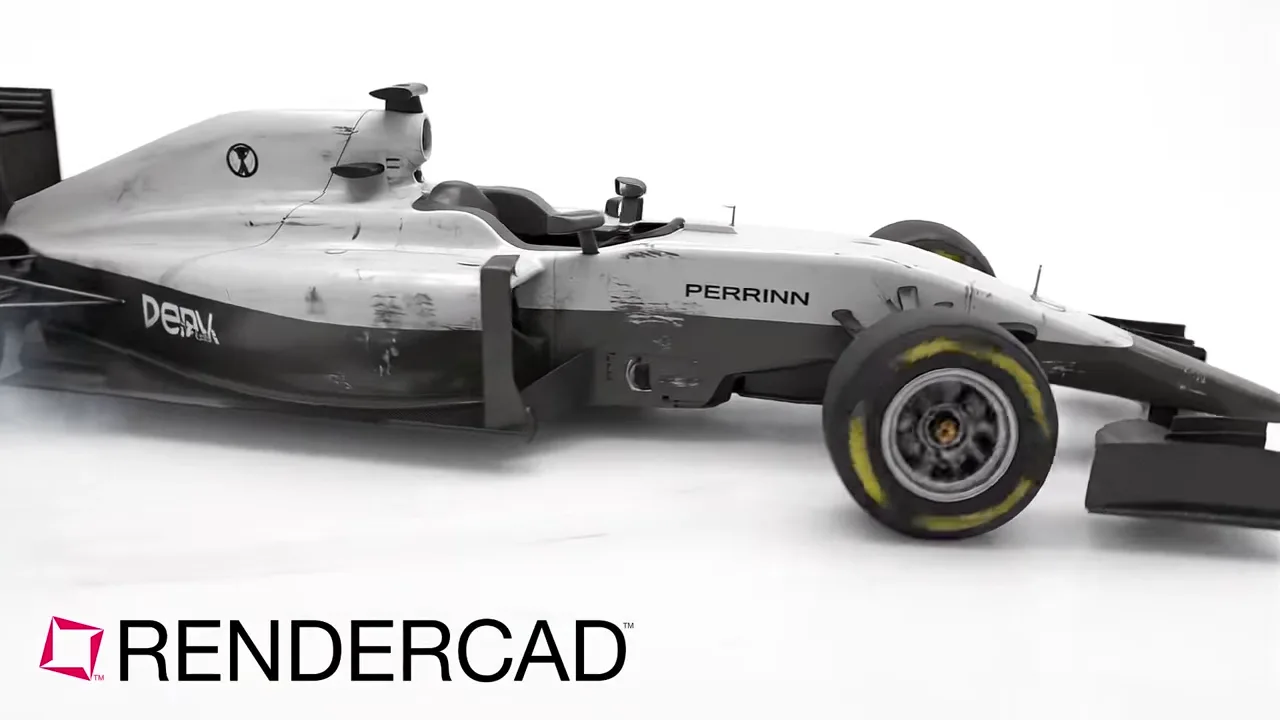
Turn Tayasui Sketches studies into render-style visual directions.
Digital drawing and painting app for brush-led sketches, watercolor studies, imported photo references, and layered illustration. Its canvas, paper settings, brush tools, and layer controls make it useful for expressing a visual direction before a model or final production artwork exists.


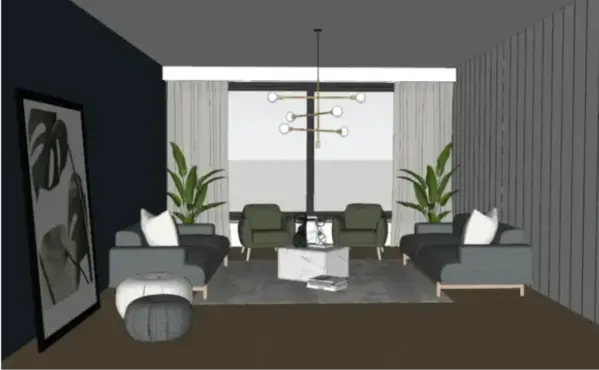
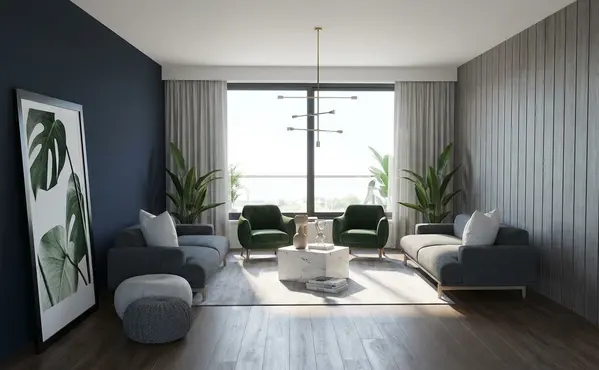


Digital drawing and painting app for brush-led sketches, watercolor studies, imported photo references, and layered illustration. Its canvas, paper settings, brush tools, and layer controls make it useful for expressing a visual direction before a model or final production artwork exists.
Tayasui Sketches is a strong starting point for product ideation, interior perspective studies, packaging directions, vehicle silhouettes, painted environment thumbnails, and photo paintovers. The most useful input is not a loose page of alternatives: it is one selected drawing with a readable subject, clear camera angle, major planes, and a deliberate light or color cue. A side perspective of a chair, a one-point room study, or a product sketch over a photo reference can communicate the intended composition even when its materials are only suggested with brushwork. Upload that focused image to RENDERCAD to explore a render-style interpretation with more defined surface character, illumination, shadow, and context for design reviews, mood boards, or early pitches. Keep Sketches as the source of truth for the drawn linework, artistic treatment, and design intent. A render-style result is a visualization direction, not proof of dimensions, construction details, or a substitute for a controlled 3D render when those details must be exact.
In Tayasui Sketches, put notes, arrows, and reference photos on separate layers so the intended object or space remains easy to read. Use the paper layer and brush marks for mood, but make the main silhouette, visible faces, horizon, and focal area unambiguous. For an interior, show the principal wall, openings, and light direction; for a product, show the chosen view and the material breaks that matter. Export a clean flattened PNG for the visualization pass. If you need to retain linework or remove the paper texture later, use a transparent-background or layered export where your version supports it. In RENDERCAD, describe only the decisions the drawing does not fully convey, such as material family, lighting mood, setting, and level of finish. Compare a small set of outputs against the original sketch, select the direction that preserves the composition, then return to Sketches or a layout tool for annotations, paintover, and final presentation. Do not expect the output to preserve every brush stroke, label, or exact geometry.
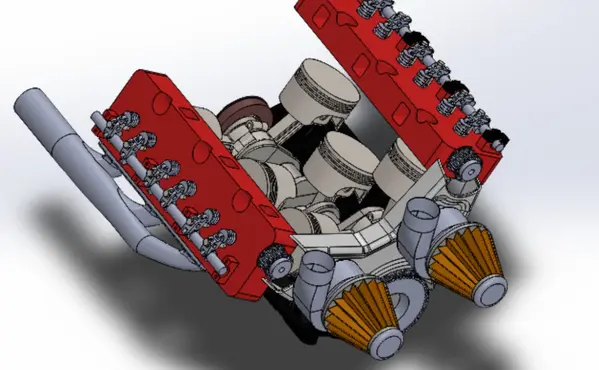
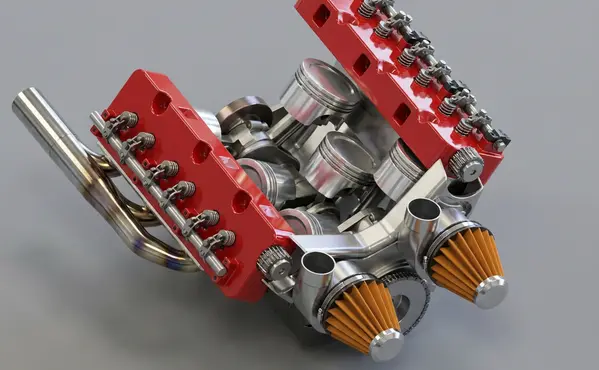
Modeled by CADSharp in Onshape. Rendered with RENDERCAD.
Add | Change | or Remove referenced objects with the stroke of a brush.
RENDERCAD uses a maintained selection of image-generation models for different rendering tasks. Results can vary by model and input, so compare generated output with the source design before relying on geometry, materials, or dimensions.
| Feature | RENDERCAD | Tayasui Sketches drawing workflow |
|---|---|---|
| Engine | Generative AI | Brush-based digital drawing and painting canvas, rather than a dedicated photoreal rendering engine |
| Output | Images + Video | Image exports, including flattened PNG and, where supported by the version, transparent-background and layered PSD exports |
| Resolution | HD / 4K | Depends on the device, canvas setup, and selected export format |
| Image Speed | Image renders complete in 60 seconds. | Interactive drawing workflow; visual realism is created through the artist's brushwork and any downstream visualization tools |
| Video Speed | Videos complete in 2-5 minutes. | Primarily a still-image drawing workflow; drawing recording is available on some recent devices |
| Scene Set Up | No separate local scene | Build a sketch or painted study with brushes, imported photos or files, layers, paper settings, and composition cues before preparing a clean image export |
| Input | Screen Snip | Hand-drawn marks, imported photos or image files, layers, colors, patterns, and stylus input |
| Hardware | Cloud GPU | Tayasui Sketches applications for iPhone, iPad, Android, and Mac, with feature availability varying by version |
| Install | None | Install the appropriate Tayasui Sketches application for the device being used |
| Cost | from $9/mo | Availability and access options vary by platform and current product offering |
Read the numbers. We trust you to know theirs.
Skip a separate local scene build. Pick a condition, material, and background while RENDERCAD handles the image-generation step. Image renders complete in 60 seconds.
 ™
RENDERCAD™
™
RENDERCAD™
Use the browser workflow directly, capture a selected view with the desktop app, or start from the browser extension.
Get StartedCommon solutions for Tayasui Sketches users
It guides the video toward a looping transition. Review continuity after export because the first and last frames may still need editing.
Yes, if you are authorized to use its contents. A mood board can guide palette, lighting, and atmosphere; generated interpretation varies.
Masking lets you target a region of a CAD screenshot, real photo, or hand drawing with a reference image or instruction. Generation can still affect other regions, so inspect the full result.
Share only reference images your team is authorized to use, together with the instructions and review criteria that produced a useful result. Reusing a reference can guide consistency but does not guarantee identical output.
While RENDERCAD generates full rectangular images, you can set the Background to "White" or "Grey" in Advanced Settings for easy masking in post-production.
Choose the Dusty condition and describe the intended atmosphere. Generated dust is illustrative, so review how it affects important product details.
Choose the Orbit camera preset and keep the source image as the authority for product shape and visible details. Generated parallax and newly revealed areas can vary.
Use the RENDERCAD Overlay to capture a clear viewport without rebuilding a separate render scene. Image renders complete in 60 seconds.
Yes. A current desktop capture app and browser extension are available, and the browser upload workflow remains available without either tool.
Start with a clear, well-framed viewport and describe the intended material and lighting. Image renders complete in 60 seconds, and you can iterate or mask a region when an artifact remains.
Generation runs on cloud infrastructure, so a local rendering GPU is not required. The laptop still needs a supported browser, network access, and enough resources for the source application and image upload.
The core workflow is available in a supported browser and accepts a selected 2D image, so it does not require a rendering plugin in the source application.