Turn LightUp SketchUp views into polished presentation visuals.
LightUp is a SketchUp extension for working with real-time lighting, daylight and insolation views, artificial lights, reflections, and walkthroughs without leaving the model. It suits architects, interior designers, lighting designers, and visualization teams who need to explore a lit space quickly, compare sun and sky conditions, or communicate how a scene will feel from a selected camera. Its useful output is often a composed SketchUp scene: an interior with daylight and fixtures, a facade assessed in context, a retail or exhibition display, or a product model placed against a backdrop.


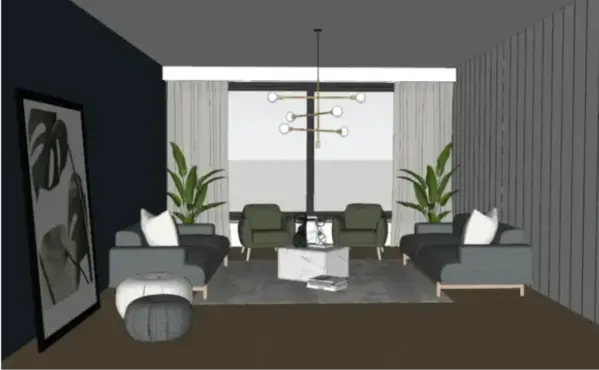
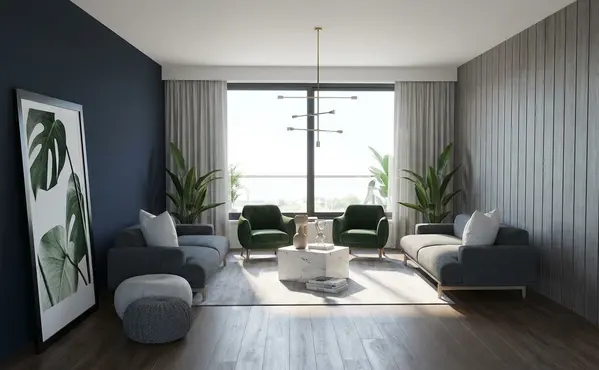


LightUp is a SketchUp extension for working with real-time lighting, daylight and insolation views, artificial lights, reflections, and walkthroughs without leaving the model. It suits architects, interior designers, lighting designers, and visualization teams who need to explore a lit space quickly, compare sun and sky conditions, or communicate how a scene will feel from a selected camera. Its useful output is often a composed SketchUp scene: an interior with daylight and fixtures, a facade assessed in context, a retail or exhibition display, or a product model placed against a backdrop.
Use RENDERCAD after LightUp has helped establish the view, rather than as a replacement for the lighting study. In LightUp, a designer can position artificial lights, work with sunlight or a backdrop, inspect a chosen moment in a walkthrough, and use daylight or insolation visualization to inform the design. When that work produces a camera angle that clearly communicates the layout, openings, lighting direction, material intent, and focal point, capture the clean lit viewport for RENDERCAD. The resulting visual can support a client presentation, concept board, option comparison, proposal, product image, or marketing-ready architectural still. This is particularly useful when the underlying SketchUp view is clear but needs a more refined visual language for a non-technical audience. RENDERCAD can enhance the presentation of the approved view, but it should not be used to validate lux, daylight, insolation, or fixture performance. Keep LightUp and the SketchUp model as the source of truth for those technical and design decisions.
Build and organize the scene in SketchUp, then use LightUp to settle the camera, sun or sky condition, visible fixtures, and the lighting mood that needs to be communicated. For daylight or insolation work, review the relevant LightUp view before switching back to a presentation-oriented scene. Hide guides, selection outlines, analysis color overlays, and temporary geometry unless an overlay is itself the point of the image. Capture a clean, well-framed lit viewport and use it as the RENDERCAD input. Briefly describe the intended material character, atmosphere, and audience while preserving the geometry, camera direction, and major lighting cues from the source. Generate a polished still for a review deck, design comparison, product presentation, or marketing image. Return to LightUp for model edits, walkthroughs, and any lighting or environmental analysis; RENDERCAD output is a presentation asset, not a substitute for those calculations.
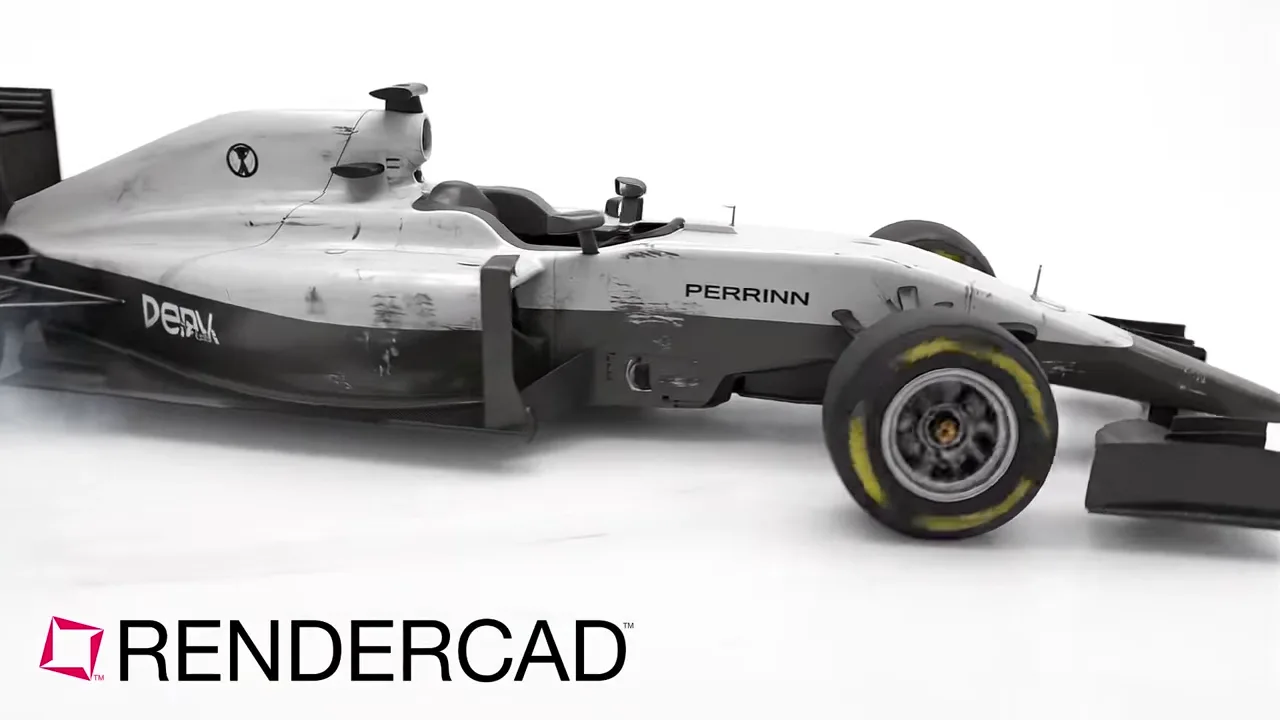
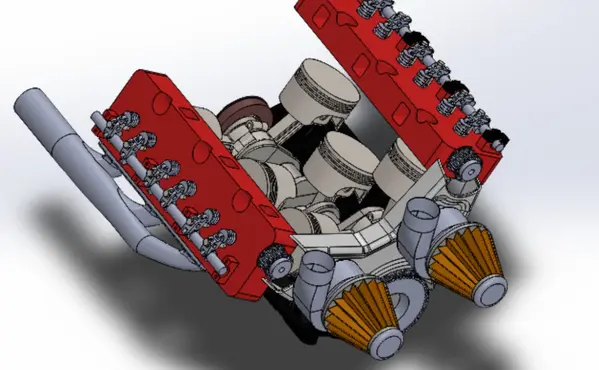
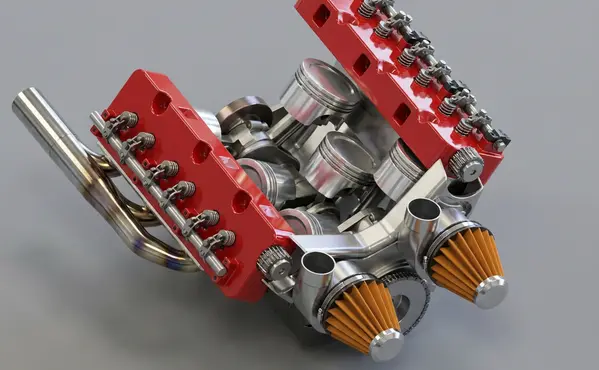
Modeled by CADSharp in Onshape. Rendered with RENDERCAD.
Add | Change | or Remove referenced objects with the stroke of a brush.
RENDERCAD uses a maintained selection of image-generation models for different rendering tasks. Results can vary by model and input, so compare generated output with the source design before relying on geometry, materials, or dimensions.
| Feature | RENDERCAD | Competitor |
|---|---|---|
| Engine | Generative AI | Varies by tool |
| Output | Images + Video | Varies by tool |
| Resolution | HD / 4K | Varies by workflow |
| Image Speed | Image renders complete in 60 seconds. | Varies by scene/tool |
| Video Speed | Videos complete in 2-5 minutes. | Varies by workflow |
| Scene Set Up | No separate local scene | Varies by workflow |
| Input | Screen Snip | Varies by tool |
| Hardware | Cloud GPU | Often local GPU/CPU |
| Install | None | Varies (web or app) |
| Cost | from $9/mo | Varies widely |
Read the numbers. We trust you to know theirs.
Skip a separate local scene build. Pick a condition, material, and background while RENDERCAD handles the image-generation step. Image renders complete in 60 seconds.
 ™
RENDERCAD™
™
RENDERCAD™
Use the browser workflow directly, capture a selected view with the desktop app, or start from the browser extension.
Get StartedCommon solutions for LightUp users
The current desktop app or browser extension can capture a selected view and send the screenshot into RENDERCAD without a CAD rendering plugin.
Yes, if you are authorized to use them. Catalog images can guide a visual direction, but generated quality and product fidelity vary.
Masking lets you target a region of a CAD screenshot, real photo, or hand drawing with a reference image or instruction. Generation can still affect other regions, so inspect the full result.
A reference can communicate palette, material, lighting, or composition more directly than text alone. Generated results still require review and may need additional iterations.
Use a clear capture, choose the Factory New condition, and describe the intended plastic type, color, and finish. Review the generated surface because gloss, texture, and molded details can vary.
Upload a clear image, choose the Realistic engine, and describe a large soft light source or overcast lighting. Generated shadows are visual approximations, not a physical lighting calculation.
Videos complete in 2-5 minutes.
No local NVIDIA rendering GPU is required. Use a supported browser to upload an image or a current capture tool to select a screenshot; generation runs on cloud infrastructure.
The Render History page lets you browse and download retained images and videos. Storage duration depends on the account plan, so download assets you need before they expire.
RENDERCAD is standalone. You don't need a LightUp rendering license - just the ability to view your model on screen.
The core workflow starts from a selected 2D view, so it does not require native CAD-file conversion or source-model upload.
Reuse a clear history image and change the color instruction or reference. Treat the results as visual options rather than color-managed proof.