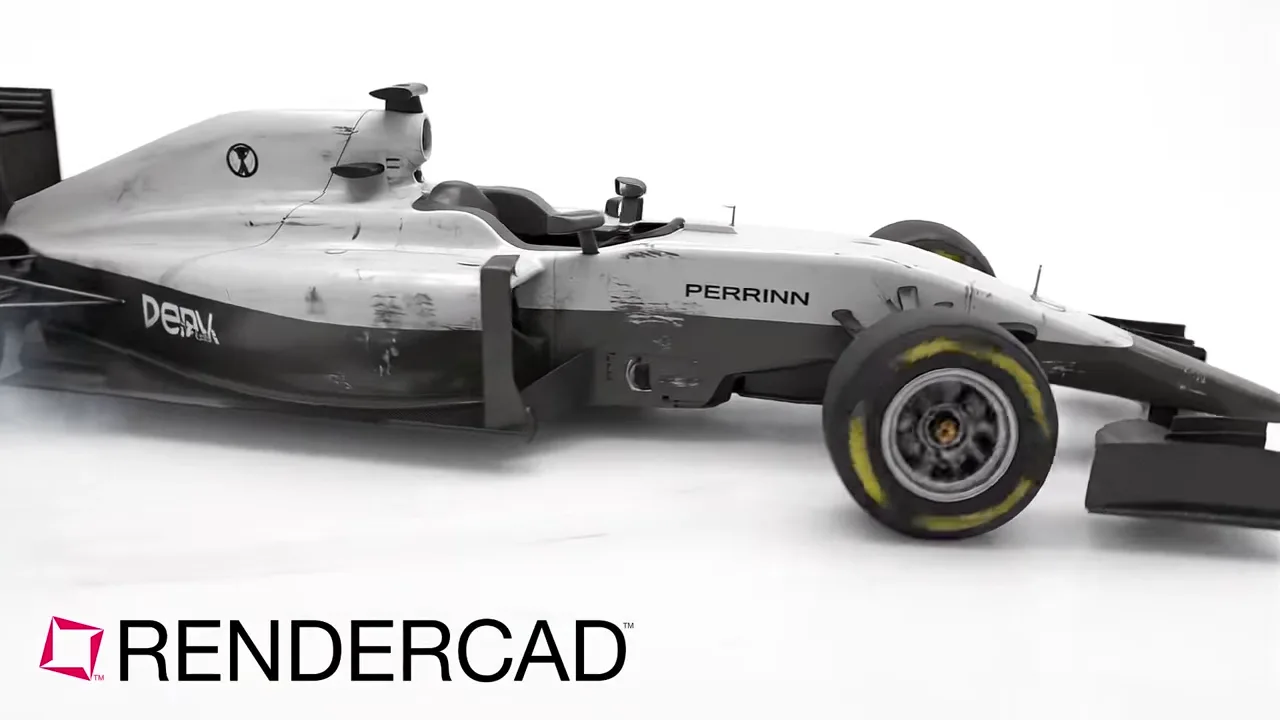
Turn focused DraftSight DWG and 3D views into design presentation visuals.
Dassault DraftSight is DWG-based CAD software for creating, editing, viewing, and marking up professional drawings, with 2D drafting and 3D design capabilities. Its drawing views can carry both precise documentation and a clear visual explanation of an object, assembly, or built detail. RENDERCAD helps develop selected DraftSight views into presentation-focused stills while the DWG remains the authoritative design record.


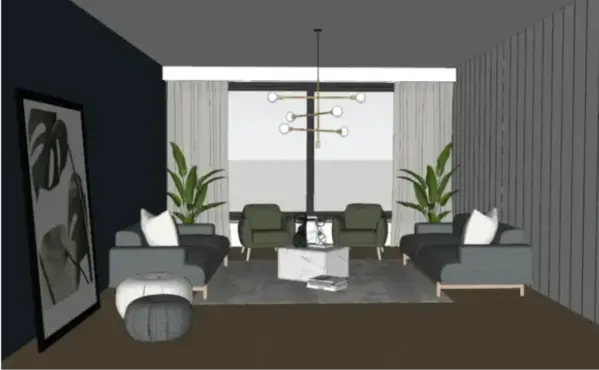
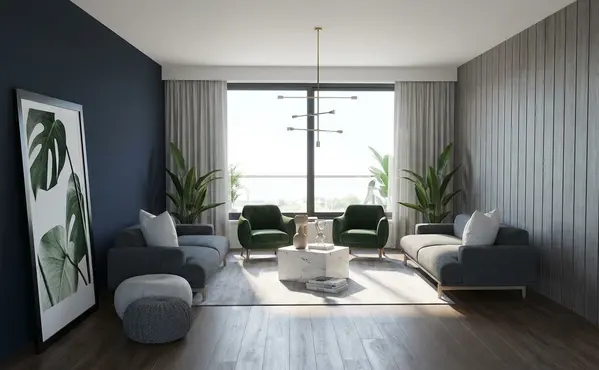
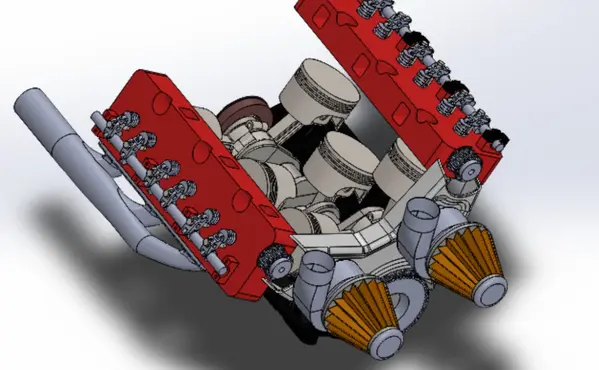


Dassault DraftSight is DWG-based CAD software for creating, editing, viewing, and marking up professional drawings, with 2D drafting and 3D design capabilities. Its drawing views can carry both precise documentation and a clear visual explanation of an object, assembly, or built detail. RENDERCAD helps develop selected DraftSight views into presentation-focused stills while the DWG remains the authoritative design record.
Dassault DraftSight is well suited to teams working from DWG drawings that need to create, revise, review, and mark up technical information. For visualization, the strongest starting point is not a crowded sheet: it is a composed perspective or isometric 3D view, a clean elevation, or a focused detail that already makes the intended form easy to read. That can be useful for a fabricated part, enclosure, fixture, product concept, room feature, facade element, or another design where stakeholders need a more immediate impression than linework alone provides. RENDERCAD can develop that selected view with a material direction, lighting, background, and setting for a proposal, design review, sales discussion, or concept board. It is also useful when comparing visual directions without changing the underlying drawing. The generated image is an interpretive presentation asset, not a verified CAD output. DraftSight remains the source of truth for DWG geometry, dimensions, annotations, layers, and documented design intent.
In DraftSight, isolate the drawing area that answers the presentation question. Choose a perspective or isometric view when depth and form matter, or use a clean elevation or detail when the design depends on a finish, profile, opening, or component arrangement. Set the view, visual style, and crop deliberately, then hide dimensions, revision clouds, dense notes, construction layers, and unrelated blocks. DraftSight can save the current drawing view to raster image formats, so export or capture a clean, readable image at a size appropriate for the intended review. Upload that view to RENDERCAD with a specific brief such as powder-coated metal under soft studio light, a timber detail in a daylight interior, or a building component in a restrained streetscape. Review the resulting stills alongside the original DWG, select the direction that supports the discussion, and return to DraftSight for any actual geometry or documentation changes. Do not use a generated image to confirm measurements, clearances, tolerances, or construction requirements.
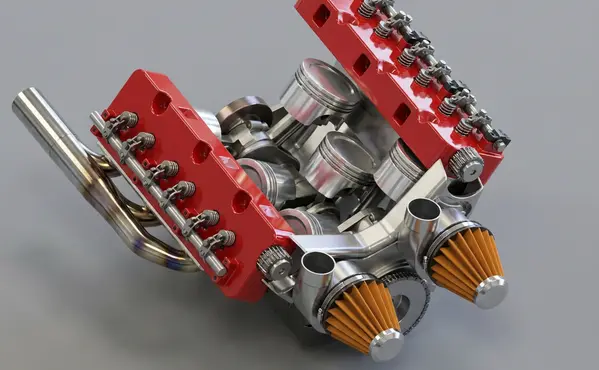
Modeled by CADSharp in Onshape. Rendered with RENDERCAD.
Add | Change | or Remove referenced objects with the stroke of a brush.
RENDERCAD uses a maintained selection of image-generation models for different rendering tasks. Results can vary by model and input, so compare generated output with the source design before relying on geometry, materials, or dimensions.
| Feature | RENDERCAD | Competitor |
|---|---|---|
| Engine | Generative AI | Varies by tool |
| Output | Images + Video | Varies by tool |
| Resolution | HD / 4K | Varies by workflow |
| Image Speed | Image renders complete in 60 seconds. | Varies by scene/tool |
| Video Speed | Videos complete in 2-5 minutes. | Varies by workflow |
| Scene Set Up | No separate local scene | Varies by workflow |
| Input | Screen Snip | Varies by tool |
| Hardware | Cloud GPU | Often local GPU/CPU |
| Install | None | Varies (web or app) |
| Cost | from $9/mo | Varies widely |
Read the numbers. We trust you to know theirs.
Skip a separate local scene build. Pick a condition, material, and background while RENDERCAD handles the image-generation step. Image renders complete in 60 seconds.
 ™
RENDERCAD™
™
RENDERCAD™
Use the browser workflow directly, capture a selected view with the desktop app, or start from the browser extension.
Get StartedCommon solutions for Dassault DraftSight users
Use the Realistic engine with a clear input, a specific material description, and a suitable background or reference. Results vary, so review the output against the source product.
Generation runs on cloud infrastructure, so a local rendering GPU is not required. The laptop still needs a supported browser, network access, and enough resources for the source application and image upload.
The core workflow is available in a supported browser and accepts a selected 2D image, so it does not require a rendering plugin in the source application.
The model can reinterpret curves and surface transitions from the 2D input. Compare the result with the source because edges and geometry can drift.
It accepts a clear viewport screenshot, so a separate local material, light, and camera scene is not required for the image-generation workflow.
It lets you describe motion, steam, lighting changes, or atmosphere for a generated clip. Added details may not exist in the source model.
Yes. An authorized location photo can guide a background option. Verify scale, placement, perspective, and site conditions before using the generated image.
Yes. Use a mask to target the background separately from the foreground product. Review both regions because generation can still alter unmasked content.
Yes, if the license permits this use. A stock image can guide a background or environment, while placement and lighting remain generated interpretations.
Upload a clear image or use a current capture tool, describe carbon fiber, and add an authorized material reference when a specific visual direction matters. Image renders complete in 60 seconds.
Choose a suitable background and describe a reflective floor. Inspect the generated reflection for alignment, product fidelity, and unintended details.
Choose the Seamless loop end-frame option to guide the clip toward a looping transition. Review the exported loop because continuity can vary by model and source image.