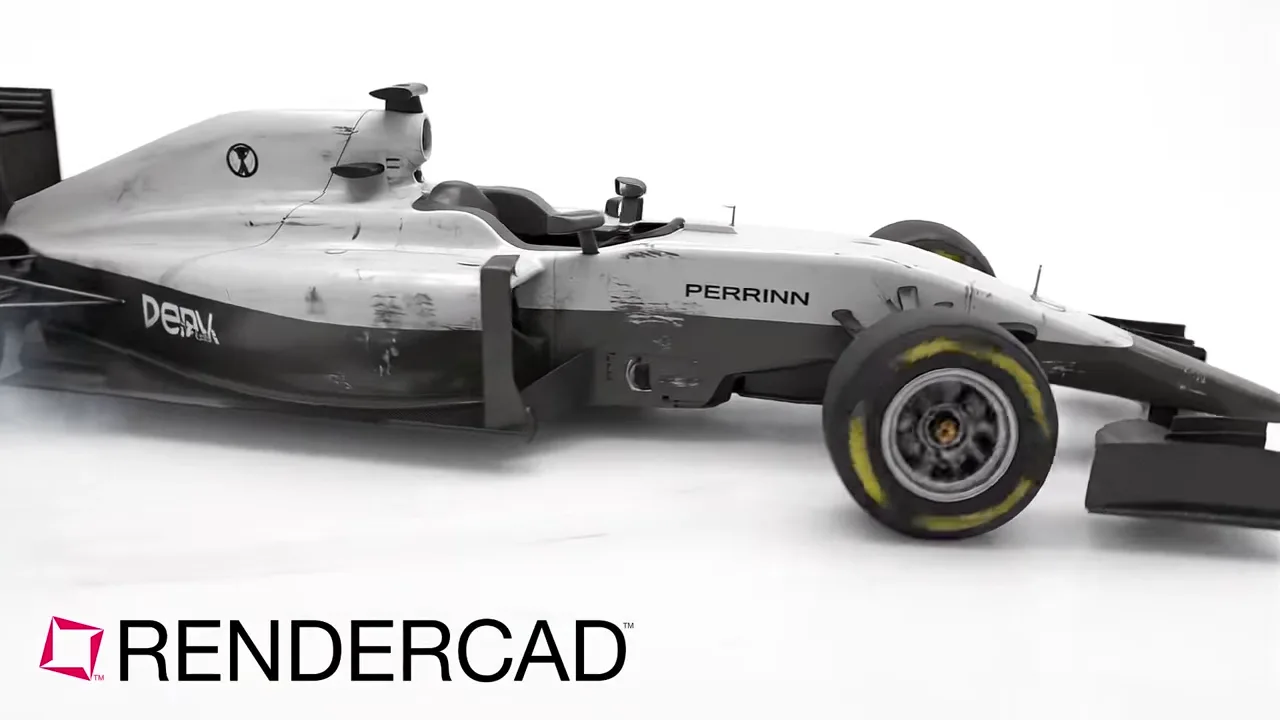
MoI develops editable NURBS geometry; RENDERCAD develops a presentation image from a flat raster and written direction. The shared videos and images are general RENDERCAD media, including an Onshape sample modeled by CADSharp. None depicts MoI, a MoI viewport, or MoI output.
FROM MODEL VIEW TO PRESENTATION IMAGE


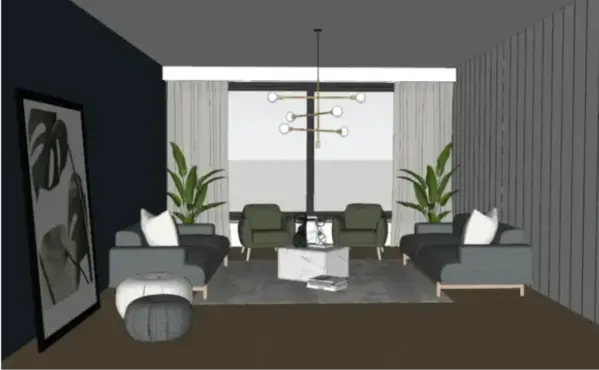
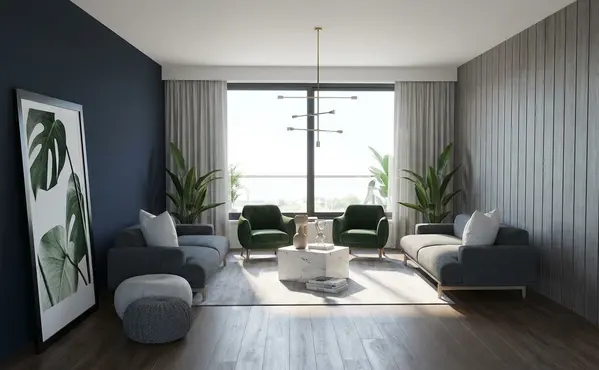
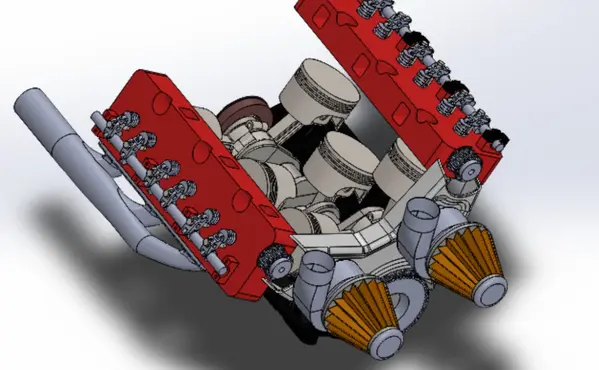
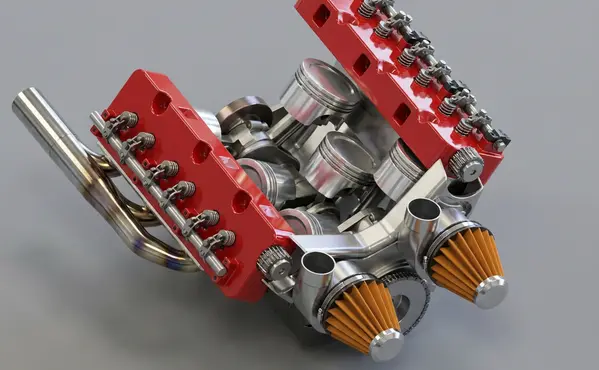


MoI (Moment of Inspiration) is Triple Squid Software Design's desktop NURBS modeler for building smooth product, industrial, and semi-mechanical forms from curves, surfaces, and solids. Its profile-driven tools include booleans and fillets, with CAD, mesh, and drawing export paths.
Choose MoI when the work must remain editable as curves, trimmed surfaces, or solids. It supports controlled form development, precise revisions, CAD exchange, drawing output, and polygon conversion. Choose RENDERCAD when the immediate deliverable is a presentation treatment of one selected view.
Prepare the handoff in MoI: choose a perspective or orthographic view, simplify the screen, and preserve crisp boundaries. A raster guides appearance, but cannot communicate edits back into the model.
Keep the 3DM project beside every generated result. Judge presentation choices in the image, but return profile, dimension, topology, hidden-surface, mesh, or repeatable-view changes to MoI.
MoI reads and writes 3DM, IGES, STEP, and SAT for curve and surface exchange. It also writes several polygon and drawing formats. A dedicated import converts a suitably prepared coarse OBJ SubD control cage into NURBS surfaces; that is distinct from ordinary scene import.
Polygon export offers n-gons, quads and triangles, or triangles, with density, angle, welding, division, small-feature avoidance, and aspect-ratio controls. These settings govern downstream mesh structure; a screenshot retains none of them.
MoI's shaded viewport, styles, reference planes, lighting controls, hidden-line tools, and screenshots support review and image output. Realistic materials and lighting commonly move downstream; RENDERCAD instead interprets one chosen raster without scene data.
Frame a clean shaded perspective or orthographic view after resolving the form. Hide distracting construction curves, retain readable part boundaries, and check that the silhouette communicates the profile-driven surfaces, openings, booleans, and fillets that matter.
General RENDERCAD examples fill this gallery; CADSharp created the Onshape model in one sample. No asset shows MoI. The videos depict pixel-inferred movement, not a model-driven orbit through editable geometry.
Use marks to identify a finish, background area, seam, or reflection in the uploaded view, then describe the intended visual change. Those marks guide pixels in a generated image; they do not select or alter MoI objects.
Compare the result with the MoI view, checking seams, fillets, proportions, text, reflections, and hidden-detail assumptions. Generated output requires review because the raster does not carry editable geometry, dimensions, topology, back surfaces, or mesh controls.
| Feature | RENDERCAD | MoI (Moment of Inspiration) |
|---|---|---|
| Engine | Generative image models | Desktop NURBS curve, surface, and solid modeling with shaded viewport display |
| Output | Presentation images and optional image-led video | 3DM, IGES, STEP, SAT; OBJ, STL, 3DS, LWO, FBX, SKP meshes; PDF, AI, DXF drawings |
| Resolution | Pro requests 1K or 4K; Classic resolution varies by provider. | Viewport, screenshot, hidden-line drawing, and mesh settings determine output detail |
| Image Speed | Depends on the selected model, request, and queue | Viewport response and export time depend on model complexity, display, and mesh settings |
| Video Speed | Optional motion inferred from an image | Official v4 workflow and documentation do not present MoI as an animation package |
| Scene Set Up | One flat source image plus written direction | Curves, profiles, surfaces, solids, booleans, fillets, styles, and chosen views |
| Input | Supported raster upload or captured viewport | 3DM, IGES, STEP, SAT; AI, PDF, DXF curves; dedicated coarse OBJ SubD cage conversion |
| Materials | Prompted visual treatment, not source style or shader data | Colored styles for organization and some downstream assignments, not PBR shader design |
| Backgrounds | Prompted or reference-led presentation setting | Viewport background color and placed reference-image planes; realistic environments are downstream work |
| Conditions | Prompted lighting, atmosphere, or weather treatment | Shaded viewport lighting and display controls; realistic lighting is commonly completed downstream |
| References | Optional raster references in supported workflows | Placed image planes can be aligned, scaled, rotated, embedded, and shown by view |
| Hardware | Compatible browser and network; no dedicated local render GPU | 64-bit Windows 7, 8, 10, or 11; Mac OS X 10.8+ |
| Install | Web app with optional capture tools | Local MoI v4 installation using the supplied Windows or Mac installer |
| Cost | Paid plans start at $9 per month | $295 full v4 purchase; $100 upgrade from an earlier license; 90-day trial |
Use the table to decide whether the next task needs MoI's editable NURBS data, controlled polygon conversion, and drawings, or RENDERCAD's flat-image presentation output. The deliverable, not a general ranking, determines the practical choice.
First prepare and save the correct model view in MoI. Then upload a supported raster to RENDERCAD and give written direction for the presentation. Keep the MoI file beside the result so visual experiments never displace the editable design.
 ™
RENDERCAD™
™
RENDERCAD™
Upload through a compatible browser, or capture a selected view with the optional desktop app or browser extension. This is a screen-to-image handoff, not a MoI plugin, native scene connection, or geometry-transfer integration.
Get StartedPractical MoI and RENDERCAD workflow distinctions
Choose MoI for creating or revising curves, surfaces, solids, dimensions, fillets, booleans, drawings, or export meshes. Choose RENDERCAD when you already have a readable model view and want to examine a separate presentation image rather than edit the underlying design.
Use a clean shaded perspective or orthographic view with a deliberate crop, legible silhouette, and clear part boundaries. Hide unrelated curves and interface clutter. Pick the camera that best exposes the material, setting, or communication decision you want to explore.
Only the visible pixels and their composition reach the image workflow. Editable NURBS geometry, dimensions, topology, object structure, hidden sides, styles, and polygon-meshing settings remain in MoI, so return there for every technical or geometric correction.
MoI styles provide colored organization and can carry some material assignments into downstream formats, but they are not a PBR shader-design system. RENDERCAD can interpret a requested finish visually; verify the result rather than assuming exact shader values or behavior.
Yes. MoI provides a shaded viewport, lighting controls, screenshots, reference images, and hidden-line or drawing mechanisms. For high-quality realistic materials and lighting, its official workflow commonly hands geometry to downstream tools. RENDERCAD is another image-presentation path, not MoI's only output route.
Establish each camera and visible configuration in MoI, then retain the model and captures as the comparison set. Because each generated raster can vary, review repeated features, finishes, proportions, text, and part boundaries across every view before using them together.
No. Optional image-led video infers motion from the supplied pixels; it does not receive MoI geometry, hidden surfaces, dimensions, topology, or camera paths. Treat it as a presentation experiment, not a model-driven orbit or an animation exported from MoI.
MoI v4 is a $295 desktop purchase, with a $100 upgrade and 90-day trial, and it uses local Windows or Mac hardware. RENDERCAD needs a compatible browser and network, starts at $9 monthly, and completion depends on the model, request, and queue.
What RENDERCAD customers say