Polished material studies from Substance Designer 3D View captures.
Adobe Substance 3D Designer is a node-based application for authoring procedural textures, materials, patterns, filters, and related visual assets. Its graph workflow keeps connected material outputs adjustable, while 3D View lets artists inspect the combined PBR material on a mesh under an environment.


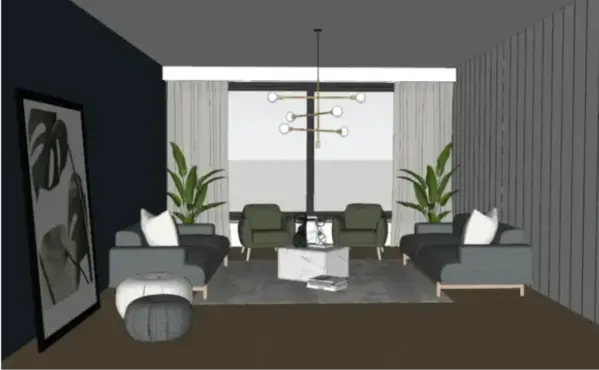
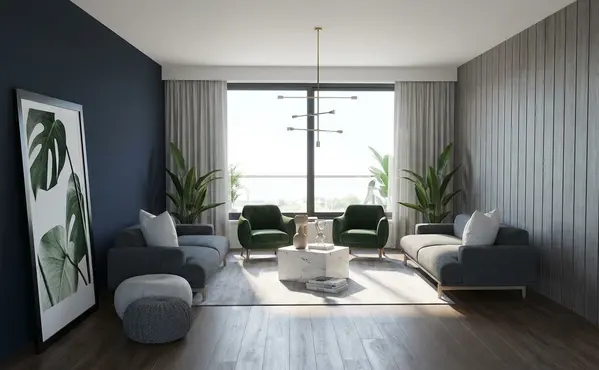


Adobe Substance 3D Designer is a node-based application for authoring procedural textures, materials, patterns, filters, and related visual assets. Its graph workflow keeps connected material outputs adjustable, while 3D View lets artists inspect the combined PBR material on a mesh under an environment.
Substance 3D Designer artists build materials by connecting procedural patterns, noises, bitmap operations, and filters into graphs whose outputs can drive a full surface. The 3D View is a useful checkpoint because it applies the graph outputs to a mesh, making it easier to judge whether base color, roughness, normal detail, height, metallic response, and repeating motifs work together. A clean 3D View capture is a strong input for RENDERCAD when the material needs a more deliberate review or presentation still. Choose a mesh and camera angle that reveal the intended scale, seams, edge breakup, relief, and light response, then use RENDERCAD to explore a polished material study for an art-direction review, portfolio, asset page, or concept board. It is especially helpful when one still needs to communicate the character of a wood, fabric, ceramic, coated metal, stone, or other procedural surface without showing the node graph.
Complete the graph in Designer first, then view the combined outputs in 3D View on a custom mesh or material sample that makes scale and surface change legible. Adjust the camera and environment until highlights show roughness, normal and height detail without obscuring the pattern. Capture one uncluttered viewport image that shows the material as the reviewer should evaluate it, rather than a node selected for debugging. Send that image to RENDERCAD to develop a polished still for lookdev feedback, an asset presentation, a portfolio draft, or a product concept board. Keep Designer as the source of truth for graph edits, channel values, material behavior, texture-map exports, and parametric asset delivery. A RENDERCAD image is a presentation aid, not a replacement for validating maps, tiling, UV behavior, or physically based material output in the target 3D workflow. For automated submission guidance, see the developer documentation.
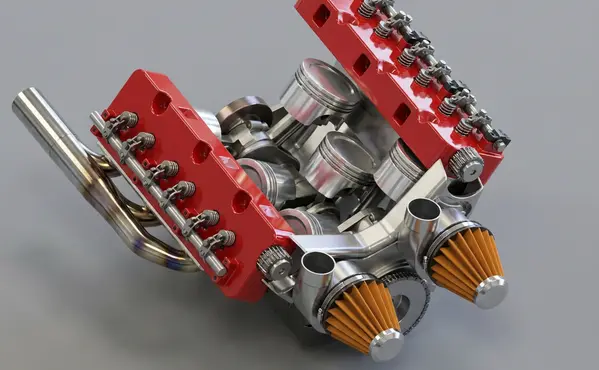
Modeled by CADSharp in Onshape. Rendered with RENDERCAD.
Add | Change | or Remove referenced objects with the stroke of a brush.
RENDERCAD uses a maintained selection of image-generation models for different rendering tasks. Results can vary by model and input, so compare generated output with the source design before relying on geometry, materials, or dimensions.
| Feature | RENDERCAD | Competitor |
|---|---|---|
| Engine | Generative AI | Varies by tool |
| Output | Images + Video | Varies by tool |
| Resolution | HD / 4K | Varies by workflow |
| Image Speed | Image renders complete in 60 seconds. | Varies by scene/tool |
| Video Speed | Videos complete in 2-5 minutes. | Varies by workflow |
| Scene Set Up | No separate local scene | Varies by workflow |
| Input | Screen Snip | Varies by tool |
| Hardware | Cloud GPU | Often local GPU/CPU |
| Install | None | Varies (web or app) |
| Cost | from $9/mo | Varies widely |
Read the numbers. We trust you to know theirs.
Skip a separate local scene build. Pick a condition, material, and background while RENDERCAD handles the image-generation step. Image renders complete in 60 seconds.
 ™
RENDERCAD™
™
RENDERCAD™
Use the browser workflow directly, capture a selected view with the desktop app, or start from the browser extension.
Get StartedCommon solutions for Substance Designer users
The screenshot workflow uses image inputs, presets, and plain-language direction. Teams should still review generated output with the appropriate designer or product owner.
Use a condition preset or regional instruction to explore dust, scratches, or age. Generated wear patterns do not predict real product use.
A supported browser can submit a clear 2D input without a local rendering GPU.
The current desktop app or browser extension can capture a selected view and send the screenshot into RENDERCAD without a CAD rendering plugin.
Yes, if you are authorized to use the photo. It can guide the environment, while placement, lighting, and shadows remain generated interpretations.
Mask individual components and assign color prompts or authorized references. Verify brand color in a color-managed workflow rather than relying on generated accuracy.
Yes, when you are authorized to use them. A generated concept can guide the visual direction of a later render, but product fidelity and style consistency still require review.
While RENDERCAD generates full rectangular images, you can set the Background to "White" or "Grey" in Advanced Settings for easy masking in post-production.
Upload a clear image, choose the Realistic engine, and describe a large soft light source or overcast lighting. Generated shadows are visual approximations, not a physical lighting calculation.
Yes, use the "Details" field in the video tab to describe elements like "Steam rising" or "Lights flickering."
No local NVIDIA rendering GPU is required. Use a supported browser to upload an image or a current capture tool to select a screenshot; generation runs on cloud infrastructure.
The Render History page lets you browse and download retained images and videos. Storage duration depends on the account plan, so download assets you need before they expire.