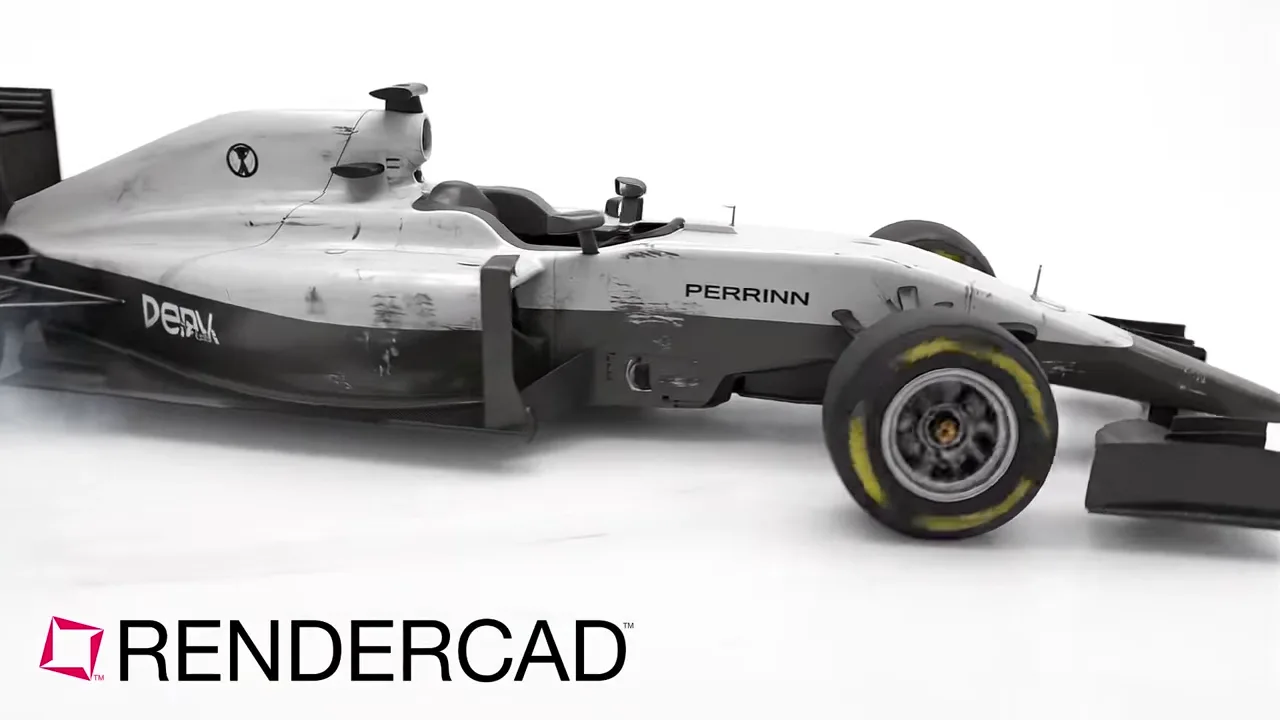
Explore presentation directions from SU Podium and SketchUp scenes.
SU Podium is a SketchUp rendering extension used to turn prepared architectural and design scenes into still images or equirectangular panoramas. Its workflow centers on the SketchUp camera, modeled geometry, materials, environment settings, lights, image format, and render preset. It is useful when a designer needs a straightforward rendered view of an interior, exterior, landscape, or product-in-context scene without leaving the SketchUp modeling workflow.


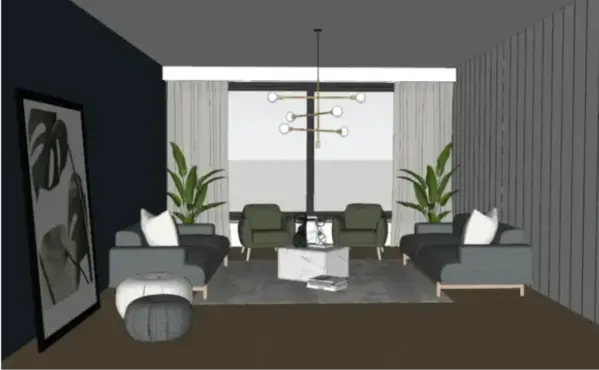
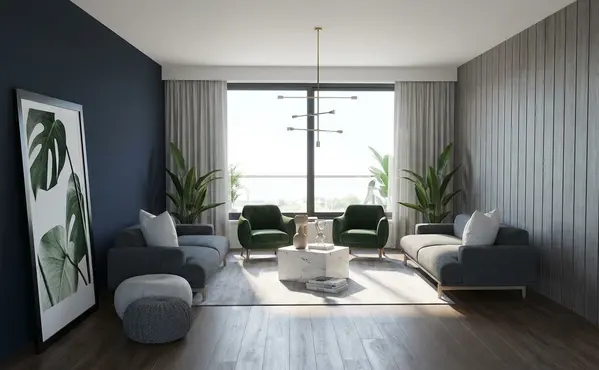


SU Podium is a SketchUp rendering extension used to turn prepared architectural and design scenes into still images or equirectangular panoramas. Its workflow centers on the SketchUp camera, modeled geometry, materials, environment settings, lights, image format, and render preset. It is useful when a designer needs a straightforward rendered view of an interior, exterior, landscape, or product-in-context scene without leaving the SketchUp modeling workflow.
SU Podium users commonly prepare a saved SketchUp scene and then refine materials, natural or image-based lighting, Podium lights, resolution, and a render preset for a client-facing still or panorama. RENDERCAD can extend that workflow after the key camera and spatial layout are approved. Start with a clean SketchUp viewport capture for early concept work, or a draft Podium render when the image already communicates the intended light and material hierarchy. Use it to explore a restrained set of presentation directions, such as warmer interior finishes, a different furnishing character, exterior planting density, weather and atmosphere, or an editorial background treatment. This is especially useful for comparing options before investing more time in a high-quality local render. Keep the SketchUp model, dimensions, and Podium setup as the source of truth for architecture, product placement, material specifications, and lighting decisions that require controlled accuracy. RENDERCAD should support visual exploration and presentation, not replace the model or validate construction detail.
In SketchUp, choose the saved scene and camera that will anchor the presentation. Hide guides, selection outlines, section clutter, and incomplete objects, while preserving clear material boundaries, glazing, landscaping, lighting intent, and scale cues. Set a suitable aspect ratio before capturing the viewport, or make a low-resolution Podium draft to confirm the composition. Bring that image into RENDERCAD with a focused direction for the finish, mood, context, or styling you want to test. Compare the resulting visual directions with the underlying SketchUp view, then return to SketchUp and SU Podium to make model changes and produce the controlled final still or panorama. For repeatable automated workflows, consult RENDERCAD developer documentation.
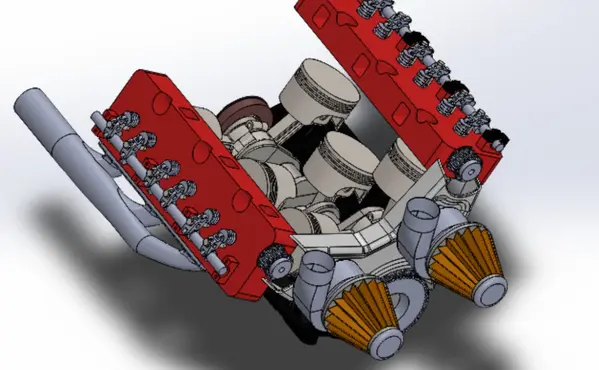
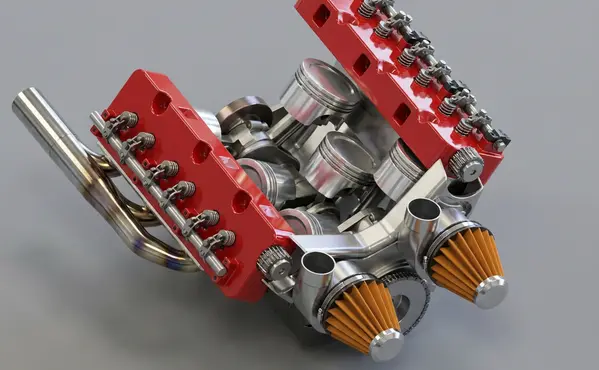
Modeled by CADSharp in Onshape. Rendered with RENDERCAD.
Add | Change | or Remove referenced objects with the stroke of a brush.
RENDERCAD uses a maintained selection of image-generation models for different rendering tasks. Results can vary by model and input, so compare generated output with the source design before relying on geometry, materials, or dimensions.
| Feature | RENDERCAD | SU Podium for SketchUp |
|---|---|---|
| Engine | Generative AI | Biased raytracing workflow with calibrated presets, material controls, environment settings, and SketchUp-based lighting |
| Output | Images + Video | Rendered still images in JPG, PNG, or HDR formats, plus equirectangular panorama output |
| Resolution | HD / 4K | Viewport, preset, and custom image dimensions are available; practical output depends on scene complexity and workstation resources |
| Image Speed | Image renders complete in 60 seconds. | Varies with scene geometry, materials, lights, preset, image size, and workstation performance |
| Video Speed | Videos complete in 2-5 minutes. | Focused on still-image and panorama output; it is not a dedicated animation rendering workflow |
| Scene Set Up | No separate local scene | A SketchUp model and saved view prepared with materials, sun or sky settings, Podium lights, render preset, image format, and output dimensions |
| Input | Screen Snip | SketchUp models and scene views processed through the SU Podium extension |
| Hardware | Cloud GPU | SketchUp desktop extension for supported Windows and Mac versions |
| Install | None | Install the SketchUp extension, then activate a license for full-use rendering |
| Cost | from $9/mo | Commercial licensing is offered, with terms subject to change |
Read the numbers. We trust you to know theirs.
Skip a separate local scene build. Pick a condition, material, and background while RENDERCAD handles the image-generation step. Image renders complete in 60 seconds.
 ™
RENDERCAD™
™
RENDERCAD™
Use the browser workflow directly, capture a selected view with the desktop app, or start from the browser extension.
Get StartedCommon solutions for SU Podium users
Generating images or videos consumes credits. Your balance refreshes monthly based on your subscription plan.
Prompt "1950s appliance style, retro photography."
RENDERCAD can place a clear viewport capture into a described lifestyle environment, such as a kitchen or office, and produce options for review.
The screenshot workflow uses image inputs, presets, and plain-language direction. Teams should still review generated output with the appropriate designer or product owner.
Use a condition preset or regional instruction to explore dust, scratches, or age. Generated wear patterns do not predict real product use.
A supported browser can submit a clear 2D input without a local rendering GPU.
The current desktop app or browser extension can capture a selected view and send the screenshot into RENDERCAD without a CAD rendering plugin.
Yes. You can add up to six authorized reference images per render and provide instructions or masks for targeted direction.
Yes. Mask each region and assign an authorized texture reference or instruction. Review material boundaries, scale, and product fidelity after generation.
Set up masks for each customizable component. Swap material references for each masked region to quickly visualize different product configurations.
Capture a clear view, select the Realistic engine, choose the Factory New condition, and describe brushed aluminum. A material reference can guide grain direction, but review the generated surface against the source design.
Upload a clear image, choose the Realistic engine, and describe a large soft light source or overcast lighting. Generated shadows are visual approximations, not a physical lighting calculation.