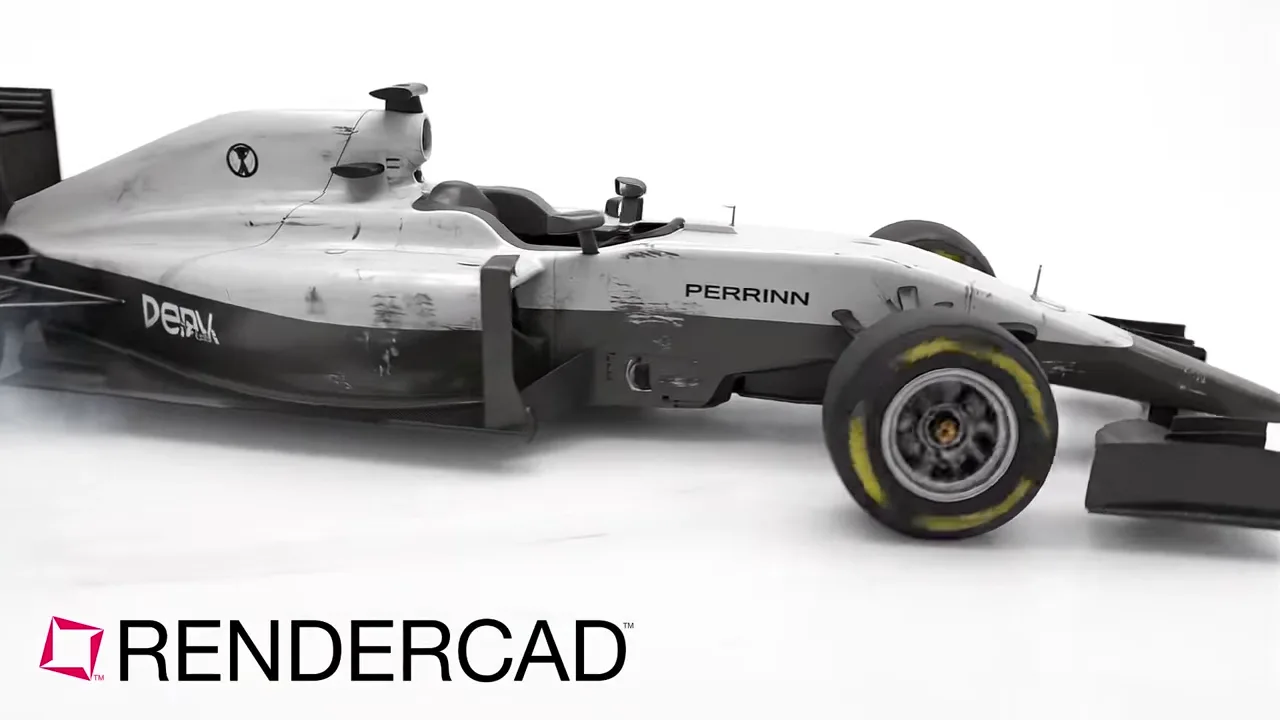
Present SpaceClaim Engineer repair and geometry-prep views with clear, polished visuals.
SpaceClaim Engineer is a direct-modeling workspace for editing, repairing, and preparing CAD geometry for engineering analysis and manufacturing tasks. Its useful visual milestones are often not finished products: they are a repaired imported part, a de-featured assembly, a fluid-volume extraction, a reverse-engineered shape, or an STL prepared for printing. RENDERCAD helps turn those clear but utilitarian viewport views into presentation-ready images while keeping SpaceClaim as the source of truth for the geometry.


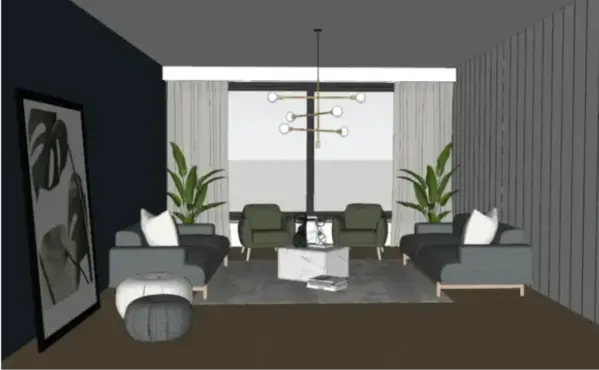
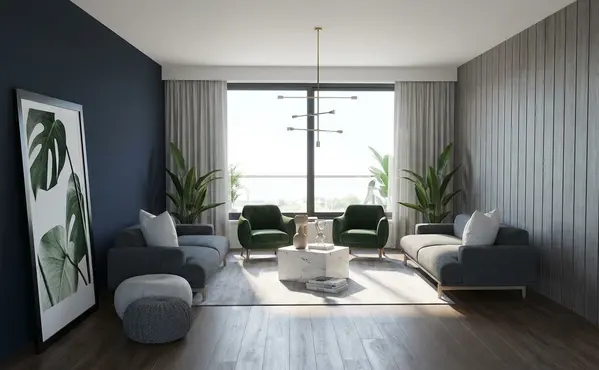
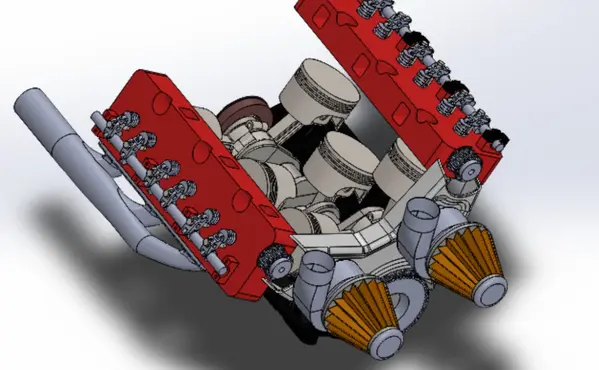


SpaceClaim Engineer is a direct-modeling workspace for editing, repairing, and preparing CAD geometry for engineering analysis and manufacturing tasks. Its useful visual milestones are often not finished products: they are a repaired imported part, a de-featured assembly, a fluid-volume extraction, a reverse-engineered shape, or an STL prepared for printing. RENDERCAD helps turn those clear but utilitarian viewport views into presentation-ready images while keeping SpaceClaim as the source of truth for the geometry.
SpaceClaim Engineer is well suited to direct edits and geometry preparation before downstream engineering work. Once imported CAD has been repaired, small details removed, or complex faces simplified, a carefully chosen viewport can explain the engineering decision much faster than an unframed model window. RENDERCAD can develop that source view into a polished still for a design review, technical report, concept proposal, manufacturing discussion, or customer update. Useful subjects include a cleaned enclosure, a fixture concept, a sectioned flow path, a reverse-engineered component, an analysis-ready assembly, or a print-ready faceted part. Preserve meaningful body colors, section cuts, and the relationship between bodies so the resulting image still communicates the preparation work. RENDERCAD is for visual communication, not validation: use the SpaceClaim model and the connected engineering workflow for dimensions, topology, named selections, parameters, and analysis decisions.
In SpaceClaim Engineer, finish the repair, simplification, direct edit, or extraction first and isolate the bodies that support the message. For an analysis-prep view, show the de-featured region or fluid domain; for a manufacturing or reverse-engineering discussion, frame the repaired surfaces, fixture relationship, or prepared mesh. Hide construction clutter and irrelevant bodies, keep any face colors or section cut that carry meaning, and choose a camera angle that makes the geometry relationship legible. Capture a clean viewport, then use RENDERCAD to add restrained materials, lighting, shadows, and an appropriate background for the intended audience. Export the finished visual for a review deck, report, proposal, or product story. Return to SpaceClaim for any geometry or engineering change; the render should describe the approved model rather than replace it. For repeat screenshot-to-render workflows, see RENDERCAD developer documentation for current implementation guidance.
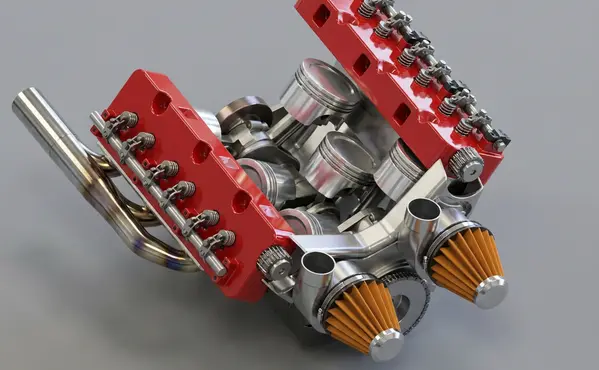
Modeled by CADSharp in Onshape. Rendered with RENDERCAD.
Add | Change | or Remove referenced objects with the stroke of a brush.
RENDERCAD uses a maintained selection of image-generation models for different rendering tasks. Results can vary by model and input, so compare generated output with the source design before relying on geometry, materials, or dimensions.
| Feature | RENDERCAD | SpaceClaim Engineer viewport workflow |
|---|---|---|
| Engine | Generative AI | Desktop direct-modeling workspace for creating, editing, repairing, and preparing geometry |
| Output | Images + Video | Interactive model views, screenshots, prepared geometry, and files for downstream engineering workflows |
| Resolution | HD / 4K | Varies with the viewport, screenshot, and export settings used |
| Image Speed | Image renders complete in 60 seconds. | Model viewing is interactive; presentation-quality imagery requires capture and additional visual treatment |
| Video Speed | Videos complete in 2-5 minutes. | Not a primary SpaceClaim Engineer output; animation depends on a separate visualization workflow |
| Scene Set Up | No separate local scene | Repair or simplify the model, isolate the relevant bodies, preserve helpful colors or section cuts, and frame the geometry before capture |
| Input | Screen Snip | SpaceClaim .scdoc files, imported CAD geometry, faceted meshes, STL data, and assemblies |
| Hardware | Cloud GPU | Ansys desktop modeling environment |
| Install | None | Requires installation and access through an eligible Ansys license |
| Cost | from $9/mo | Availability and licensing depend on the Ansys product configuration and account |
Read the numbers. We trust you to know theirs.
Skip a separate local scene build. Pick a condition, material, and background while RENDERCAD handles the image-generation step. Image renders complete in 60 seconds.
 ™
RENDERCAD™
™
RENDERCAD™
Use the browser workflow directly, capture a selected view with the desktop app, or start from the browser extension.
Get StartedCommon solutions for SpaceClaim Engineer users
Add a familiar scale cue such as a person, hand, or furniture item, then verify the generated relationship against known dimensions in the source model.
The core workflow starts from a selected 2D view, so it does not require native CAD-file conversion or source-model upload.
Reuse a clear history image and change the color instruction or reference. Treat the results as visual options rather than color-managed proof.
Describe the finish, gloss, grain direction, and lighting, or provide an authorized material reference. Generated reflections are visual approximations rather than physically verified material behavior.
It uses generative image models with screenshot or image inputs. Models and features can change over time, so current product documentation is the source of truth.
Video jobs consume credits based on current duration and model settings. Check the pricing page for current costs rather than comparing with an assumed outsourcing price.
Use an authorized product photo or brand asset as a color reference. Verify final color in a color-managed workflow because generated imagery does not guarantee exact color reproduction.
Image references and masks are applied during the initial image render. Once you have your styled image, use the Image-to-Video feature to animate it with camera movements.
Reuse the same source image with authorized daytime and night lighting references or instructions. Compare both outputs with the source because lighting changes can also alter generated details.
Upload a CAD screenshot, real photo, or hand drawing and describe condensation or water droplets in the custom prompt. Generated placement and appearance vary, so iterate or mask a region when needed.
Add phrases like "Light from left," "Backlit," or "Top down lighting" to your custom prompt in RENDERCAD.
Choose the Orbit camera preset in the Video panel. Review the generated clip because viewpoint changes and product details can vary from a single-image input.