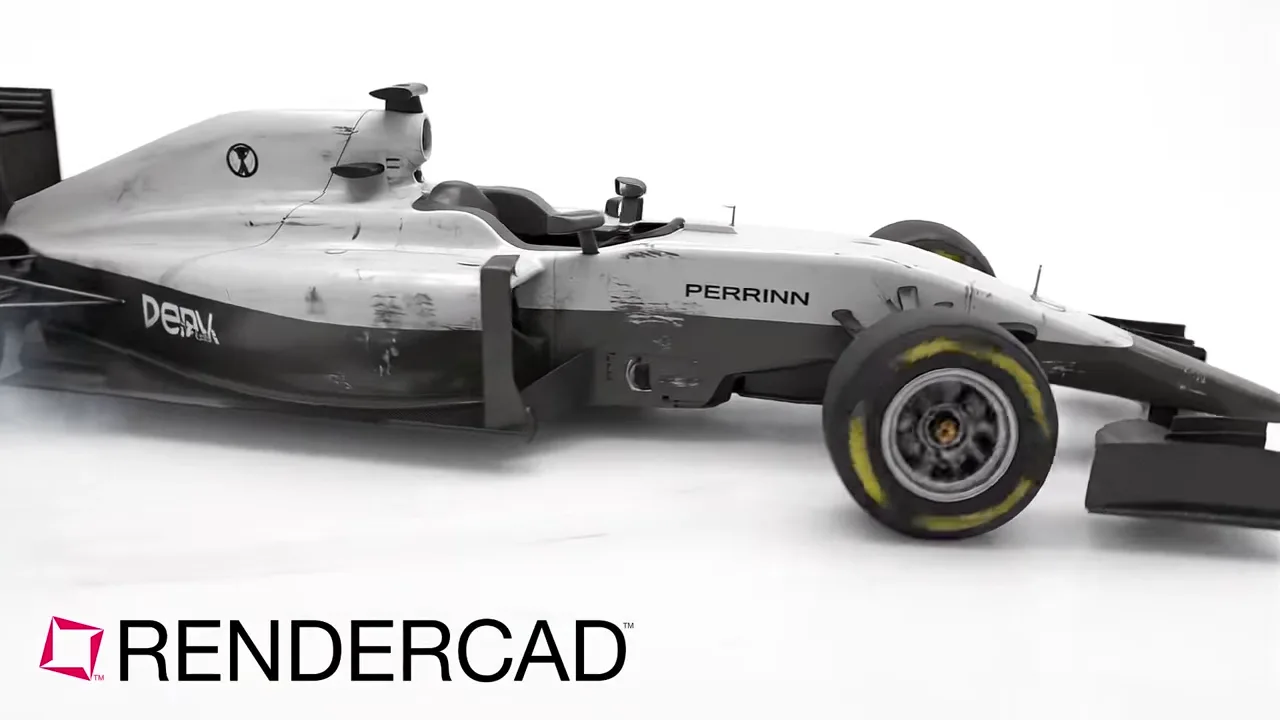
Clear visuals for Solid Edge pipe, tube, cable, and harness routing assemblies.
Create clear, presentation-ready visuals from Solid Edge pipe, tube, and electrical routing assembly views without losing the mechanical context that makes a route understandable.


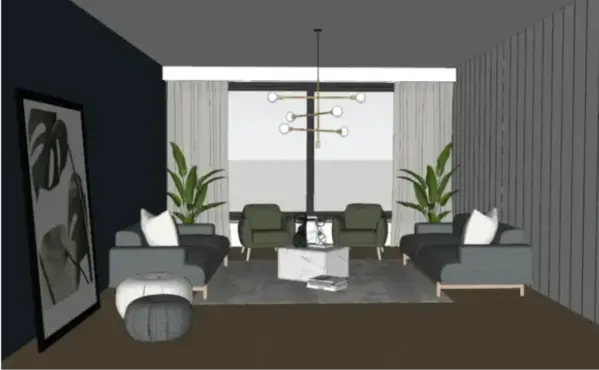

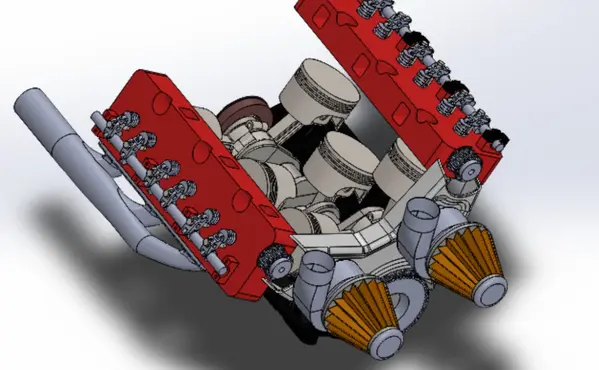
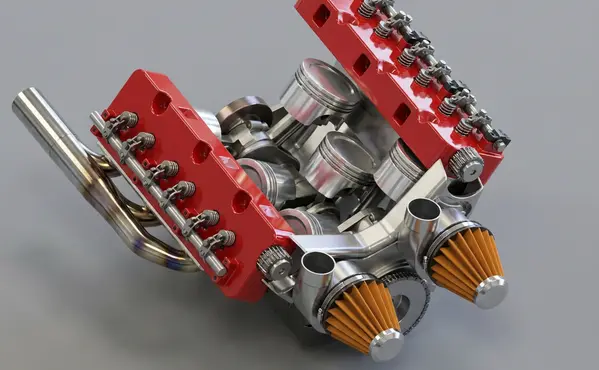


Create clear, presentation-ready visuals from Solid Edge pipe, tube, and electrical routing assembly views without losing the mechanical context that makes a route understandable.
Solid Edge Routing is used to develop routed systems in the context of a mechanical assembly. XpresRoute users define associative 3D paths for pipes and tubes, then populate the path with components such as fittings and end treatments. Electrical Routing users organize wires, cables, and bundles between assigned components, where connector locations, branch points, and the surrounding enclosure or equipment all affect whether the harness is easy to understand. A route can be technically correct yet difficult to explain in a flat shaded viewport.
RENDERCAD fits the visual handoff after the engineering view is established. Start with a view that shows the run from its connection points through the relevant equipment, rather than an isolated route with no packaging context. A polished visual can help a non-CAD reviewer understand access, routing intent, physical separation, product finish, or installation context in a design review, proposal, service guide, product brief, or stakeholder presentation. It is particularly useful when the route needs to remain legible against brackets, panels, housings, and adjacent assemblies.
The RENDERCAD image is a communication asset, not the routing authority. Keep the Solid Edge assembly, routing data, drawings, manufacturing reports, and electrical design data as the source of truth for lengths, connectivity, bend limits, clearances, and build decisions.
In Solid Edge, prepare an assembly viewport before capturing it for RENDERCAD. For a pipe or tube route, show the path with its bends, fittings, end treatments, supports, and the ports or equipment it connects. Include enough nearby structure to communicate clearance and access, but hide unrelated internals that obscure the run. For an electrical route, show the harness path, bundle branches, connectors, and the enclosure, panel, or packaging surfaces that establish its mechanical context.
Choose a camera angle that reveals both endpoints and the sections where the route changes direction, passes through a constrained area, or meets a serviceable component. Hide sketches, dimensions, selection highlights, construction geometry, and temporary diagnostics. Capture the clean viewport, create a RENDERCAD visual, and review it alongside the Solid Edge model. Use the finished image in presentation material, installation-oriented communication, service content, or a product overview, while retaining formal drawings and routing records for engineering validation. For repeatable image workflows, see RENDERCAD developer documentation.
Modeled by CADSharp in Onshape. Rendered with RENDERCAD.
Add | Change | or Remove referenced objects with the stroke of a brush.
RENDERCAD uses a maintained selection of image-generation models for different rendering tasks. Results can vary by model and input, so compare generated output with the source design before relying on geometry, materials, or dimensions.
| Feature | RENDERCAD | Competitor |
|---|---|---|
| Engine | Generative AI | Varies by tool |
| Output | Images + Video | Varies by tool |
| Resolution | HD / 4K | Varies by workflow |
| Image Speed | Image renders complete in 60 seconds. | Varies by scene/tool |
| Video Speed | Videos complete in 2-5 minutes. | Varies by workflow |
| Scene Set Up | No separate local scene | Varies by workflow |
| Input | Screen Snip | Varies by tool |
| Hardware | Cloud GPU | Often local GPU/CPU |
| Install | None | Varies (web or app) |
| Cost | from $9/mo | Varies widely |
Read the numbers. We trust you to know theirs.
Skip a separate local scene build. Pick a condition, material, and background while RENDERCAD handles the image-generation step. Image renders complete in 60 seconds.
 ™
RENDERCAD™
™
RENDERCAD™
Use the browser workflow directly, capture a selected view with the desktop app, or start from the browser extension.
Get StartedCommon solutions for Solid Edge Routing users
Yes, if you are authorized to use it. A reference guides visual direction but does not guarantee style replication or geometry preservation.
Yes. Mask the region that needs adjustment and provide a focused instruction. RENDERCAD generates a new image, so inspect both the targeted region and the rest of the output for drift.
Yes. Mask a region, then assign a specific reference image just to that masked area. Other areas can have different references or default to the prompt.
Describe the intended anodized color and matte or satin finish, then review the generated metal appearance against an authorized material reference when color and finish matter.
Choose a suitable background and describe a reflective floor. Inspect the generated reflection for alignment, product fidelity, and unintended details.
Choose the Orbit camera preset in the Video panel. Review the generated clip because viewpoint changes and product details can vary from a single-image input.
If the source viewport is visible but a local renderer fails, capture a clear screenshot and use it as a RENDERCAD input. Image renders complete in 60 seconds.
Yes. Upload a photo of a foam model and prompt "Finished plastic product" to visualize the final look.
Prompt "1950s appliance style, retro photography."
Image renders complete in 60 seconds.
Generation runs on cloud infrastructure, so a local rendering GPU is not required. The device still needs sufficient resources for the source application, browser, and network connection.
Context prompts can provide a visual scale cue, but the source model and known dimensions remain authoritative. Do not infer measurements from generated imagery.