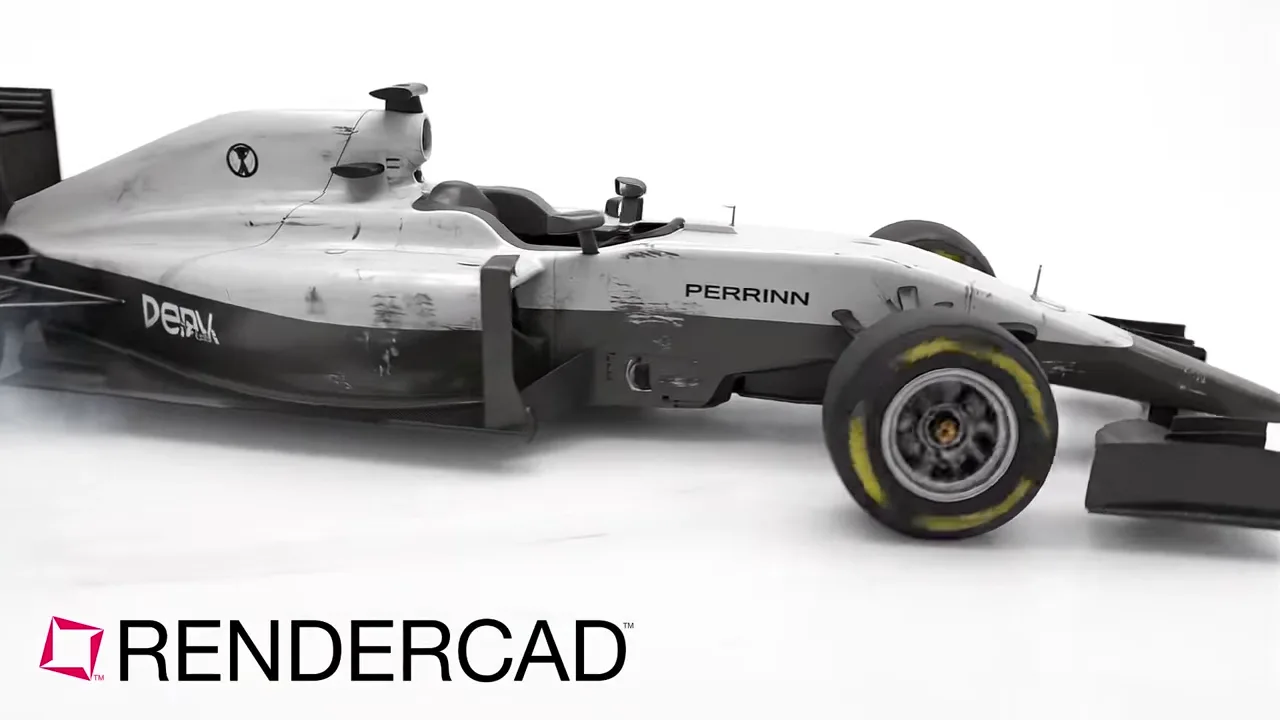
Explore presentation direction from Kerkythea scene views.
Kerkythea is a standalone renderer for imported 3D scenes, with a real-time GL viewer for staging plus integrated material and render-setting controls. It suits designers who need to turn architectural, interior, landscape, or product models into considered still images. A clean Kerkythea camera view can also be a useful visual reference for exploring early presentation direction before the controlled render scene is finalized.


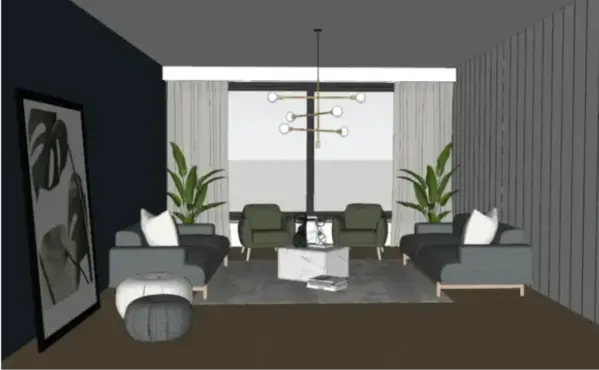
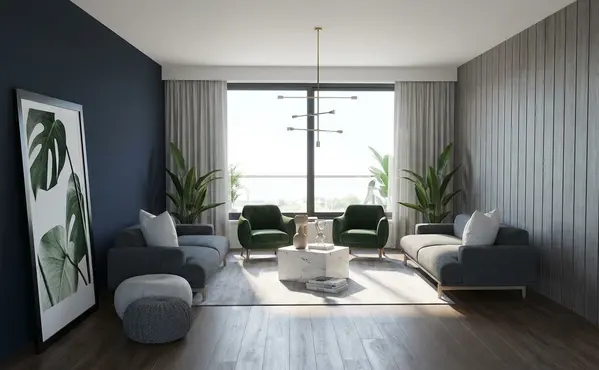


Kerkythea is a standalone renderer for imported 3D scenes, with a real-time GL viewer for staging plus integrated material and render-setting controls. It suits designers who need to turn architectural, interior, landscape, or product models into considered still images. A clean Kerkythea camera view can also be a useful visual reference for exploring early presentation direction before the controlled render scene is finalized.
Kerkythea is used after a 3D model has been prepared in another modeling application and brought into a renderer scene. Its GL viewer supports visual staging of the imported scene, including the camera and lights, while its material editor and render settings are used to develop the final image. This makes it relevant to architects, interior designers, landscape designers, and product visualizers who are working from a model but still need to decide how the image should feel.
Use RENDERCAD with a clean Kerkythea viewport or early render that already has the intended camera, main forms, openings, and surface hierarchy. It can help compare a calm daylight interior, a more dramatic exterior, a material-forward product image, or a presentation mood for a design review while holding the underlying composition steady. Treat the resulting concept as a creative brief for the next scene pass, not as proof of physical lighting or exact material behavior. The source model, geometry, camera, material assignments, lights, and final render settings remain the source of truth in the modeling application and Kerkythea.
Import or open the prepared 3D scene in Kerkythea, then use the GL viewer to settle a readable camera and place the important forms in frame. Check that the view clearly communicates the room, facade, landscape area, or product silhouette. Before capture, remove selection marks, gizmos, guides, and other interface clutter so the composition is easy to interpret.
Upload that clean view to RENDERCAD and explore a small set of deliberate directions: daylight character, material emphasis, surrounding context, furnishing mood, or a more editorial product presentation. Compare the concepts with the design team and identify the camera, atmosphere, and surface cues worth carrying forward. Return to Kerkythea to make those decisions reproducible through its scene staging, materials, lights, and render settings, then create the final controlled output. For API implementation details, visit RENDERCAD developer documentation.
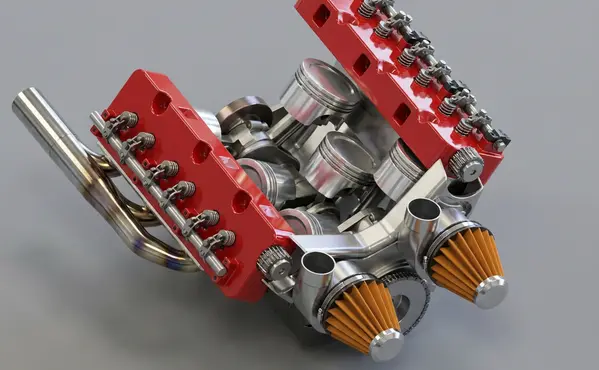
Modeled by CADSharp in Onshape. Rendered with RENDERCAD.
Add | Change | or Remove referenced objects with the stroke of a brush.
RENDERCAD uses a maintained selection of image-generation models for different rendering tasks. Results can vary by model and input, so compare generated output with the source design before relying on geometry, materials, or dimensions.
| Feature | RENDERCAD | Competitor |
|---|---|---|
| Engine | Generative AI | Varies by tool |
| Output | Images + Video | Varies by tool |
| Resolution | HD / 4K | Varies by workflow |
| Image Speed | Image renders complete in 60 seconds. | Varies by scene/tool |
| Video Speed | Videos complete in 2-5 minutes. | Varies by workflow |
| Scene Set Up | No separate local scene | Varies by workflow |
| Input | Screen Snip | Varies by tool |
| Hardware | Cloud GPU | Often local GPU/CPU |
| Install | None | Varies (web or app) |
| Cost | from $9/mo | Varies widely |
Read the numbers. We trust you to know theirs.
Skip a separate local scene build. Pick a condition, material, and background while RENDERCAD handles the image-generation step. Image renders complete in 60 seconds.
 ™
RENDERCAD™
™
RENDERCAD™
Use the browser workflow directly, capture a selected view with the desktop app, or start from the browser extension.
Get StartedCommon solutions for Kerkythea users
The current desktop app or browser extension can capture a selected view and send the screenshot into RENDERCAD without a CAD rendering plugin.
A relevant reference can communicate palette, material, lighting, or composition more directly than text alone. Add a concise instruction and review the result rather than assuming the reference will be followed exactly.
Yes. Draw a mask around the product and direct the background region separately. Inspect the full result because unmasked content can still drift during generation.
Set up masks for each customizable component. Swap material references for each masked region to quickly visualize different product configurations.
Capture a clear view and describe the intended glow color, brightness, and surrounding light spill. Review the generated image because bloom and illumination can vary.
Upload a clear image, choose the Realistic engine, and describe a large soft light source or overcast lighting. Generated shadows are visual approximations, not a physical lighting calculation.
Start from an image that clearly shows the existing separated components, then choose the Exploded View product motion. Review the clip against the source because generated motion can alter part boundaries or relationships.
No local NVIDIA rendering GPU is required. Use a supported browser to upload an image or a current capture tool to select a screenshot; generation runs on cloud infrastructure.
The Render History page lets you browse and download retained images and videos. Storage duration depends on the account plan, so download assets you need before they expire.
RENDERCAD is standalone. You don't need a Kerkythea rendering license - just the ability to view your model on screen.
The core workflow starts from a selected 2D view, so it does not require native CAD-file conversion or source-model upload.
Reuse a clear history image and change the color instruction or reference. Treat the results as visual options rather than color-managed proof.