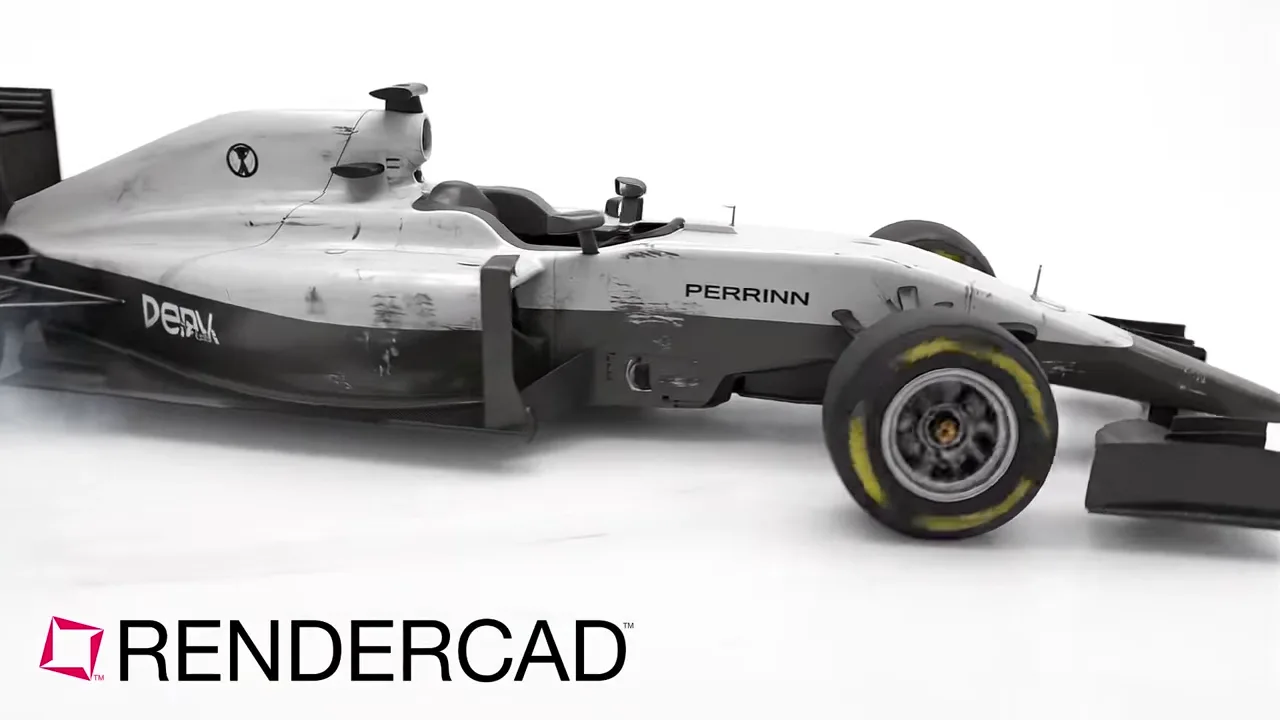
Turn Rhino Grasshopper design studies into clear render concepts.
Grasshopper is Rhino's graphical algorithm editor for building parametric and generative design definitions. Designers use connected components, referenced geometry, data, and adjustable inputs to generate and compare architectural systems, products, and spatial studies.


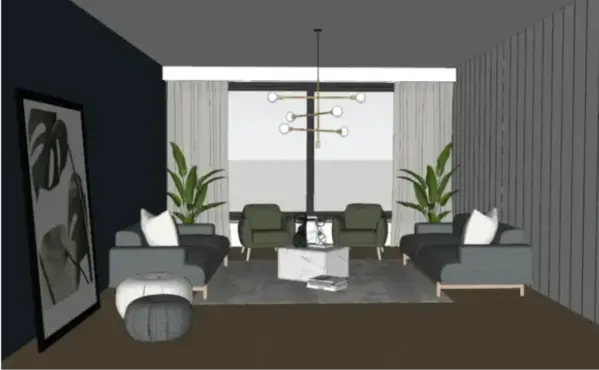
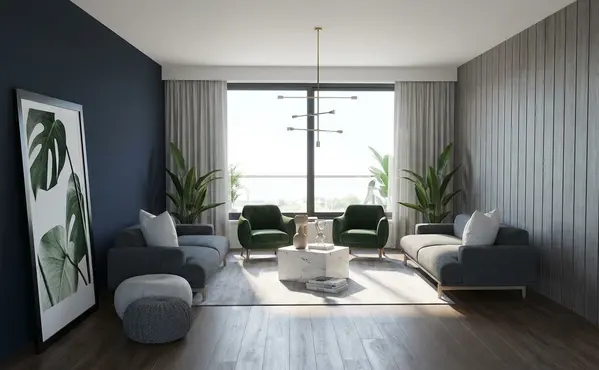


Grasshopper is Rhino's graphical algorithm editor for building parametric and generative design definitions. Designers use connected components, referenced geometry, data, and adjustable inputs to generate and compare architectural systems, products, and spatial studies.
Grasshopper is especially useful when a design is defined by relationships rather than a single fixed model: a facade responds to panel spacing, a canopy follows support points, a lattice changes density, or a product family shares rules across many sizes. Its Rhino viewport preview makes rapid option testing possible, but a working display can be less effective for explaining scale, material intent, or the difference between closely related parameter sets. RENDERCAD can turn a clean Rhino viewport capture of one solved Grasshopper option into a render concept for client reviews, design pinups, competition boards, early marketing imagery, or internal option comparisons.
Choose the view that best answers the design question. An overall perspective can show massing, circulation, and site relationship; an elevation or orthographic view can make a panel pattern, aperture rhythm, or structural grid easy to compare; a closer camera can communicate jointing, surface depth, furniture variation, or material direction. This workflow suits facade modules, panelized surfaces, pavilions, roofs, landscape systems, furniture, lighting objects, and configurable product studies. RENDERCAD can help communicate the selected output, but it does not validate the definition's logic, referenced inputs, dimensions, performance analysis, or buildability. Keep the Rhino model and Grasshopper definition as the editable source of truth.
Open the Rhino file and Grasshopper definition, set the sliders, referenced geometry, and inputs for the option under review, and allow the definition to solve. Use the Grasshopper preview or bake the chosen result into Rhino when object organization, display control, or Rhino materials make the view clearer. Hide helper curves, points, alternate previews, selection highlights, annotations, and interface clutter. Frame a perspective, elevation, or close detail that clearly shows the geometry and retain nearby context when it establishes scale. Capture that Rhino view and use RENDERCAD to explore lighting, material character, depth, landscape, or product context. For option reviews, keep the camera, crop, and prompt direction consistent across captures so the comparison remains about changes in spacing, curvature, density, proportion, or openings. Return to Grasshopper and Rhino for all geometry edits and technical checks.
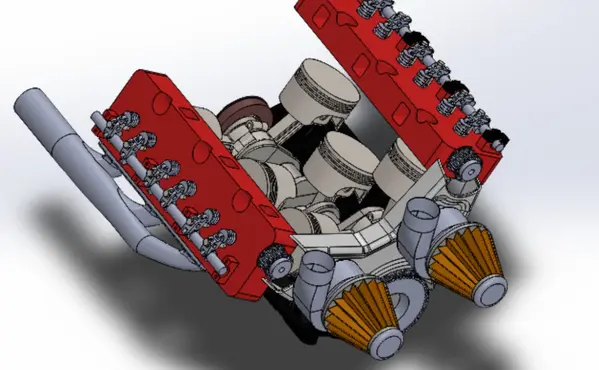
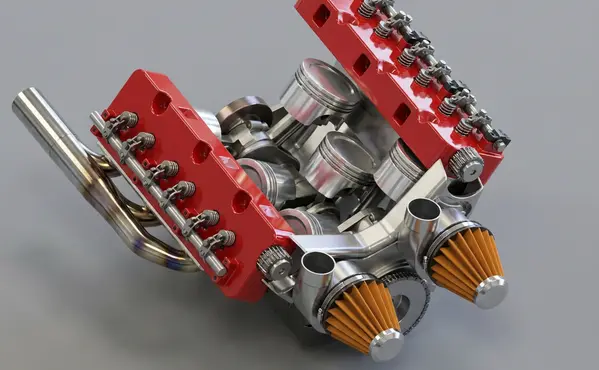
Modeled by CADSharp in Onshape. Rendered with RENDERCAD.
Add | Change | or Remove referenced objects with the stroke of a brush.
RENDERCAD uses a maintained selection of image-generation models for different rendering tasks. Results can vary by model and input, so compare generated output with the source design before relying on geometry, materials, or dimensions.
| Feature | RENDERCAD | Competitor |
|---|---|---|
| Engine | Generative AI | Varies by tool |
| Output | Images + Video | Varies by tool |
| Resolution | HD / 4K | Varies by workflow |
| Image Speed | Image renders complete in 60 seconds. | Varies by scene/tool |
| Video Speed | Videos complete in 2-5 minutes. | Varies by workflow |
| Scene Set Up | No separate local scene | Varies by workflow |
| Input | Screen Snip | Varies by tool |
| Hardware | Cloud GPU | Often local GPU/CPU |
| Install | None | Varies (web or app) |
| Cost | from $9/mo | Varies widely |
Read the numbers. We trust you to know theirs.
Skip a separate local scene build. Pick a condition, material, and background while RENDERCAD handles the image-generation step. Image renders complete in 60 seconds.
 ™
RENDERCAD™
™
RENDERCAD™
Use the browser workflow directly, capture a selected view with the desktop app, or start from the browser extension.
Get StartedCommon solutions for Grasshopper users
It guides the video toward a looping transition. Review continuity after export because the first and last frames may still need editing.
Yes, if you are authorized to use its contents. A mood board can guide palette, lighting, and atmosphere; generated interpretation varies.
Yes. Use a mask to target the background separately from the foreground product. Review both regions because generation can still alter unmasked content.
Share only reference images your team is authorized to use, together with the instructions and review criteria that produced a useful result. Reusing a reference can guide consistency but does not guarantee identical output.
Capture the model, describe the wood species and grain direction, and add an authorized material reference when needed. Generated grain varies and should be reviewed for scale and orientation.
Choose the Dusty condition and describe the intended atmosphere. Generated dust is illustrative, so review how it affects important product details.
Yes, use the "Details" field in the video tab to describe elements like "Steam rising" or "Lights flickering."
Use the RENDERCAD Overlay to capture a clear viewport without rebuilding a separate render scene. Image renders complete in 60 seconds.
Yes. A current desktop capture app and browser extension are available, and the browser upload workflow remains available without either tool.
RENDERCAD is standalone. You don't need a Grasshopper rendering license - just the ability to view your model on screen.
Generation runs on cloud infrastructure, so a local rendering GPU is not required. The laptop still needs a supported browser, network access, and enough resources for the source application and image upload.
The core workflow is available in a supported browser and accepts a selected 2D image, so it does not require a rendering plugin in the source application.