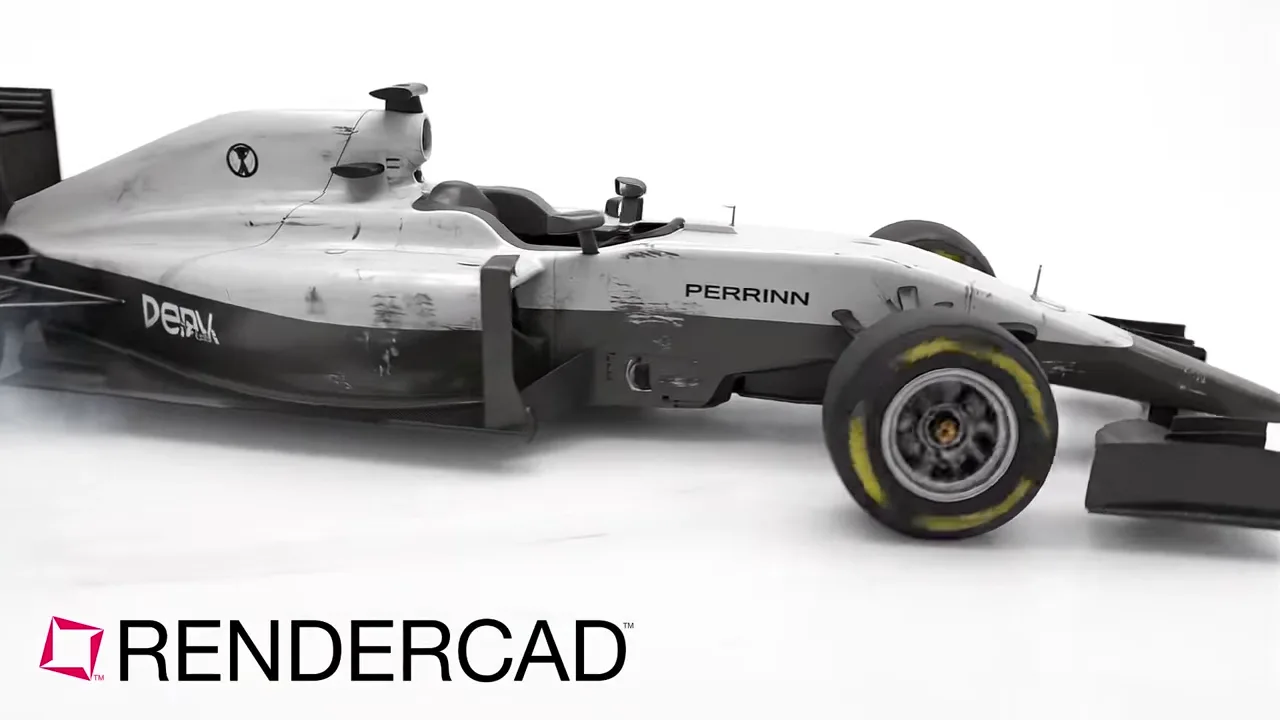
Polished product visuals from Creo Unite mixed-CAD assembly views.
Creo Unite supports multi-CAD work in Creo, letting engineering teams open and assemble supported non-Creo parts and assemblies alongside native Creo data. It is especially useful when a supplier assembly, purchased component, or legacy design needs to be understood in the context of the product being developed.


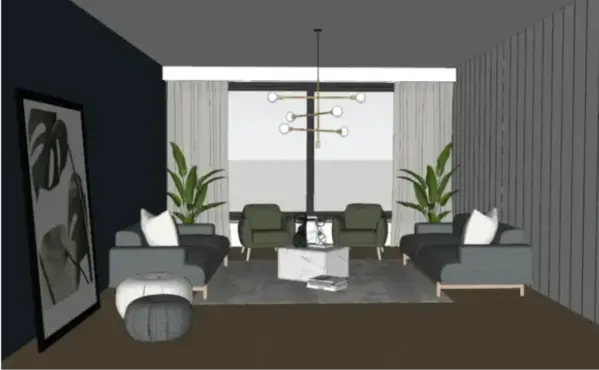

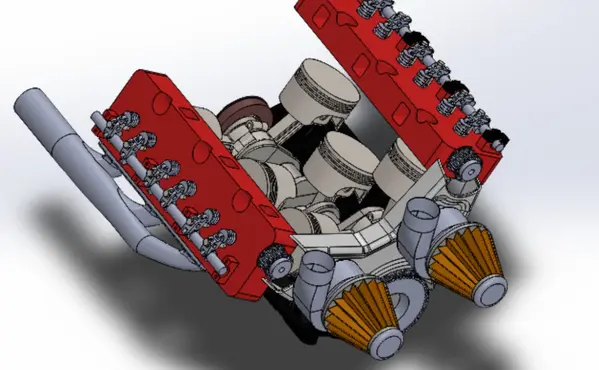
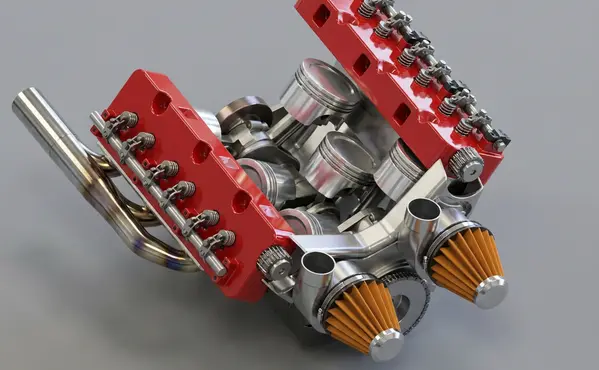


Creo Unite supports multi-CAD work in Creo, letting engineering teams open and assemble supported non-Creo parts and assemblies alongside native Creo data. It is especially useful when a supplier assembly, purchased component, or legacy design needs to be understood in the context of the product being developed.
Creo Unite gives product teams a practical way to work with supported non-Creo CAD data in a Creo assembly without rebuilding every supplied or legacy component. That makes a mixed-CAD viewport valuable when a design review needs to show how a purchased mechanism, supplier subassembly, or inherited part fits with the native product. Establish the meaningful engineering state in Creo first: choose the assembly configuration or simplified representation, position the mechanism, and use an exploded or section view only when it clarifies interfaces, clearances, or service access. RENDERCAD can then develop that clean viewport into a more polished visual for a review summary, proposal, launch presentation, supplier discussion, or product documentation. It is well suited to full-product hero images, isolated subsystem views, exploded arrangements, and context images that explain the relationship between components from different CAD sources. The refined image is a communication asset, not a replacement for the source CAD model, assembly constraints, dimensions, or engineering validation.
Open the mixed-CAD assembly in Creo and let the current design data determine the view. Set the intended configuration, simplified representation, display state, section, or exploded arrangement, then frame the camera around the product decision rather than the whole authoring interface. Isolate the components that need attention and keep enough surrounding geometry visible to explain mounting, enclosure, or assembly context. Capture a clean viewport with selections, dialogs, and transient markup removed. In RENDERCAD, direct the visual treatment toward credible materials, lighting, background, and emphasis while retaining the chosen geometry and composition. Use the finished render in presentation-oriented deliverables, while returning to Creo and the originating CAD data whenever an update, dimension, fit, or technical decision must be checked. For repeatable image workflows in a larger system, see RENDERCAD developer documentation.
Modeled by CADSharp in Onshape. Rendered with RENDERCAD.
Add | Change | or Remove referenced objects with the stroke of a brush.
RENDERCAD uses a maintained selection of image-generation models for different rendering tasks. Results can vary by model and input, so compare generated output with the source design before relying on geometry, materials, or dimensions.
| Feature | RENDERCAD | Competitor |
|---|---|---|
| Engine | Generative AI | Varies by tool |
| Output | Images + Video | Varies by tool |
| Resolution | HD / 4K | Varies by workflow |
| Image Speed | Image renders complete in 60 seconds. | Varies by scene/tool |
| Video Speed | Videos complete in 2-5 minutes. | Varies by workflow |
| Scene Set Up | No separate local scene | Varies by workflow |
| Input | Screen Snip | Varies by tool |
| Hardware | Cloud GPU | Often local GPU/CPU |
| Install | None | Varies (web or app) |
| Cost | from $9/mo | Varies widely |
Read the numbers. We trust you to know theirs.
Skip a separate local scene build. Pick a condition, material, and background while RENDERCAD handles the image-generation step. Image renders complete in 60 seconds.
 ™
RENDERCAD™
™
RENDERCAD™
Use the browser workflow directly, capture a selected view with the desktop app, or start from the browser extension.
Get StartedCommon solutions for Creo Unite users
Yes. Use authorized previous renders as style references, then review the new output because visual consistency can vary.
Capture a clear view, select the Realistic engine, choose the Factory New condition, and describe brushed aluminum. A material reference can guide grain direction, but review the generated surface against the source design.
Upload a CAD screenshot, real photo, or hand drawing and describe warm golden-hour light and the intended direction. Review the generated color and shadows because the interpretation can vary.
Yes. Choose the Dolly In or Dolly Out camera preset in the Video panel, then review the clip for product and geometry fidelity.
Yes. RENDERCAD's Render Studio works on Safari or Chrome on Mac, allowing you to turn CAD screenshots, real photos, and hand drawings into pro renders easily.
Generating images or videos consumes credits. Your balance refreshes monthly based on your subscription plan.
Upload your image or snip your wireframe view. In RENDERCAD, prompt "Technical Illustration" or "Blueprint style."
RENDERCAD can place a clear viewport capture into a described lifestyle environment, such as a kitchen or office, and produce options for review.
The screenshot workflow uses image inputs, presets, and plain-language direction. Teams should still review generated output with the appropriate designer or product owner.
Use a condition preset or regional instruction to explore dust, scratches, or age. Generated wear patterns do not predict real product use.
A supported browser can submit a clear 2D input without a local rendering GPU.
The current desktop app or browser extension can capture a selected view and send the screenshot into RENDERCAD without a CAD rendering plugin.