Turn Bentley cable routing and raceway views into clearer presentation renders.
Presentation rendering for Bentley 3D cable raceway, routing, trench, and duct bank views


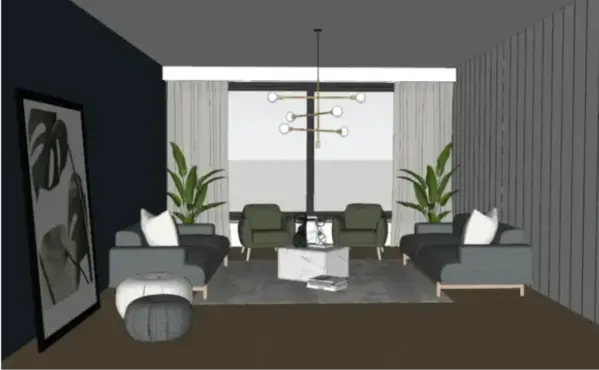
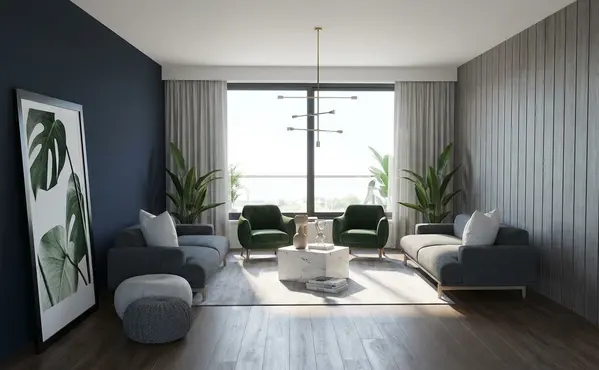


Presentation rendering for Bentley 3D cable raceway, routing, trench, and duct bank views
Bentley Raceway and Cable Management supports the layout of raceway systems, cable routing, and material estimating across conceptual, detailed, and construction-oriented design work. Its 3D views can bring cable trays, ladders, baskets, routed cables, equipment connections, trenches, and duct banks into one plant or facility context. That makes a carefully framed view useful when a project team needs to explain why a route changes level, how an equipment connection is reached, or where underground electrical systems pass beneath a site. RENDERCAD can develop a clean Bentley viewport capture into a more readable presentation image for design reviews, proposal visuals, owner updates, or multidisciplinary coordination conversations. It is especially useful for a congested rack, a multi-level electrical room, a cable approach to equipment, or a trench and duct bank crossing where depth and surrounding structure matter. The render should communicate the prepared model view, not reinterpret its engineering data. Bentley remains the source of truth for routing rules, raceway capacity and weight, cable information, material estimates, schedules, construction drawings, clearances, and engineering decisions.
In Bentley Raceway and Cable Management, isolate the scene that answers one visual question: a tray transition at equipment, several parallel raceways in a rack, a routed cable path through a plant area, or an underground trench and duct bank. Keep the relevant raceway geometry, visible cables, equipment, and nearby steel, walls, grade, or process equipment in view so the route has scale and location. Use a perspective that makes elevation changes and crossings legible. Hide dense labels, selection grips, temporary construction items, and unrelated systems, while retaining model colors that distinguish the key elements. Capture the 3D viewport at a useful review angle, then use RENDERCAD to create a presentation render with clearer lighting, material separation, depth, and contextual detail. Compare the result with the Bentley view before sharing it. Return to Bentley for any route adjustment, cable assignment, capacity review, material quantity, schedule, drawing, or construction decision.
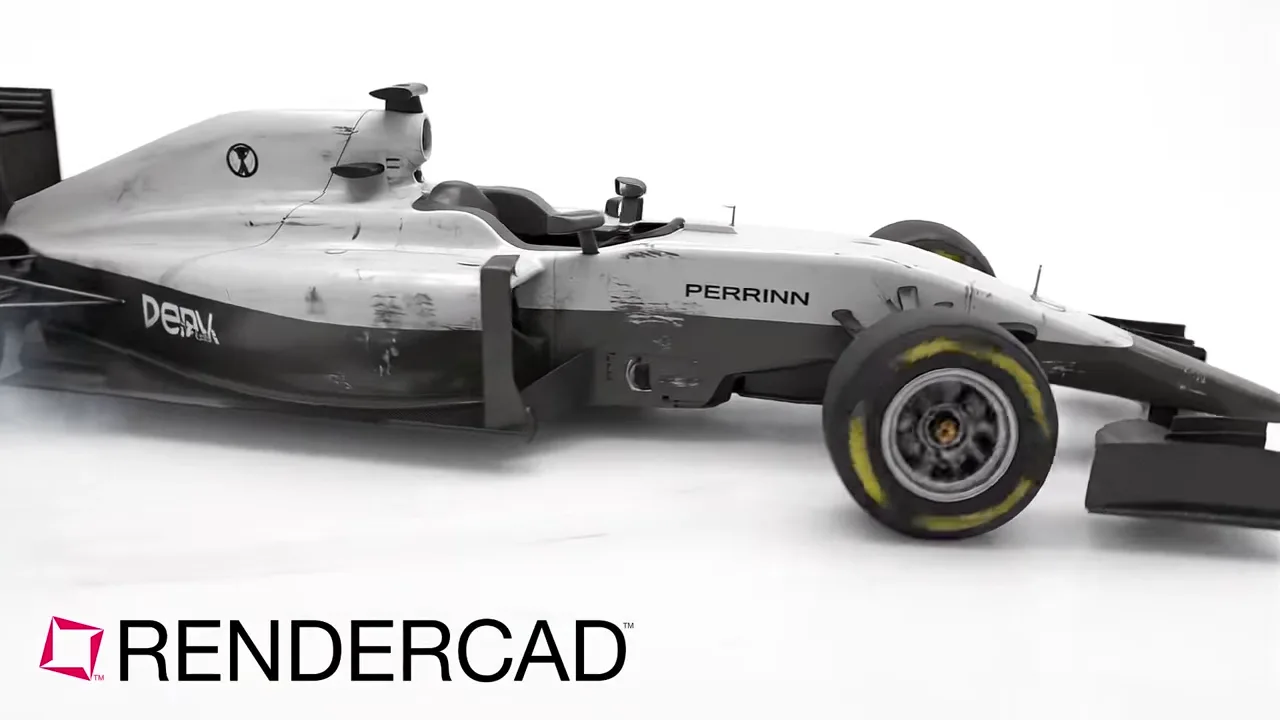
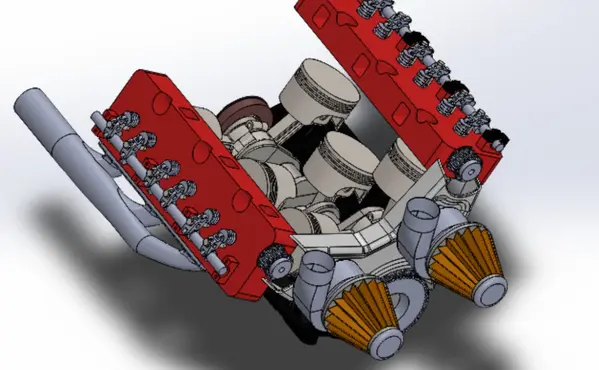
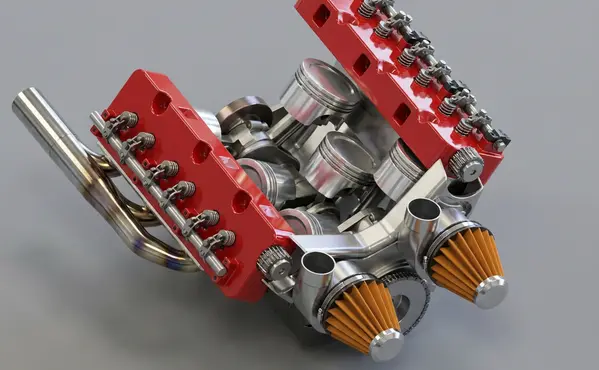
Modeled by CADSharp in Onshape. Rendered with RENDERCAD.
Add | Change | or Remove referenced objects with the stroke of a brush.
RENDERCAD uses a maintained selection of image-generation models for different rendering tasks. Results can vary by model and input, so compare generated output with the source design before relying on geometry, materials, or dimensions.
| Feature | RENDERCAD | Competitor |
|---|---|---|
| Engine | Generative AI | Varies by tool |
| Output | Images + Video | Varies by tool |
| Resolution | HD / 4K | Varies by workflow |
| Image Speed | Image renders complete in 60 seconds. | Varies by scene/tool |
| Video Speed | Videos complete in 2-5 minutes. | Varies by workflow |
| Scene Set Up | No separate local scene | Varies by workflow |
| Input | Screen Snip | Varies by tool |
| Hardware | Cloud GPU | Often local GPU/CPU |
| Install | None | Varies (web or app) |
| Cost | from $9/mo | Varies widely |
Read the numbers. We trust you to know theirs.
Skip a separate local scene build. Pick a condition, material, and background while RENDERCAD handles the image-generation step. Image renders complete in 60 seconds.
 ™
RENDERCAD™
™
RENDERCAD™
Use the browser workflow directly, capture a selected view with the desktop app, or start from the browser extension.
Get StartedCommon solutions for Bentley Raceway and Cable Management users
Add phrases like "Light from left," "Backlit," or "Top down lighting" to your custom prompt in RENDERCAD.
Yes, use the "Details" field in the video tab to describe elements like "Steam rising" or "Lights flickering."
Submit a clear viewport screenshot to the web workflow instead of running a local scene render. The generation request runs in the cloud while your source application remains separate.
Open the current desktop app or browser extension, select the viewport region, and send the captured image into the screenshot-based workflow. Availability and device requirements are documented on the current download pages.
Describe the color code name (e.g., "Traffic Red") in the prompt.
It supports fast visual feedback from a clear viewport capture. Image renders complete in 60 seconds.
The current desktop app or browser extension can capture a selected viewport region and send that screenshot into the image workflow. The web upload path remains available without a CAD plugin.
Choose a background or describe the intended environment and lighting. Generated reflections and illumination are visual interpretations, not a scene-based light simulation.
4K is an optional output-resolution step. It increases pixel dimensions but does not restore missing source detail or guarantee print suitability.
It guides the video toward a looping transition. Review continuity after export because the first and last frames may still need editing.
Yes. An environment reference can guide the visual direction of reflections on metallic or glossy surfaces, but the result is not a physical reflection simulation.
Mask visible components separately when they need different material or color direction. Keep the source model or drawing beside the output because generated boundaries and part relationships can drift.