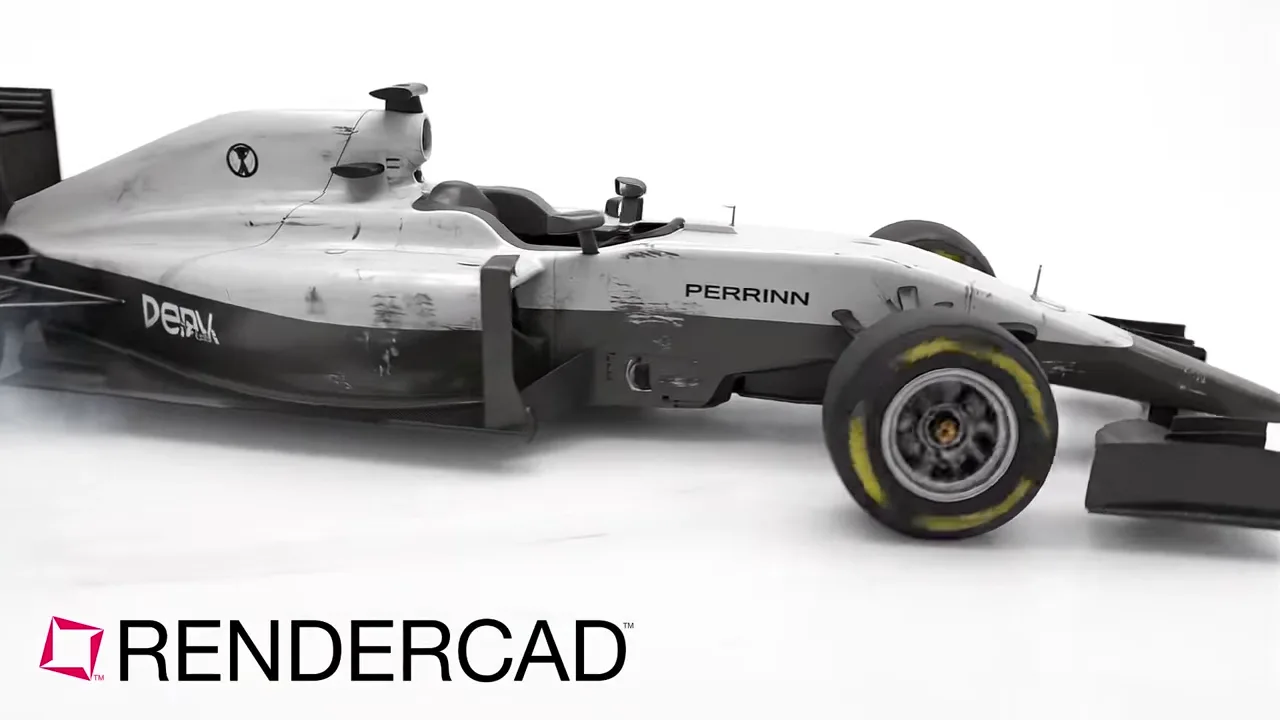
Explore V-Ray camera views and Frame Buffer previews as focused look-development references.
V-Ray is a Chaos renderer used across supported 3D and design applications for photorealistic stills, animation frames, look development, and compositing-ready imagery. Its workflow centers on a deliberate scene: camera, geometry, materials, textures, lights, rendering settings, and image review in the V-Ray Frame Buffer. The Frame Buffer can show render elements and supports image comparison, while its Light Mix and layers help artists assess lighting and post-processing choices before delivery.


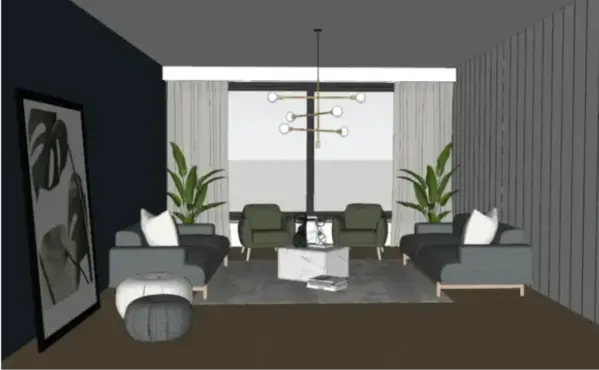
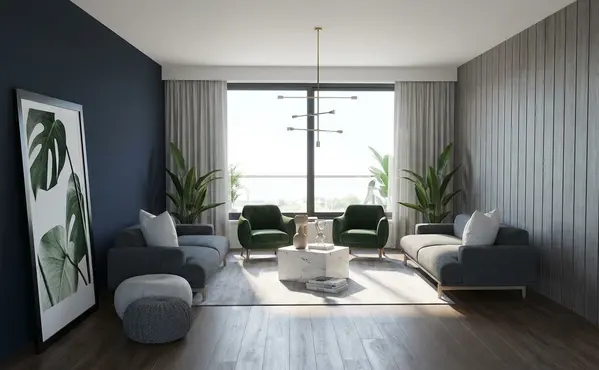


V-Ray is a Chaos renderer used across supported 3D and design applications for photorealistic stills, animation frames, look development, and compositing-ready imagery. Its workflow centers on a deliberate scene: camera, geometry, materials, textures, lights, rendering settings, and image review in the V-Ray Frame Buffer. The Frame Buffer can show render elements and supports image comparison, while its Light Mix and layers help artists assess lighting and post-processing choices before delivery.
V-Ray is a strong fit for architectural visualization, interiors, product imagery, and other camera-led 3D work where the final output must remain traceable to a controlled scene. RENDERCAD is most useful earlier in that process, once a V-Ray camera view, clay study, interactive render, or Frame Buffer preview already makes the composition readable. Upload that image to explore tightly scoped art direction: warm versus cool daylight, facade or upholstery material character, landscape density, background treatment, product colorway, or a more editorial presentation style. Keep the camera and main geometry consistent so the alternatives can be compared as visual direction rather than as replacement designs. Choose a result that communicates the intended look, then recreate its decisions in the V-Ray scene. V-Ray remains the source of truth for physically based lighting, material behavior, render elements, final sampling, animation continuity, and compositing control.
Set the review camera in the V-Ray host application and make a clean viewport capture, clay render, interactive preview, low-sample render, or Frame Buffer image. For lighting exploration, begin with a view whose geometry and framing are already approved, then use RENDERCAD to compare a small number of deliberate changes such as material mood, daylight character, furnishing palette, context, or product finish. Treat the selected image as a visual brief, not as a final render file. Return to V-Ray to adjust actual materials, lights, camera settings, and render elements, then use the Frame Buffer and compositing workflow to validate the final image or animation frame. Teams implementing RENDERCAD in a production pipeline can find current integration guidance at RENDERCAD developer documentation.
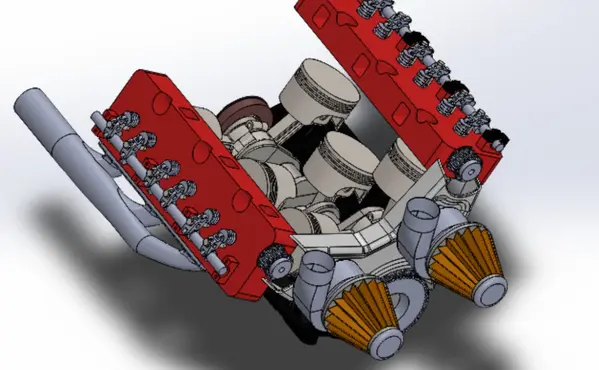
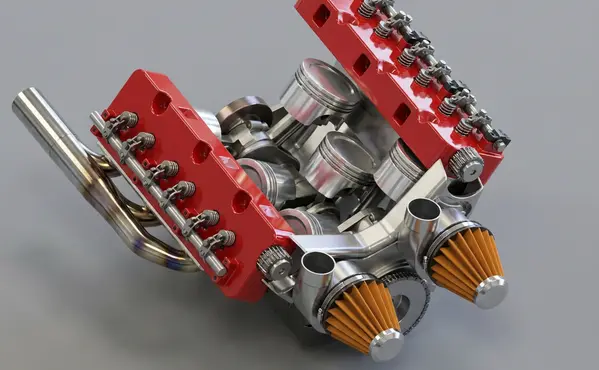
Modeled by CADSharp in Onshape. Rendered with RENDERCAD.
Add | Change | or Remove referenced objects with the stroke of a brush.
RENDERCAD uses a maintained selection of image-generation models for different rendering tasks. Results can vary by model and input, so compare generated output with the source design before relying on geometry, materials, or dimensions.
| Feature | RENDERCAD | V-Ray |
|---|---|---|
| Engine | Generative AI | Physically based renderer with CPU, GPU, and hybrid rendering options |
| Output | Images + Video | Stills, animation frames, render elements, and V-Ray Frame Buffer image outputs |
| Resolution | HD / 4K | Hardware- and settings-dependent |
| Image Speed | Image renders complete in 60 seconds. | Depends on scene complexity, rendering mode, quality settings, and hardware |
| Video Speed | Videos complete in 2-5 minutes. | Frame time varies by scene, quality target, and render hardware |
| Scene Set Up | No separate local scene | Host-application scene preparation with materials, lighting, cameras, render settings, and VFB adjustments |
| Input | Screen Snip | 3D scenes through V-Ray integrations for supported CAD and DCC host applications |
| Hardware | Cloud GPU | Desktop operating systems supported by the selected V-Ray integration and host application |
| Install | None | V-Ray integration installed for a supported host application |
| Cost | from $9/mo | Commercial licensing from Chaos; options vary by product and region |
Read the numbers. We trust you to know theirs.
Skip a separate local scene build. Pick a condition, material, and background while RENDERCAD handles the image-generation step. Image renders complete in 60 seconds.
 ™
RENDERCAD™
™
RENDERCAD™
Use the browser workflow directly, capture a selected view with the desktop app, or start from the browser extension.
Get StartedCommon solutions for V-Ray users
Yes. You can add up to six authorized reference images per render and provide instructions or masks for targeted direction.
Select the glass or transparent components with a mask. Apply glass-specific prompts to the masked area while treating opaque parts differently.
Yes, if the license permits this use. A stock image can guide a background or environment, while placement and lighting remain generated interpretations.
Upload a clear image, choose the Realistic engine, and describe the intended glass type, tint, and lighting. Transparency and reflections can vary between generations, so inspect the output before use.
Choose a suitable background and describe a reflective floor. Inspect the generated reflection for alignment, product fidelity, and unintended details.
Start from an image that clearly shows the existing separated components, then choose the Exploded View product motion. Review the clip against the source because generated motion can alter part boundaries or relationships.
If the source viewport is visible but a local renderer fails, capture a clear screenshot and use it as a RENDERCAD input. Image renders complete in 60 seconds.
Yes. Upload a photo of a foam model and prompt "Finished plastic product" to visualize the final look.
Describe cinematic depth of field and the intended focus area. Check that important product details remain sharp after generation.
Image renders complete in 60 seconds.
Generation runs on cloud infrastructure, so a local rendering GPU is not required. The device still needs sufficient resources for the source application, browser, and network connection.
Context prompts can provide a visual scale cue, but the source model and known dimensions remain authoritative. Do not infer measurements from generated imagery.