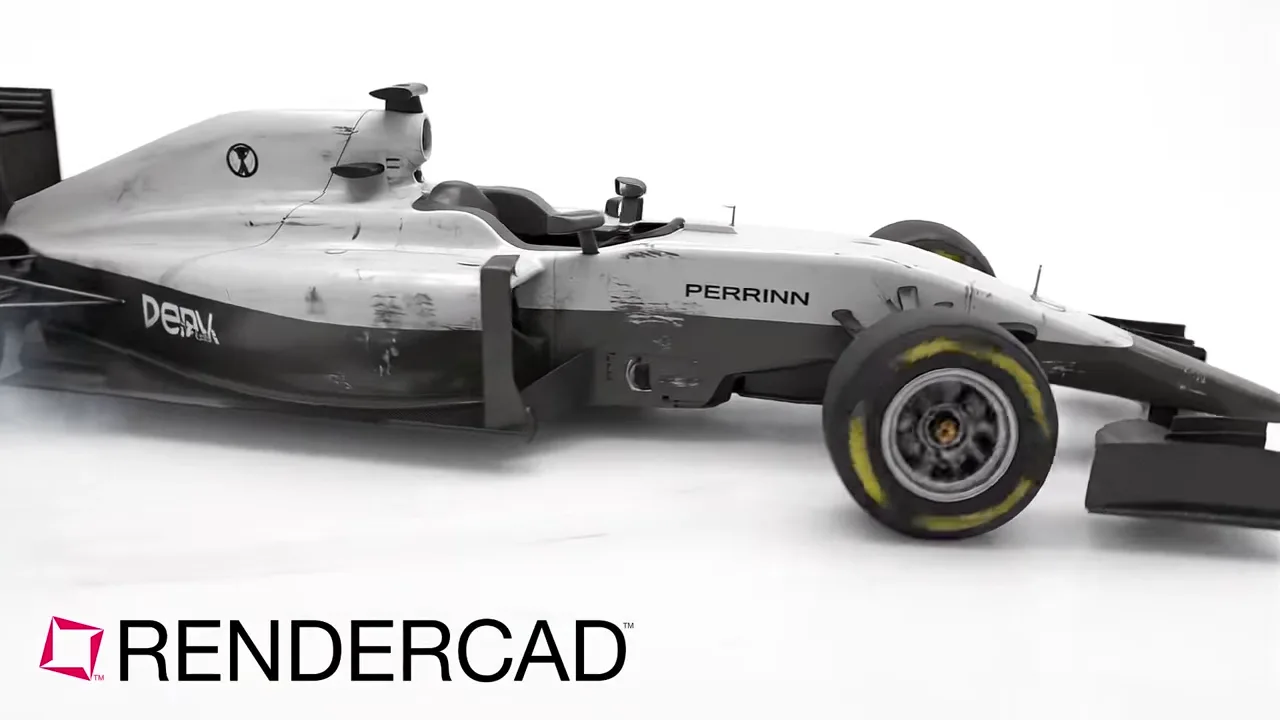
Explore polished visual directions from Thea for SketchUp scene drafts.
Thea Render for SketchUp integrates interactive and production rendering with SketchUp scenes. Designers can work from a saved SketchUp camera, refine materials and lighting, and use an interactive render in either the SketchUp viewport or Thea rendering window to judge the visible design before preparing a final scene-controlled image.


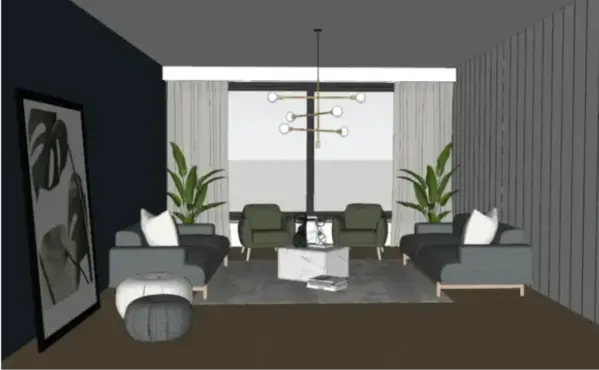
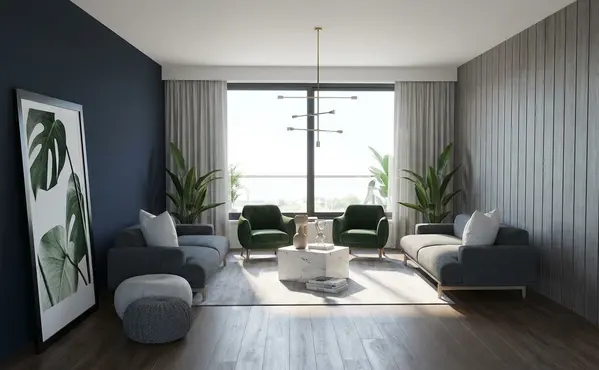


Thea Render for SketchUp integrates interactive and production rendering with SketchUp scenes. Designers can work from a saved SketchUp camera, refine materials and lighting, and use an interactive render in either the SketchUp viewport or Thea rendering window to judge the visible design before preparing a final scene-controlled image.
Thea Render for SketchUp is a strong starting point for architects, interior designers, and product designers who already have a readable SketchUp scene and want to compare presentation directions before committing to another production render. Thea can render interactively in the SketchUp view or its rendering window, so a draft can preserve the chosen camera, model silhouette, visible finishes, furniture or landscape placement, and the essential lighting logic. That makes a clean interactive or production draft useful input for RENDERCAD when the question is visual rather than structural: compare a calmer daylight mood, a more material-led interior, a hospitality-style atmosphere, an exterior setting, or a product context for a design review.
Open the SketchUp model and choose the saved scene or camera that best explains the proposal. In Thea, check the composition with an interactive render, then confirm the materials, environment, display treatment, and lights that must remain recognizable. For an interior, keep the room boundaries, openings, major fixtures, and viewpoint clear; for an exterior, keep the massing, facade, ground relationship, and intended landscape placement visible. Save a clean image without interface clutter and send it to RENDERCAD with one focused brief, such as soft overcast daylight, a warmer evening interior, a restrained editorial finish, or a more populated but believable setting. Use the resulting stills to compare visual directions in a client review or presentation. Return to Thea when the approved result requires source-scene accuracy, repeatable camera and material changes, render channels, relight control, animation, or final technical output. RENDERCAD should not be treated as the source of truth for the SketchUp model, dimensions, construction details, or exact material specifications. For automated image-variation workflows, see RENDERCAD developer documentation.
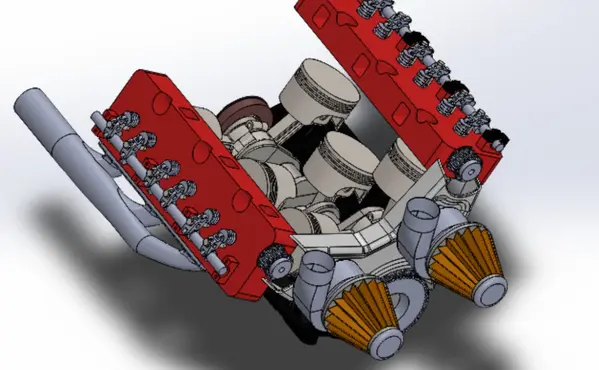
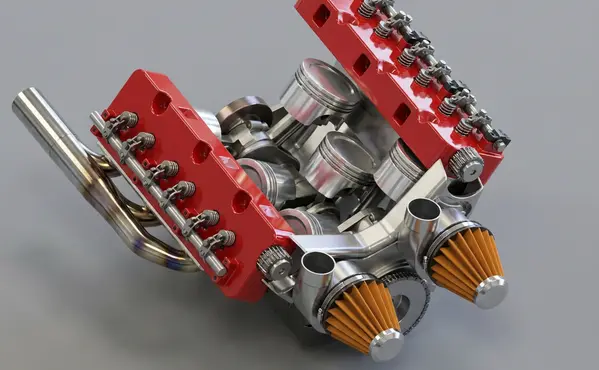
Modeled by CADSharp in Onshape. Rendered with RENDERCAD.
Add | Change | or Remove referenced objects with the stroke of a brush.
RENDERCAD uses a maintained selection of image-generation models for different rendering tasks. Results can vary by model and input, so compare generated output with the source design before relying on geometry, materials, or dimensions.
| Feature | RENDERCAD | Thea Render for SketchUp |
|---|---|---|
| Engine | Generative AI | Thea rendering engines with interactive and production modes for SketchUp scenes |
| Output | Images + Video | Still images, batch scene renders, render channels, relight edits, and animation output |
| Resolution | HD / 4K | Configured through camera and render settings, subject to scene complexity, hardware, and output choices |
| Image Speed | Image renders complete in 60 seconds. | Depends on the selected engine, scene complexity, materials, lighting, denoising, hardware, and quality settings |
| Video Speed | Videos complete in 2-5 minutes. | Animation rendering depends on frame count, scene complexity, selected engine, hardware, and quality settings |
| Scene Set Up | No separate local scene | Prepare SketchUp scenes with cameras, Thea materials, lights, environments, displays, and render settings |
| Input | Screen Snip | SketchUp scenes rendered through the Thea plugin, including interactive and production rendering workflows |
| Hardware | Cloud GPU | SketchUp desktop plugin for supported Windows and macOS installations |
| Install | None | Install the Thea for SketchUp plugin and configure its data folder during setup |
| Cost | from $9/mo | Commercial licensing is available; current terms are published by Thea Render |
Read the numbers. We trust you to know theirs.
Skip a separate local scene build. Pick a condition, material, and background while RENDERCAD handles the image-generation step. Image renders complete in 60 seconds.
 ™
RENDERCAD™
™
RENDERCAD™
Use the browser workflow directly, capture a selected view with the desktop app, or start from the browser extension.
Get StartedCommon solutions for Thea Render for SketchUp users
Yes, if you are authorized to use it. A reference guides visual direction but does not guarantee style replication or geometry preservation.
Yes. Use a mask to target the background separately from the foreground product. Review both regions because generation can still alter unmasked content.
Yes. Mask a region, then assign a specific reference image just to that masked area. Other areas can have different references or default to the prompt.
Upload a clear image or use a current capture tool, describe carbon fiber, and add an authorized material reference when a specific visual direction matters. Image renders complete in 60 seconds.
Choose a suitable background and describe a reflective floor. Inspect the generated reflection for alignment, product fidelity, and unintended details.
Choose the Orbit camera preset in the Video panel. Review the generated clip because viewpoint changes and product details can vary from a single-image input.
If the source viewport is visible but a local renderer fails, capture a clear screenshot and use it as a RENDERCAD input. Image renders complete in 60 seconds.
Yes. Upload a photo of a foam model and prompt "Finished plastic product" to visualize the final look.
Prompt "1950s appliance style, retro photography."
Image renders complete in 60 seconds.
Generation runs on cloud infrastructure, so a local rendering GPU is not required. The device still needs sufficient resources for the source application, browser, and network connection.
Context prompts can provide a visual scale cue, but the source model and known dimensions remain authoritative. Do not infer measurements from generated imagery.