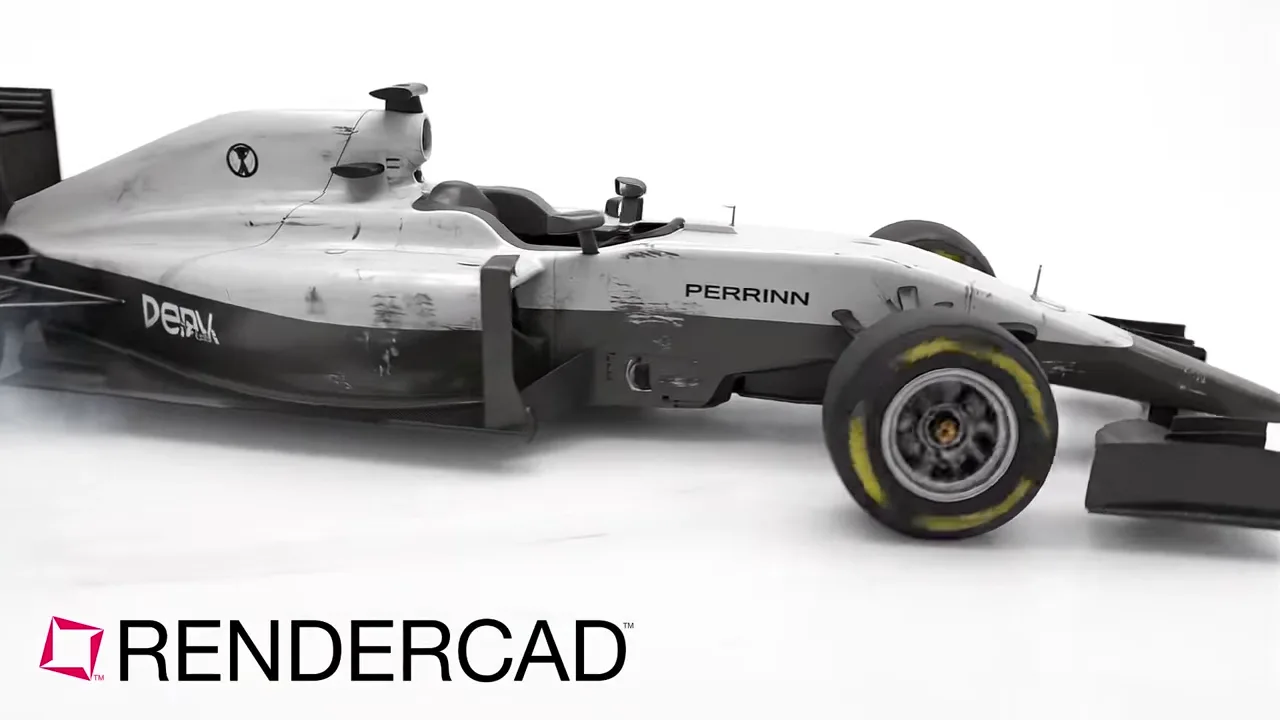
Create photorealistic product images and videos.
30 seconds. Zero configuration.
Trade show teams operate under relentless deadlines — booth graphics need to be finalized weeks before the event, yet product lineups frequently change at the last minute. A new SKU announced days before a major expo traditionally means either scrambling for a photo shoot or going without visuals entirely. RenderCAD eliminates this crunch by letting teams generate booth-ready product imagery and looping display videos in hours, not weeks. Assets created for one show can be rapidly adapted for the next by swapping backgrounds and layouts while keeping product renders consistent. The batch export and ZIP download workflow means an entire booth's worth of large-format graphics and screen content can be prepared in a single focused session, freeing the team to focus on logistics instead of asset production.
Corporate teams spend tens of thousands annually on product photography, agency retainers, and asset creation that takes weeks to deliver. Every new product launch, sales deck, or trade show booth requires a fresh round of visuals—and the timeline never matches the urgency. RenderCAD gives corporate teams an in-house rendering capability that produces boardroom-quality visuals in 30 seconds from a simple screenshot.
No photography studio, no lighting setup, no agency briefing cycle. Capture your product from any CAD tool, internal configurator, or even a web-based 3D viewer, and RenderCAD's AI engine generates photorealistic images ready for presentations, pitch decks, and marketing collateral. Your product files stay on your machine—nothing is uploaded—so IP security policies stay intact.
When product visuals come from five different sources—photography, agency renders, quick phone shots, supplier images—the result is a brand that looks fragmented. RenderCAD solves this by giving every team member access to the same rendering engine with the same material library and environmental presets. Sales in Tokyo and marketing in London produce visuals with identical quality and style.
Use reference image slots to lock in your brand's visual language: a specific background tone, lighting mood, or material finish that carries across every asset. The 2,500+ material textures and 300+ background scenes provide enough range for any product category while maintaining the polished consistency that corporate communications demand.
Product launches, quarterly updates, regional campaigns, and internal training materials all need visuals. Traditionally, that means more agency hours or more in-house designers. RenderCAD's bulk processing lets a single team member generate an entire product catalog's worth of renders in one session. Queue dozens of variations—different angles, materials, environments—and let them process while you work on something else.
For corporate teams managing dozens or hundreds of products, the math is straightforward: faster turnaround, lower cost per asset, zero dependency on external schedules. RenderCAD turns product visualization from a bottleneck into a competitive advantage—one that any team member can operate without specialized training.
No creative agency required. Screenshot any product or design asset, and RenderCAD delivers boardroom-ready imagery in 30 seconds. Brand-consistent visuals on demand, at the speed your marketing calendar demands.
Update product colors for a new season. Swap the background for a different market. Remove a component that's under NDA. RenderCAD lets your team iterate on product imagery without waiting for agency turnarounds or reshooting. One screenshot, unlimited brand variations.
RenderCAD's AI engine delivers brand-consistent output across your entire product line. Fine-tuned to maintain design accuracy and material fidelity, it produces marketing-grade imagery that meets corporate visual standards — without the cost or timeline of traditional product photography.
Traditional rendering tools require specialized skills your marketing team doesn't have. RenderCAD requires none. Any team member can produce professional product imagery by choosing a background, material, and condition from our library. 2,500+ materials and 300+ environments — no 3D expertise needed.
Products don't exist in a vacuum. Add real-world context to your imagery — studio lighting for catalogs, outdoor environments for lifestyle shots, atmospheric effects for premium brand positioning. 40+ conditions that elevate product perception without a production budget.
No file uploads means no data exposure. RenderCAD works from screenshots only — your CAD files, product specifications, and proprietary designs never leave your corporate network. Meets the security requirements your IT department actually cares about, without the compliance headaches of cloud-based file sharing.
Render your entire product catalog in one batch. Every SKU, every angle, every colorway — processed in parallel on cloud infrastructure. RenderCAD's API integrates with your existing asset management pipeline for automated, scheduled rendering that scales with your product line.
No IT deployment headaches. RenderCAD's overlay tool works on top of any application — no admin privileges required, no software conflicts. Install our desktop app or browser extension and your entire team can start rendering immediately.
Try NowCommon solutions for Trade Show Teams
RenderCAD is an AI-powered rendering service that transforms product images, screenshots, sketches, and photos into photorealistic visuals in seconds. Upload an image, choose your settings, and receive a professional render — no plugins, 3D model files, or rendering software required.
No. RenderCAD works entirely from uploaded images and text instructions. Anyone on your team can create professional product visuals without design expertise, specialized software, or rendering training.
RenderCAD accepts JPEG, JPG, PNG, WebP, BMP, and TIFF image files. You can upload product photos, concept sketches, screenshots from any software, or any other image source.
You can upload by clicking the upload area, dragging and dropping files into the workspace, or pasting an image from your clipboard. You can also use the desktop app or browser extension for quick capture.
Yes. New users receive 3 free render credits with no credit card required. This lets your team test the full rendering quality and workflow before choosing a subscription plan.
Renders complete in seconds. The Fast engine delivers results almost instantly at 1 credit per render, while the Realistic engine takes slightly longer for higher quality output at 2 credits. 4K resolution is also available for an additional 2 credits.
RenderCAD runs entirely in your web browser — no installation required. There is also an optional desktop app and browser extension for added workflow convenience, but the full Render Studio is accessible from any modern browser.
Yes. RenderCAD's Render Studio has a mobile-friendly interface with touch-optimized controls, so you can generate visuals from a tablet or phone during client meetings or while traveling.
Immediately. There is no setup, onboarding process, or learning curve. Upload an image, describe what you need, and your first professional render is ready in seconds.
Yes. Each team member can create their own account. For larger teams, the Enterprise plan offers 2,000 credits per month along with a dedicated account manager and custom integration support.
RenderCAD uses AI to transform a simple image — a CAD screenshot, sketch, or product photo — into a photorealistic render in seconds. Choose from Exact, Creative, or Freeform render styles, apply materials from 2,500+ textures, set backgrounds from 300+ scenes, and add 40+ environmental conditions.
No. RenderCAD works from 2D images — product photos, screenshots, sketches, or any visual. You never need to create, export, or share 3D model files.
Yes. You can upload scanned or photographed sketches and the AI will interpret the design and generate a photorealistic visualization from it — ideal for early-stage concepts and ideation.
The details field lets you provide up to 1,000 characters of text instructions to guide the AI. Describe the desired materials, lighting, environment, context, or any specific requirements for your render.
The AI analyzes your image to identify the subject, surfaces, and spatial context. You can guide it further with text instructions describing the intended usage scenario, materials, or presentation style.
Your uploaded images and renders are stored securely and are only accessible to your account. RenderCAD does not share your product images or proprietary visuals publicly.
Yes. The AI can process images of complex products, assemblies, and configurations. For best results, use clear images with visible details and good contrast.
RenderCAD continuously updates its AI rendering capabilities. As a cloud-based service, improvements are available to all users automatically without any software updates or version changes.
In Exact mode, RenderCAD preserves your original design precisely, maintaining accurate colors, geometry, and proportions. This makes it suitable for professional presentations where product accuracy is critical.
Yes. RenderCAD produces high-quality, photorealistic output suitable for pitch decks, trade show displays, investor presentations, training materials, and any professional business context.
You can upload via file browser, drag and drop, clipboard paste, the RenderCAD desktop app, the browser extension, or the live viewport capture feature that lets you screen-share your design software or product catalog.
Yes. You can upload multiple images to the workspace simultaneously. They appear in a grid layout and can all be rendered in a single batch operation — ideal for product lines and catalogs.
Live viewport lets you share your screen or a browser tab directly in RenderCAD. You can then capture frames from the live feed, crop and adjust the capture region, and send those frames to the render workspace.
Yes. Copy a screenshot to your clipboard using your system screenshot tool and paste it directly into the RenderCAD workspace using Ctrl+V or Cmd+V. This is the fastest way to capture and render.
The desktop app integrates with your system to allow quick capture and upload from any application. It streamlines the screenshot-to-render workflow without switching between windows — ideal for fast-paced work.
The RenderCAD browser extension lets you capture and send images to your Render Studio workspace directly from web-based tools, product catalogs, or any browser content.
Yes. Photos from any device — phone cameras, DSLRs, scanners — are valid upload sources. RenderCAD accepts JPEG, JPG, PNG, WebP, BMP, and TIFF formats from any source.
Your original uploads are preserved in the workspace alongside the rendered outputs. You can toggle between viewing the original and rendered versions of each image for comparison.
Yes. Any image saved to your device can be uploaded via file browser or drag and drop. You can also copy images from web-based systems and paste them directly into the workspace.
Clear, well-lit images with visible product details and good contrast produce the best results. Standard product photos, screenshots, and catalog images all work well.
RenderCAD offers two engines: Fast (1 credit per render) for quick iterations and previews, and Realistic (2 credits per render) for higher quality output with better material detail and lighting accuracy.
Use the Fast engine for rapid iterations during internal reviews, quick concept comparisons, draft visuals for team discussions, and any situation where speed matters more than maximum visual fidelity.
Use the Realistic engine for client-facing presentations, investor decks, trade show materials, marketing assets, and any context where material accuracy and lighting quality represent your brand.
Yes. You can render the same image with both engines to compare results. This lets you quickly preview with Fast, then produce the final version with Realistic.
The Fast engine does not support reference images, masks, 4K resolution, or custom conditions. It defaults conditions to Pristine. Use the Realistic engine for the full feature set.
Reference images, mask editing, custom materials, custom backgrounds via reference slots, object removal, 4K resolution, and non-default conditions all require the Realistic engine.
A 4K render costs 4 credits total: 2 credits for the Realistic engine (required for 4K) plus 2 additional credits for the 4K resolution upgrade.
Yes. The Realistic engine produces noticeably better material textures, more accurate lighting, and finer detail. For quick internal reviews, the Fast engine is perfectly adequate. For client-facing work, Realistic is recommended.
For large batches where speed and budget matter, use Fast (1 credit each) for initial drafts. Then selectively re-render the best candidates with Realistic (2 credits each) for final output. This optimizes your credit spend.
Yes. You can configure the engine in your global render settings. The selected engine applies to all images in your batch unless changed individually.
RenderCAD offers three render styles: Exact (preserves your original design precisely), Creative (the AI improves lighting, shadows, and visual quality), and Freeform (full prompt control without a system template).
Use Exact when the render must closely match the original product image with precise colors, geometry, and proportions preserved. Ideal for technical documentation, product spec sheets, and presentations where accuracy is critical.
Creative style gives the AI more freedom to enhance the image — improving lighting, adding realistic shadows, correcting minor imperfections, and boosting overall visual quality while keeping the core product design intact.
Freeform gives you full prompt control with no system template. This is useful for experimental concepts, mood boards, artistic product interpretations, or when you want to heavily guide the output with detailed instructions.
For pitch decks, Creative style is often best — it enhances lighting and atmosphere for maximum visual impact. Use Exact when the presentation requires precise product accuracy with no AI interpretation.
Exact style is recommended for training and documentation materials where product accuracy is paramount. The render should match the actual product as closely as possible to avoid confusion.
No. The render style does not change the credit cost. Cost is determined only by the engine (Fast or Realistic) and resolution (HD or 4K) selections.
Yes. Reference images, materials, backgrounds, and masks work with all render styles when using the Realistic engine. This gives you full control over both style and specific visual elements.
Yes. Render the same product image in Exact, Creative, and Freeform to compare results and choose the best version for your specific use case. Each render consumes credits based on the engine selected.
RenderCAD offers HD resolution (included with all renders) and 4K resolution (an additional 2 credits, available with the Realistic engine only) for print-quality output.
Use 4K for large-format prints like trade show banners, high-resolution presentation boards, detailed product close-ups, annual report imagery, and any output where fine detail and sharpness matter at large sizes.
Rendered images are output as PNG files, which preserve full quality without compression artifacts — suitable for professional printing and digital distribution.
Yes. HD resolution is well-suited for screen presentations, pitch decks, websites, social media, email campaigns, and most digital display use cases. Choose 4K only for print materials or large-format displays.
Rendered images on paid plans (Starter, Professional, Enterprise) are not watermarked. All plans include full-quality output ready for professional use.
Yes. 4K resolution provides the detail needed for large-format booth graphics, banners, and display panels where viewers may see the imagery up close.
Rendered files are stored securely on cloud storage and are accessible through your RenderCAD account. Storage retention varies by plan: 30 days for Starter, 90 days for Professional, and 365 days for Enterprise.
Yes. The workspace includes a Download All as ZIP feature that packages all your rendered images from the current session into a single downloadable archive for easy distribution.
For printed investor reports and large presentation screens, yes. For standard slide decks viewed on laptops, HD is sufficient. Match the resolution to how stakeholders will view the materials.
Reference images are additional visual inputs you can attach to a render to guide the AI. Each render supports up to 3 reference image slots that can be used for custom images, materials, backgrounds, or object removal.
You can use up to 3 reference image slots per render. Each slot can serve a different purpose: custom reference, material, background, or remove (object removal).
There are four reference types: Custom (upload your own reference image), Material (choose from the 2,546-texture library), Background (choose from the 300+ background library), and Remove (remove a masked object from the image).
Upload brand-standard materials, approved backgrounds, or style reference images as custom references. This ensures every render matches your brand guidelines, whether produced by one person or an entire team.
Yes. Each reference slot has an optional text prompt field where you can describe how the reference should be applied, giving the AI more specific guidance about your brand intent.
Yes. Each reference image slot includes a mask editor that lets you paint which region of your original image the reference should affect, using brush, eraser, and lasso tools.
Yes. Reference images, masks, and object removal features require the Realistic engine (2 credits per render). The Fast engine does not support reference slots.
Yes. Upload a photo of any real-world material — fabric, metal, wood, packaging, or any surface — and the AI will use it to guide the material appearance in your render.
When all 3 slots are used, you have maximum control over the render. For example, you could use one slot for a brand material, one for an approved background scene, and one for object removal — all on the same render.
Yes. By using the same reference images across renders — either manually or via Master Background and Master Material — you ensure every product in a line is presented with consistent brand-approved materials and settings.
The RenderCAD material library contains 2,546 textures covering a wide range of surfaces including wood, metal, fabric, stone, leather, plastic, glass, and many more.
Select a reference slot and choose Material as the type. This opens the material library where you can browse, filter, and search textures. Selecting one assigns it to that reference slot for your render.
Yes. The material library includes a category dropdown filter to narrow results by material type such as wood, stone, metal, fabric, leather, and more — helping you find the right surface quickly.
Yes. There are 11 color filters available: black, white, gray, brown, red, orange, yellow, green, blue, purple, and pink. This helps you find materials that match your product or brand palette.
Yes. The material library has a search field that lets you find textures by name, category, or color keywords — useful when you know exactly what finish you need.
Yes. All textures in the material library are-licensed, meaning they are free for commercial use with no attribution required. Use them in any business context.
Yes. Instead of selecting from the library, you can upload your own material image as a custom reference. This is essential when matching specific proprietary finishes, brand colors, or material specifications.
Yes. Use the mask editor on the material reference slot to paint the specific region where you want the material applied. Only the masked area will be affected by the material reference.
Upload the same product image multiple times, then apply different materials from the library to each copy. Render the batch to produce a complete material variation set in seconds — perfect for showing finish options to clients.
Yes. The material library displays thumbnail previews of each texture. You can browse the paginated gallery to evaluate materials before selecting one for your render.
Yes. Each material selection occupies one of the 3 available reference slots per render. Plan your reference usage when combining materials with backgrounds or other references.
The background library contains over 300 curated backgrounds organized into categories including nature, studio, roads, interior, and exterior environments.
RenderCAD offers several background options: Auto (AI selects an appropriate background), Library (choose from 300+ backgrounds), Upload (your own background image), Custom Color (HSV color picker), and Solid Colors (white, grey, gradient) plus custom hex colors.
Select Background as a reference type in one of your reference slots, then browse the Studio category in the background library. Studio backgrounds provide clean, professional settings ideal for product presentation.
Yes. RenderCAD offers solid color options including white, grey, and gradient backgrounds. You can also specify any custom hex color for a precise solid background — standard for catalog and e-commerce product imagery.
Yes. Upload your own background image as a custom reference. This lets you place products in brand-specific environments, office settings, or any proprietary scene.
When set to Auto, the AI selects an appropriate background based on the content of your image and any text instructions you provide. This is the default and works well for general-purpose renders.
Yes. The Custom Color option provides an HSV color picker letting you select any exact color for your background — useful for matching brand colors or specific presentation themes.
Studio backgrounds provide clean, professional settings. Interior backgrounds work for lifestyle product shots. Nature and exterior backgrounds suit environmental or outdoor product contexts. Choose based on your presentation narrative.
When using the library or upload background options through a reference slot, yes, it uses one of your 3 reference slots. The Auto, Solid Color, and Custom Color background options do not use a reference slot.
Yes. Backgrounds are organized into categories including nature, studio, roads, interior, and exterior. You can also filter by 11 color options to match your desired palette.
Master Background lets you set a single background that automatically applies to all images in your workspace during batch rendering. It ensures consistent scene placement across your entire product set.
In the global settings area of the Render Studio, select your desired background. When enabled, this background is applied as a reference to every image when you render the batch.
Yes. The Master Background occupies one of the 3 available reference slots on each image. This means each image can still use up to 2 additional reference slots for materials, custom references, or object removal.
Master Background is essential when creating catalogs, pitch decks, or presentation sets where every product image must appear in the same professional setting — ensuring brand consistency across all visuals.
Yes. You can edit individual image reference slots to override or adjust the background for specific images while keeping the master setting for the rest of the batch.
Yes. You can select any background from the 300+ background library, upload a custom background image, or use other background options as your master selection.
Yes, but each uses one reference slot per image. Using both together leaves 1 remaining reference slot per image for additional customization.
Master Background uses reference slots which require the Realistic engine. It will not apply when rendering with the Fast engine.
Set your branded studio or environment as the Master Background, upload all product images, and batch render. Every product appears in the same professional setting, ready for catalogs, decks, or web pages.
Master Material lets you set a single material or texture that automatically applies to all images in your workspace during batch rendering. It ensures material consistency across your entire product set.
In the global settings area of the Render Studio, select a material from the 2,546-texture library or upload your own. This material is applied as a reference to every image in your batch.
Yes. The Master Material can be configured with a mask so it only affects specific regions of each image, rather than the entire surface. This gives you precise control over where the material is applied.
Yes. Master Material occupies one of the 3 reference slots on each image. You can still use the remaining slots for backgrounds, custom references, or object removal.
Master Material is ideal when presenting an entire product line in a consistent finish — showing all items in the same material, or quickly generating variations by swapping the master material between batch renders.
Yes. Change the Master Material selection and re-render the batch to compare different material options across all your products. This lets you produce complete finish variation sets in minutes.
Yes. Each image's Master Material reference slot can have its own mask painted, allowing you to target specific areas of each image while using the same base material across the batch.
No. Master Material uses reference slots which require the Realistic engine (2 credits per render).
Upload your product images once. Render the batch with Material A as Master Material, then swap to Material B and re-render. You instantly have two complete sets showing the same products in different finishes for client review.
Conditions are surface and environmental effects you can apply to your render. RenderCAD offers over 40 conditions across 8 categories, from pristine clean finishes to weathered, environmental, and extreme states.
Conditions are organized into 8 categories: Clean & New, Surface Imperfections, Heavy Wear, Accumulation & Age, Structural Damage, Moisture & Temperature, Extreme States, and Environmental Coverage.
The Clean & New category includes Pristine, Factory New, Polished, Gleaming, and Glazed — ideal for showcasing products in their best showroom-ready state for sales materials and presentations.
For sales and corporate presentations, Clean & New conditions like Pristine, Polished, and Gleaming present products in their best light. These create showroom-quality visuals perfect for pitch decks and marketing materials.
Yes. Conditions like Distressed, Chipped, Weathered, Scuffed, and various wear levels (Light, Medium, Heavy Wear) can demonstrate product aging stages — useful for warranty documentation, insurance assessments, or durability marketing.
Environmental Coverage includes Mud-covered, Dirt-covered, Sand-covered, and Snow-covered — useful for showing products in field conditions, seasonal contexts, or outdoor environments.
Yes. Render the same product with a wear condition like Weathered or Rusted, then render again with Pristine or Factory New. This creates compelling before-and-after pairs for restoration, maintenance, or upgrade sales narratives.
Yes. The condition selector includes a search function so you can quickly find any condition by name rather than browsing through all categories.
The Fast engine defaults all conditions to Pristine. To use specific conditions, select the Realistic engine.
Beyond standard product shots, conditions enable storytelling: show products surviving extreme conditions (Snow-covered, Wet, Sand-covered), demonstrate durability (Weathered, Battered), or create dramatic visuals (Frosted, Steaming) for trade show attention.
The mask tool lets you paint specific regions of your image to control where reference images, materials, or removal effects are applied. It provides brush, eraser, lasso, inversion, and clear tools for precise region selection.
The mask editor includes a Brush tool (to add mask regions), an Eraser tool (to remove mask regions), a Lasso tool (freehand selection), plus Inversion and Clear functions for quick adjustments.
Yes. The brush size is adjustable from 5 to 150 pixels, allowing both broad strokes for large areas and fine detail work for precise edges.
The lasso tool lets you draw a freehand selection area. Once you close the selection, the enclosed region becomes part of the mask. This is faster than painting large areas with the brush.
Yes. The mask editor includes an inversion function that swaps masked and unmasked areas. This is useful when it is easier to select what you want to exclude rather than include.
Each reference slot has its own independent mask. The mask defines where that specific reference (material, background, or removal) is applied to your image. Only the masked region is affected.
Yes. The mask editor supports touch input, allowing you to paint masks using finger gestures on tablets — useful when making adjustments during meetings or presentations.
Yes. Each of the 3 reference slots has its own independent mask. You can target different regions of your image with different references, materials, or removal operations simultaneously.
Mask specific product surfaces — such as a casing, panel, or trim — then apply different materials or colors via reference slots. This lets you show product customization options without separate source images.
Add a reference slot and set its type to Remove. Then use the mask editor to paint over the object you want removed. The AI will replace the masked area with contextually appropriate content.
You can use the Remove reference type with a mask to remove unwanted overlays, watermarks, or branding from source images before or during rendering — useful for cleaning up supplier-provided product photos.
Yes. Mask the distracting elements — cords, packaging, or background objects — and use the Remove reference type. The AI will fill in those areas with clean, contextually appropriate content.
Yes. Mask the unwanted items and use the Remove reference type. The AI replaces those areas naturally, leaving a clean image focused on your product.
Render an image, then use render iterations to re-render the output with a Remove mask applied to any remaining artifacts or unwanted elements. This refinement process can be repeated until the result is perfect.
You would use two reference slots: one with a Remove mask for the unwanted element, and another with a material or custom reference for what you want in its place. This uses 2 of your 3 reference slots.
No. Object removal is a reference slot type included in the Realistic engine cost (2 credits). There is no additional charge beyond the standard render cost.
Yes. Paint your mask to cover all the objects you want removed in a single reference slot. The AI will remove everything within the masked region in one render.
The built-in image editor provides pre-processing tools for quick adjustments before rendering. It includes brush, eraser, fill, lasso, crop, text, shapes, layers, and a 50-state undo/redo history.
The editor includes a Brush tool (with adjustable color, size, opacity, and feather), an Eraser tool, a Fill (bucket) tool, and basic Shape tools (rectangle, circle, line).
Yes. The image editor includes a crop tool with multiple aspect ratio presets: free, 1:1, 4:3, 3:2, 16:9, 21:9, and 9:16. This lets you frame your image for specific presentation formats before rendering.
Yes. The editor has a full layers system where you can add, delete, reorder, and toggle visibility of layers. This is useful for compositing multiple product images or annotations before rendering.
The image editor maintains a history of up to 50 states, so you can undo and redo up to 50 steps of your editing work.
Yes. The Text tool lets you add text layers to your image, useful for adding product labels, annotations, or notes before rendering or for preparing presentation-ready annotated visuals.
The editor supports zoom from 5% to 500%, with mouse wheel zoom, fit-to-window, and manual controls. This lets you work on fine details or see the full image at any scale.
Yes. You can open either your original upload or the rendered output in the image editor for additional adjustments, cleanup, or preparation for render iterations.
Crop product images to standard presentation ratios (16:9 for slides, 1:1 for social), add text annotations, clean up source images with the eraser tool, or composite multiple product elements — all before rendering.
Render iterations let you take an existing rendered image and render it again, building on the previous output. This allows you to refine results, remove artifacts, add new materials, or progressively improve quality.
After your initial render completes, use the re-render or modify option on the rendered image. The output becomes the new input, and you can apply new settings, masks, references, or conditions.
Yes. Mask the area with artifacts, set a reference to Remove, and re-render. The AI will clean up the masked region while preserving the rest of the image — ensuring client-ready quality.
Yes. In a render iteration, add a material reference with a mask targeting the area you want to change. The AI applies the new material only to the masked region of your already-rendered image.
There is no limit to the number of render iterations you can perform. Each iteration costs credits based on the engine and resolution settings used.
Yes. Each render iteration is a new render and costs credits based on the engine (1 for Fast, 2 for Realistic) and resolution (+2 for 4K) selected.
Yes. Your render history preserves all previous versions, so you can compare iterations and choose the result you prefer for your final deliverable.
Use iterations when the initial result is close but needs localized fixes — small artifacts, a material change in one area, or an edge refinement. Start fresh when you want to try fundamentally different settings or a completely new approach.
Yes. RenderCAD's Image-to-Video feature converts rendered stills into animated video sequences with camera movement and product motion options — ideal for presentations, trade shows, and digital displays.
You can create videos at 4 seconds (4 credits), 6 seconds (6 credits), or 8 seconds (8 credits).
Videos can be rendered at 720p (included in the base cost) or 1080p (adds 1 additional credit to the total cost).
Videos can be downloaded in MP4, WebM, and GIF formats. MP4 works with all presentation software, WebM is ideal for web, and GIF is useful for email and messaging.
Two video styles: Exact (preserves the appearance of the original render precisely) and Creative (the AI adds dynamic effects and enhanced motion to the scene).
Yes. The Seamless Loop end frame option creates videos that loop smoothly back to the start. You can adjust a crossfade setting from 0 to 2 seconds for smoother transitions — perfect for kiosks and digital signage.
Four end frame options: None (video ends on last frame), Seamless Loop (loops back to start with optional crossfade), From History (select from render history), and Upload (custom end frame image).
Yes. Upload a custom end frame image or select one from your render history. This lets you create videos that transition between two product states — such as before and after, or two finish options.
Video adds motion and energy to static product imagery. A turntable product video in a pitch deck or a looping animation at a trade show booth captures attention far more effectively than still images alone.
Yes. The video creation panel includes a custom details field where you can describe desired motion, mood, lighting effects, or specific animation behaviors for your video.
RenderCAD offers over 20 camera movement presets including Auto, Fixed Angle, Slow Push-In, Slow Pull-Back, Rack Focus, Dolly Zoom, Truck Left/Right, Pedestal Up/Down, Flyover, Cinematic Orbit, Spiral, Pan Swivel, Handheld, Crash Zoom, Low Angle Rise, Dutch Angle, Top-Down Spin, Follow Cam, and 180° Arc.
Cinematic Orbit and Slow Push-In are popular for product showcases. Orbit provides a dramatic rotating view, while Push-In draws the viewer's attention to product details — both create engaging presentation content.
Cinematic Orbit and 180° Arc create eye-catching product rotations. For ambient background displays, Slow Push-In or Pan Swivel with Seamless Loop creates continuous, attention-holding content.
Auto lets the AI choose an appropriate camera movement based on the content of your image. This is a good starting point if you are unsure which movement to select.
Yes. Camera movement and product motion can be set independently for the same video, creating dynamic scenes with both camera and subject movement for maximum visual impact.
Slow Push-In draws viewers in, Crash Zoom creates urgency and drama, and Low Angle Rise adds power and authority. Each creates a different reveal effect suited to different presentation narratives.
Handheld adds subtle, natural camera shake to simulate a person holding the camera. This creates a more authentic, documentary-style feel — effective for product demonstration and behind-the-scenes content.
Slow Push-In and Fixed Angle project professionalism and polish. Avoid overly dramatic movements for investor content — subtle, controlled camera work communicates confidence and credibility.
Top-Down Spin looks down at the product from above while rotating, creating a distinctive overhead view. This is effective for showing product layouts, packaging design, or flat-lay presentations.
RenderCAD offers over 30 product motion presets including Static, Idle, Move in Place, Levitating, Vibrating, Pulsing, Turntable, Roll, Tumble, Hero Spin, Drop, Slide In, Pop Up, Explode, Assemble, Mechanical, Dynamic, Liquid Splash, Condensation, Cloth Wave, Inflate, Squish, Open & Close, Fold/Unfold, and Dispense Action.
Turntable provides a clean 360° rotation ideal for showing all angles. Hero Spin adds a dramatic, cinematic quality. For pitch decks, Idle or Levitating keeps products subtly animated without distraction.
Yes. The Explode preset separates product components apart, while Assemble brings them together. These are excellent for training materials, technical presentations, and demonstrating product complexity.
The Mechanical preset animates mechanical motion, and Open & Close shows products opening or closing. Fold/Unfold and Dispense Action can demonstrate specific functional behaviors — all useful for product demonstrations.
Yes. The Turntable motion preset rotates the subject smoothly, creating a classic 360° view ideal for product presentations, catalogs, and e-commerce listings.
Hero Spin creates a dramatic, cinematic rotation that emphasizes the product with a dynamic presentation style. It is more dramatic than a simple turntable rotation — ideal for hero product moments in pitch decks.
Yes. The Static motion preset keeps the subject completely still while only the camera moves. This is ideal when you want to focus on the camera angle revealing the product without any object motion.
The Liquids & Soft Body category includes Liquid Splash, Condensation, Cloth Wave, Inflate, and Squish motions. These can demonstrate product features involving liquids, fabrics, or flexible materials.
Combine Explode or Assemble for component breakdowns, Open & Close or Fold/Unfold for operational demonstrations, and Mechanical for functional animations. These create clear, visual training content from static product images.
Select Seamless Loop as the end frame option when creating a video. The video will smoothly loop back to the starting frame. Use the crossfade slider (0 to 2 seconds) to control the blend transition.
The crossfade controls how gradually the video transitions from the end back to the beginning. A 0-second crossfade creates a direct cut, while a 2-second crossfade creates a smooth, gradual blend.
Yes. The From History option lets you select any previously rendered image as the end frame. This creates a transition video between two different product states or configurations.
Yes. The Upload option lets you provide any image as the end frame. The video will animate from your source render to the uploaded end frame.
For web-based signage and kiosks, WebM supports seamless playback loops natively. MP4 works with most digital signage software with loop playback enabled. GIF is useful for simpler, lower-resolution loops.
Create a product showcase video with Cinematic Orbit or Turntable motion and Seamless Loop enabled. Set the crossfade to 1-2 seconds for a smooth continuous rotation. Export as MP4 or WebM for your display system.
Seamless looping product videos on screens and monitors draw continuous attention to your booth. Use Hero Spin or Cinematic Orbit with a branded studio background for professional, eye-catching display content.
Yes. Short seamless loops (4 seconds with crossfade) make excellent animated backgrounds for websites, presentation slides, and digital marketing materials. WebM format works best for web use.
RenderCAD offers three paid plans: Starter ($20/month, 150 credits), Professional ($60/month, 500 credits), and Enterprise ($175/month, 2,000 credits). New users also receive 3 free trial credits with no credit card required.
The Starter plan costs $20 per month and includes 150 render credits, email support, 30-day render retention, commercial use rights, and unlimited exports.
The Professional plan costs $60 per month and includes 500 render credits, priority support, 90-day render retention, batch processing, API access, commercial use rights, and unlimited exports.
The Enterprise plan costs $175 per month and includes 2,000 render credits, 24/7 support, 365-day render retention, custom integrations, a dedicated account manager, API access, commercial use rights, and unlimited exports.
Yes. New users receive 3 free render credits with no credit card required. This allows your team to test rendering quality and workflow before committing to a subscription.
No. Credits do not roll over. Unused credits expire at the end of each billing cycle and are replaced with your fresh monthly allocation.
Yes. All plans are month-to-month with no contracts. You can cancel at any time and billing stops immediately.
For individual professionals, Starter with 150 credits is a solid starting point. Teams producing regular visual content should consider Professional (500 credits) for API access and batch processing. Large teams or heavy usage benefit from Enterprise (2,000 credits) with dedicated account management.
Yes. All plans — including the free trial — include commercial use rights and unlimited exports. Every render you create is fully licensed for professional and commercial use.
Render retention varies by plan: 30 days on Starter, 90 days on Professional, and 365 days on Enterprise. Download your renders within your retention window to keep them permanently.
API access is included with the Professional and Enterprise plans. Starter and trial users do not have API access.
Yes. The Enterprise plan includes a dedicated account manager along with 24/7 support, custom integrations, and 365-day render retention.
A Fast engine render costs 1 credit. A Realistic engine render costs 2 credits. Adding 4K resolution to a Realistic render adds 2 more credits, for a total of 4 credits per 4K image.
Videos cost 4 credits (4 seconds), 6 credits (6 seconds), or 8 credits (8 seconds) at 720p resolution. Adding 1080p resolution costs 1 additional credit.
Use the Fast engine for internal drafts and concept exploration (1 credit). Switch to Realistic for client-facing final output (2 credits). Batch similar renders and use Master Background/Material to maintain consistency efficiently.
With the Starter plan (150 credits) using the Realistic engine (2 credits each), you can create 75 HD Realistic renders per month.
With the Professional plan (500 credits) using the Realistic engine (2 credits each), you can create 250 HD Realistic renders per month.
With the Enterprise plan (2,000 credits) and the Fast engine (1 credit each), you can create up to 2,000 Fast renders per month.
With the Professional plan at $60/month, you can produce 250 HD Realistic renders — delivering high-quality product visuals for proposals, presentations, and marketing materials at a predictable monthly cost with no per-project fees.
No. Using reference images, masks, and conditions is included in the Realistic engine cost (2 credits per render). There is no additional charge for these features.
Yes. Your current credit balance is displayed in the Render Studio with a credit gauge that shows remaining credits and updates in real-time as you render.
Estimate your typical output needs: pitch decks, trade show materials, training documents. Reserve credits for Fast-engine drafts (1 credit each) and Realistic finals (2 credits each). If you consistently hit your limit, upgrade to the next plan for better per-credit value.
Yes. Upload multiple images to your workspace and use the Render All button to process them all in a single batch. Progress tracking shows the status of each image.
Upload all your images to the workspace grid, configure global settings (engine, style, background, material, condition), and click Render All. Each image is queued and processed with the selected settings.
Yes. The Download All as ZIP feature packages all rendered images from the current workspace into a single downloadable archive for easy distribution to stakeholders.
Yes. When you set a Master Background, it automatically applies to every image in your batch, ensuring consistent scene placement across all renders.
Yes. When you set a Master Material, it applies to every image in your batch, ensuring consistent material treatment across all renders — ideal for product line presentations.
Yes. The workspace shows individual status indicators for each image, a main progress bar for the overall batch, queue position, and estimated wait times.
The Render All button is available to all users. Batch processing as a highlighted feature is listed on the Professional and Enterprise plans, which include higher credit allocations to support bulk workflows.
Upload all product images for a catalog, set a consistent studio background via Master Background, select your brand material if applicable, and batch render. The entire catalog imagery is generated in minutes with consistent styling.
Yes. The Clear All function removes all images from your workspace after a confirmation prompt. Your workspace auto-saves, so you can quickly prepare for a new batch project.
Yes. RenderCAD offers a desktop application that integrates with your system for quick image capture and upload from any software you use in your daily workflow.
The RenderCAD browser extension lets you capture and send images to your Render Studio workspace directly from any browser tab — including web-based product catalogs, ERP systems, or reference imagery.
Live viewport lets you share your screen or a browser tab directly in RenderCAD. You can see a live feed, select a crop region, adjust the aspect ratio, and capture frames to send to the render workspace.
Live viewport supports Custom, 1:1, 4:3, 3:2, 16:9, 21:9, and 9:16 aspect ratios for the capture region, matching common presentation and output formats.
Yes. Since the desktop app integrates with your system, it works with any software visible on your screen — product design tools, ERP systems, presentation software, or any other application.
The desktop app eliminates the need to manually screenshot, save, and upload. Capture directly from any application and send to RenderCAD in one step, saving time on every render especially during high-volume production.
Yes. RenderCAD can be opened in a floating pop-out window, which is useful for keeping the Render Studio accessible alongside your other workflow tools without switching tabs.
RenderCAD outputs PNG images and MP4/WebM/GIF videos that are directly compatible with PowerPoint, Google Slides, Keynote, and all standard presentation software. Download and drag into your deck.
Yes. API access is available on the Professional and Enterprise plans. The API allows you to integrate rendering capabilities into your own applications and automated workflows.
The API lets you submit images for rendering, configure render settings, retrieve results, and manage your render queue programmatically. This enables automated batch workflows and custom integrations.
API access is included with the Professional ($60/month) and Enterprise ($175/month) plans. It is not available on the Starter plan or trial.
Yes. The Enterprise plan includes custom integration support, and the API allows you to connect RenderCAD with your CRM, DAM, PIM, e-commerce platform, or any other business system.
Yes. With API access on Professional or Enterprise plans, you can automate image submission, render configuration, and result retrieval — eliminating manual steps from repetitive rendering tasks.
Yes. The Enterprise plan includes custom integration support and a dedicated account manager to help you build tailored workflows specific to your team's requirements.
Yes. The API supports submitting multiple images for rendering programmatically, making it ideal for automating catalog production, product line renders, or any high-volume visual generation workflow.
Connect the API to your product database. When new products are added, automatically submit product images for rendering with standardized settings, retrieve the results, and update your catalog — no manual intervention required.
Rendered images are output as high-quality PNG files, preserving full detail and color accuracy without compression artifacts — suitable for professional printing and digital distribution.
Yes. Each rendered image has a Download button that saves the file directly to your device for immediate use in presentations, documents, or asset libraries.
Yes. The Download All as ZIP feature packages all rendered images from your current workspace into a single archive — efficient for distributing complete sets to team members or stakeholders.
Render retention depends on your plan: 30 days on Starter, 90 days on Professional, and 365 days on Enterprise. Download renders within your retention period to keep them permanently.
Yes. The workspace lets you toggle between the original and rendered views for each image, making it easy to verify quality and accuracy before distributing.
Yes. Your workspace state, settings, and images auto-save to your browser's local storage. When you return to the Render Studio, your workspace is restored as you left it.
Yes. Your render history is available in the workspace, allowing you to review past renders, re-render with new settings, use previous results as video end frames, or reference past work.
Videos can be downloaded in MP4 (universal compatibility), WebM (web-optimized), and GIF (email and messaging) formats. Choose the format that matches your distribution channel.
Use batch rendering with consistent settings, download complete sets as ZIP archives, and organize by project or campaign. Enterprise plan's 365-day retention keeps your asset library accessible for the longest period.
Upload product images, describe the desired context (client branding, usage scenario, environment), and render. Within seconds, you have professional product visuals ready to drop into PowerPoint, Google Slides, or Keynote.
Yes. Render your product with different backgrounds, materials, or contexts tailored to each prospect's industry or use case. Upload custom backgrounds that match the prospect's environment for maximum relevance.
Render the same product with different conditions — such as Weathered vs. Pristine — or with different materials and backgrounds. Place both versions side by side in your presentation for compelling comparison slides.
Yes. Upload the same product image multiple times and apply different materials, backgrounds, or conditions to each. Batch render to produce a complete set of configuration options in minutes.
Render your product image, then use Image-to-Video with a camera movement like Cinematic Orbit or Slow Push-In. The resulting MP4 video embeds directly into presentation software for dynamic product showcases.
Use the Realistic engine with Creative style for maximum visual impact. Choose a studio background for clean, professional product shots, or an environment background to show the product in context. HD resolution is sufficient for screen presentations.
Yes. Render competing products or product variations with identical settings — same background, same lighting, same conditions. This creates fair, visually consistent comparison sets for side-by-side evaluation slides.
Upload a photo of the client's environment as a custom background reference. The AI places your product in that context, creating personalized visuals that resonate with the specific prospect.
Yes. Use conditions like Gleaming or Polished for aspirational showcase shots. Use Creative style with descriptive text instructions about lighting and mood to create emotionally impactful visuals that support your sales narrative.
Upload product photos and render with Exact style on the Realistic engine. Exact style preserves accurate product appearance — critical for training materials where users need to recognize the actual product.
Yes. Create a video from your product render using the Explode motion preset. This separates components visually, creating clear instructional content showing product assembly or internal structure.
Render the product at each stage using different conditions, open/close states, or material highlights. Use the mask tool with different materials to highlight specific components in each step of the process.
Yes. Use Master Background and Master Material to ensure every product image in your training set uses the same clean background and consistent styling. Batch render for efficiency.
Render products on a clean white or grey solid background using Exact style. Add text annotations in the image editor before or after rendering to label product features, ports, or components.
Yes. Use conditions like Wet, Frosted, Dusty, or Snow-covered to show products as they might appear in various field conditions — helping trainees recognize and handle products in real-world situations.
Use conditions like Cracked, Broken, or heavy wear states to illustrate product damage that requires attention. Render before-and-after pairs showing acceptable vs. unacceptable product states for inspection training.
Yes. Create short product videos using Turntable (360° view), Assemble (component overview), or Open & Close (operational demonstration) motion presets. These produce engaging instructional video clips from static images.
Upload product images and render at 4K resolution with the Realistic engine for large-format prints. Use studio backgrounds for clean product shots or environment backgrounds for contextual placement on banners and panels.
Yes. Create product videos with Cinematic Orbit, Turntable, or Hero Spin camera movements and enable Seamless Loop. Export as MP4 for continuous playback on monitors and digital signage at your booth.
4K resolution is recommended for large-format trade show banners and display panels where viewers will be close to the imagery. Use the Realistic engine (required for 4K) for maximum quality.
Use Master Background with your branded environment and Master Material if applicable. Batch render all product images at once to ensure every visual has identical styling, lighting, and presentation quality.
Yes. RenderCAD runs in any web browser — bring a laptop to the event and generate custom visuals on the spot. Render new product images, create quick comparison sets, or produce personalized visuals during prospect conversations.
Create product videos with Turntable or Hero Spin motion and Seamless Loop enabled. Set crossfade to 1-2 seconds for smooth continuous playback. Export as MP4 or WebM for your kiosk display software.
Yes. Upload the same product image multiple times, apply different materials, colors, or conditions to each, and batch render. Display the variations on a screen or tablet for interactive prospect demonstrations.
Render product images at 4K resolution on clean solid backgrounds. Download as PNG for direct use in print layout software. The high resolution ensures sharp reproduction on printed collateral.
Yes. Use Slide In, Pop Up, or Drop motion presets combined with dramatic camera movements like Crash Zoom or Low Angle Rise. Export as MP4 for embedding in keynote presentations on the main stage.
Upload product images and render with the Realistic engine and Creative style for maximum polish. Use studio backgrounds for clean product shots. HD resolution is sufficient for screen-based investor presentations.
Yes. Render product images at 4K resolution for print-quality annual report imagery. Use Polished or Gleaming conditions for aspirational product presentation that reflects corporate professionalism.
Upload all products in a lineup, set a Master Background for consistent presentation, and batch render. Download as ZIP for easy insertion into quarterly reports or board presentations.
Yes. Upload concept sketches or early-stage product designs and render them into photorealistic visuals. This transforms rough concepts into presentation-ready imagery that communicates product vision to investors.
Slow Push-In and Fixed Angle project professionalism and control. Cinematic Orbit is acceptable for product showcases. Avoid overly dramatic movements — subtle camera work communicates confidence and credibility to investors.
Yes. Render the same product with different conditions or iterations to show evolution — from early prototype (using conditions like Factory New) to refined product (Polished or Gleaming). This creates compelling progress narratives.
Upload brand-approved background images, use specific materials from the library or upload proprietary textures, and apply consistent settings across all renders. Master Background and Master Material enforce uniformity.
Yes. Save your preferred render settings and repeat the workflow each quarter. Upload updated product images, apply the same backgrounds and materials, and batch render. Fresh visuals in minutes, not days.
Yes. Each team member creates their own account and can work independently in their own Render Studio workspace. For large teams, the Enterprise plan offers the highest credit allocation.
Establish standard rendering guidelines: approved backgrounds, materials, conditions, and style settings. Share reference images and text instruction templates. Use Master Background and Master Material when applicable.
For small teams, individual Professional plans ($60/month, 500 credits each) provide API access and batch processing. For larger teams, Enterprise ($175/month, 2,000 credits) includes a dedicated account manager and custom integration support.
Team members can download renders as PNG or ZIP and share through your existing file sharing, DAM, or project management tools. Rendered files are standard formats compatible with all business systems.
Assign product categories or projects to team members. Each person renders their assigned products with shared brand guidelines, then downloads and distributes to the central asset library.
Yes. Document your standard settings — engine, style, condition, background, material choices — and share as team guidelines. Each member applies the same settings for consistent output across all team-produced visuals.
Anyone can produce professional visuals without design expertise. Sales, marketing, training, and product teams can self-serve high-quality product imagery, freeing design resources for higher-value creative work.
Yes. Sales uses it for pitch decks, marketing for campaigns, training for manuals, procurement for evaluations, and executive teams for investor materials — all from the same platform with consistent quality.
Yes. All plans — including the free trial — include full commercial use rights. You can use rendered images and videos in client presentations, marketing materials, publications, and any commercial context.
Yes. You retain full rights to the images and videos you create with RenderCAD, including the right to use them commercially without attribution or additional licensing.
Yes. RenderCAD renders are fully licensed for professional use in client presentations, project proposals, RFP responses, marketing materials, and publications.
Yes. All 2,546 textures in the material library are-licensed, meaning they are free for commercial use with no attribution required.
Starter includes email support, Professional includes priority support, and Enterprise includes 24/7 support with a dedicated account manager.
Yes. Each rendered image has a Report Issue option that lets you flag problems for the RenderCAD team to review and address.
Yes. RenderCAD supports both dark and light themes. Your preference is saved and persisted across sessions.
Yes. The Enterprise plan is designed for organizational use with 2,000 monthly credits, 24/7 support, a dedicated account manager, custom integrations, API access, 365-day retention, and full commercial licensing.
Your uploaded images and renders are stored securely and are only accessible to your account. RenderCAD does not share your product images or proprietary visuals publicly.