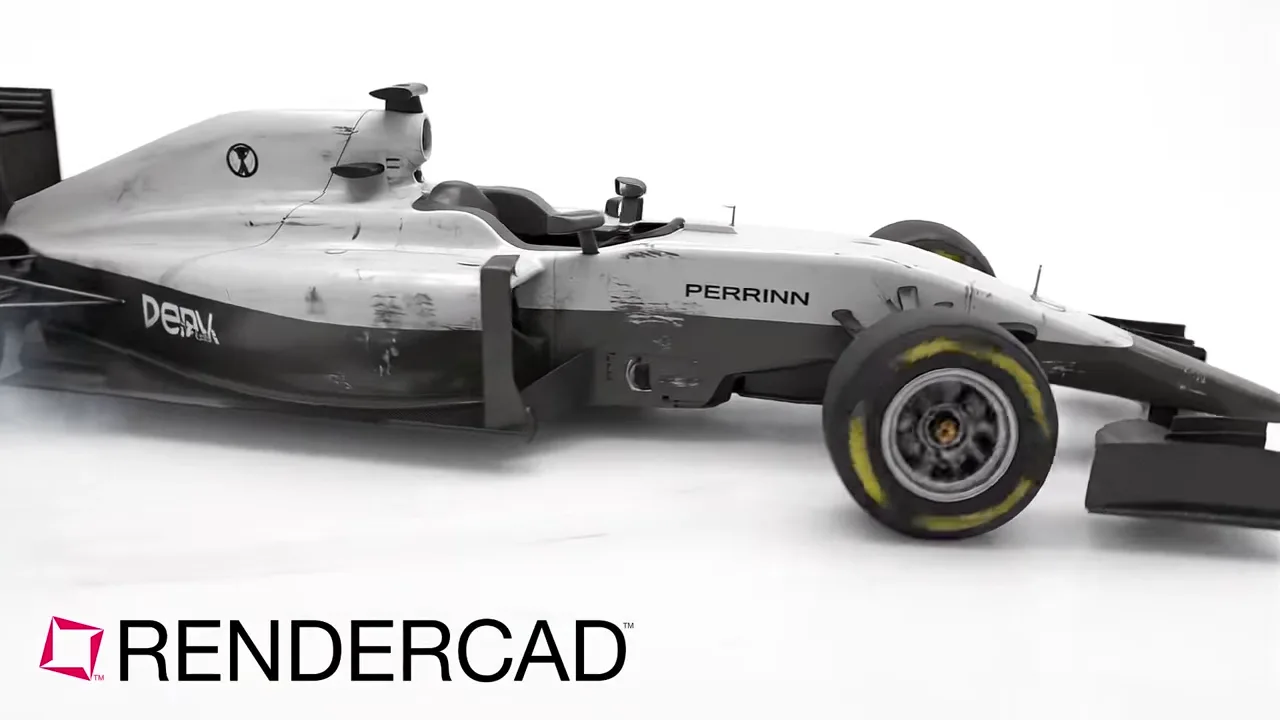
Create stunning photorealistic images and videos from any CAD system, real life photo, or even a quick napkin sketch.
IMAGE RENDERS COMPLETE IN 60 SECONDS.


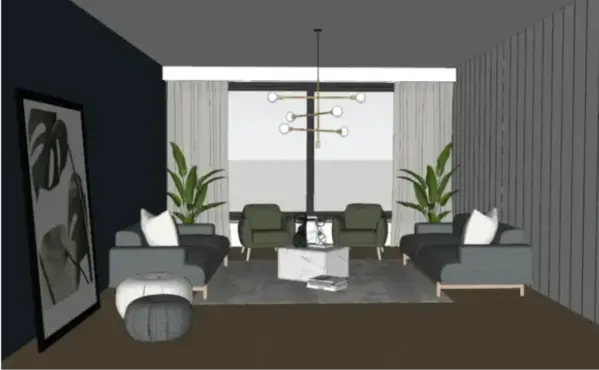
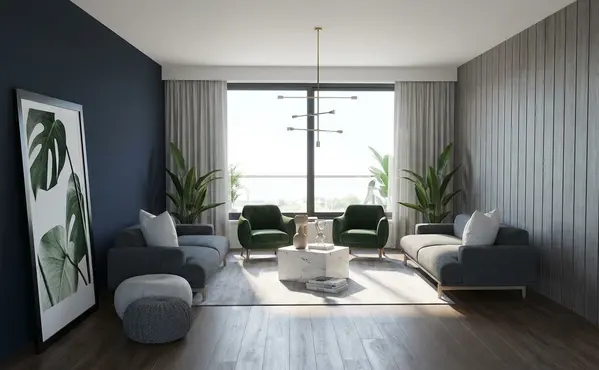
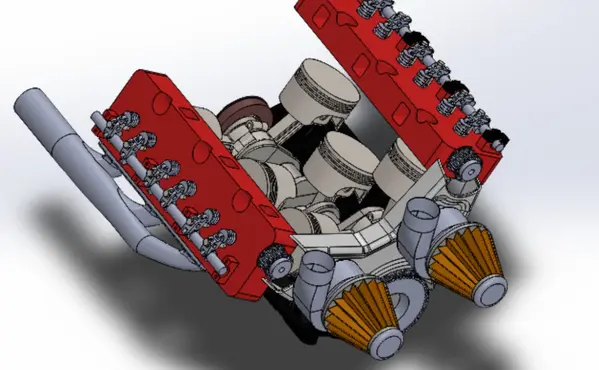
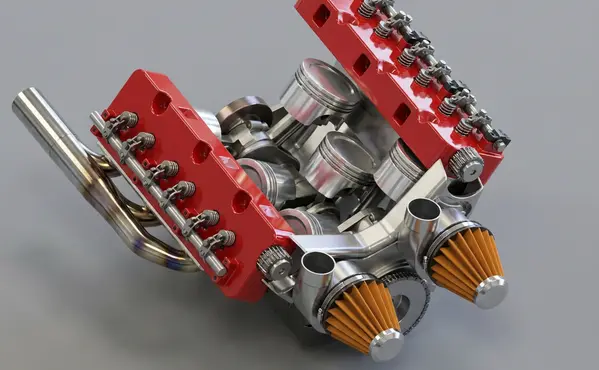


Medical device designers need visuals that make a product's form, controls, and intended interaction easy to discuss without overstating what an image can prove. CAD screenshots, industrial design viewports, and prototype photos often establish the enclosure and component placement, but can leave a display, connector, button, status light, accessory, or material transition hard to read for engineering, clinical, marketing, and training stakeholders. RENDERCAD helps turn those working references into clear render studies while the device is still evolving.
Start with a straight-on or three-quarter view that shows the user-facing surfaces and the relevant interaction points. A clean CAD viewport is useful for preserving the housing silhouette, seams, ports, and accessories; a prototype photo can be useful when its physical texture, assembly, or handheld scale needs to be conveyed. Use restrained lighting and a neutral background for a focused design review. Keep one camera angle consistent while comparing finishes, colorways, control callouts, screen treatments, removable caps, charging cradles, cables, or accessory configurations. Masks can isolate a proposed change instead of altering the entire device image.
Context renderings can support early conversations about intended users, environments, storage, or handling. They are also useful as illustrative assets for design presentations, internal training concepts, sales enablement, and launch planning. Avoid presenting a concept render as a clinical claim, an approved label, or proof of device performance. A polished screen image can communicate hierarchy and state, but it does not demonstrate interface behavior or legibility under real conditions.
These are visual communication assets, not engineering, usability, quality, labeling, verification, validation, or regulatory evidence. Confirm dimensions, materials, interface behavior, labeling content, packaging, and use-related safety through the appropriate design controls, human factors work, quality system, and regulatory processes. Use the controlled design record and approved product information as the source of truth when producing final materials.
RENDERCAD helps Medical Device Designers teams move from concept views to presentation-oriented visual options using reusable material and background direction. Review each output for product and brand consistency.
Screenshot your SolidWorks, Fusion 360, or CATIA viewport. RENDERCAD image renders complete in 60 seconds - no render farm, no material library setup, and no overnight wait for a single design review image.
Modeled by CADSharp in Onshape. Rendered with RENDERCAD.
Add | Change | or Remove referenced objects with the stroke of a brush.
RENDERCAD is designed for product-image exploration from clear design inputs, with controls for materials, finishes, backgrounds, and lighting direction. Generated concepts can support stakeholder review, but the source model and product specifications remain authoritative.
| Feature | RENDERCAD | Others |
|---|---|---|
| Engine | Generative AI | Varies by tool |
| Output | Images + Video | Varies by tool |
| Resolution | HD / 4K | Varies by workflow |
| Image Speed | Image renders complete in 60 seconds. | Varies by scene/tool |
| Video Speed | Videos complete in 2-5 minutes. | Varies by workflow |
| Scene Set Up | No separate local scene | Varies by workflow |
| Input | Screen Snip | Varies by tool |
| Materials | 2,600+ Textures | Tool-dependent |
| Backgrounds | 1300+ Backgrounds | Tool-dependent |
| Conditions | 40+ Effects | Tool-dependent |
| References | Up to 6 Per Render | Varies |
| Hardware | Cloud GPU | Often local GPU/CPU |
| Install | None | Varies (web or app) |
| Cost | from $9/mo | Varies widely |
Industrial designers need fast iteration, high-fidelity materials, and presentation-grade resolution. Here's how RENDERCAD's AI pipeline compares to your current rendering stack.
Skip a separate local scene build. Pick a condition, material, and background while RENDERCAD handles the image-generation step. Image renders complete in 60 seconds.
Forget about complex prompts, RENDERCAD lets you pick materials visually from our library with over 2600+ materials to choose from. Need more? Upload your own custom material references or even MATCH complex material reference images.
RENDERCAD uploads and processes the viewport screenshot you select; it does not require your SolidWorks assembly, Fusion project, CATIA model, or other native source file. Review current privacy, retention, and third-party processing terms before submitting confidential images.
Stop rolling the prompt dice trying to get the right background. RENDERCAD lets you visually select from over 1300+ environments in a single click. Supports 2D, 360 HDR, and even 3D Scenes.
Queue multiple material, color, finish, or angle variations for batch processing, subject to plan concurrency and usage limits. The API supports scripted workflows for approved design studies.
 ™
RENDERCAD™
™
RENDERCAD™
Use RENDERCAD in the browser, capture a selected view with the desktop app, or start from the browser extension. The screenshot workflow does not require a plugin in the source CAD application.
Get StartedCommon solutions for Medical Device Designers
Yes. Photograph your physical prototype or material sample and upload it as a reference for finish, texture, and color. Generated details can vary, so compare the result with the physical sample before using it as an accurate product representation.
Two engines: Fast (quick results, 1 credit) and Realistic (higher quality with reference image support, 2 credits). Both run in the cloud - no local GPU required.
Choose from 2,600+ materials - brushed aluminum, injection-molded plastic, walnut veneer, frosted glass - or describe a material in your text prompt. RENDERCAD uses that selection as generation guidance; review the result against the source design before publishing.
Yes. Render a photorealistic still, then use Image to Video with an available motion direction. Videos complete in 2-5 minutes.
Standard output is HD resolution in PNG format. 4K resolution is available for an additional 2 credits. Videos export as MP4.
Yes. The Seamless Loop option is designed to return the motion toward the starting frame. Review the transition before using the video on a website, social channel, or presentation.
Each render costs 1 credit (Fast engine) or 2 credits (Realistic engine). 4K adds 2 credits. Credits refresh monthly with your subscription.
Yes. All plans are month-to-month with no long-term contracts. Cancel anytime from account settings.
RENDERCAD is an AI-powered rendering service for CAD screenshots, real photos, and hand drawings. Upload an image and choose the relevant settings to create a rendered image or video without rebuilding a local 3D scene.
Image renders complete in 60 seconds. Videos complete in 2-5 minutes.
RENDERCAD continuously updates its AI rendering capabilities. As a cloud-based service, improvements are available to all users automatically without software updates.
Upload a 2D image - a CAD screenshot, real photo, or hand drawing - and choose the render style, materials, background, and condition. RENDERCAD then generates an image or video without requiring a 3D model export.