Create photorealistic product images and videos.
30 seconds. Zero configuration.
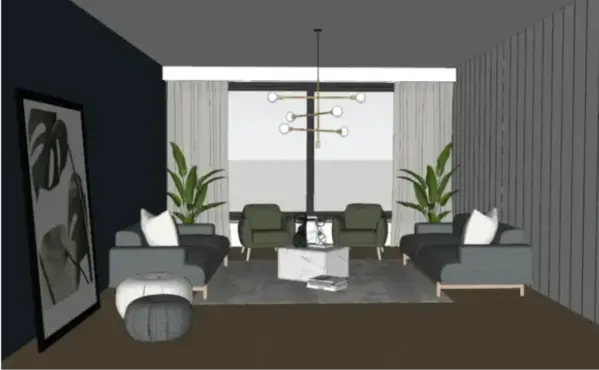
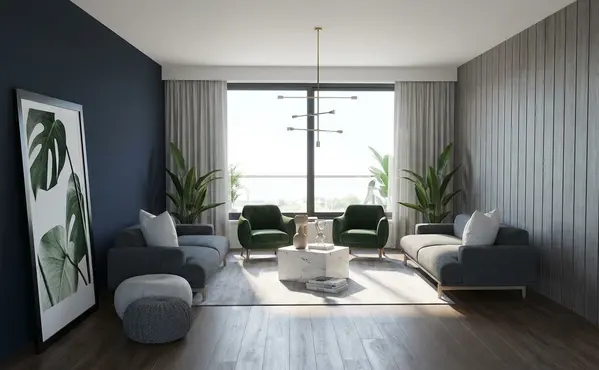
Furniture designers need clients to see pieces in context—a dining table means nothing in a void, but placed in a sunlit mid-century kitchen it tells a story that closes the sale. Presenting material and finish options is a constant bottleneck: clients want to compare walnut versus white oak, bouclé versus linen, and each variation historically required a separate scene render or physical swatch board. Collection cohesion is hard to evaluate when pieces are visualized in isolation across different lighting setups. RenderCAD's room context backgrounds and batch rendering solve both problems, placing an entire collection in consistent environments while letting you swap finishes per piece. Trade show preparation becomes dramatically faster when your booth graphics, lookbook, and website imagery all render from the same source in an afternoon.
Product designers iterate constantly—materials change, forms evolve, and clients need to see options before committing. Traditional rendering tools demand hours of scene setup, material assignment, and render time for each variation. RenderCAD collapses that entire workflow into a 30-second screenshot-based process that keeps pace with the speed of design thinking.
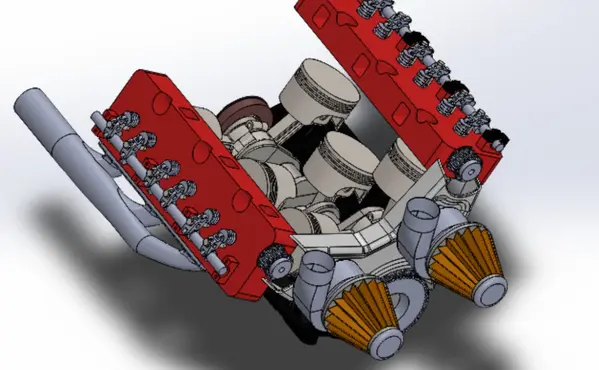
Working in SolidWorks, Fusion 360, Rhino, or any other design tool, simply capture your viewport and render. No exporting STEP files, no rebuilding scenes, no UV unwrapping. The AI engine reads your model's geometry, proportions, and design intent from the screenshot alone—and your proprietary CAD data never leaves your machine.
Choosing the right material is a design decision that clients often struggle to visualize from swatches and verbal descriptions. RenderCAD's 2,500+ material library lets you show the same product in brushed aluminum, matte black polymer, natural walnut, carbon fiber, or translucent polycarbonate—all in minutes. Use the mask tool to swap materials on specific regions: a soft-touch grip on a hard-shell body, a chrome accent on a matte housing, a leather wrap on a metal frame.
This kind of rapid material exploration used to require a dedicated visualization specialist or hours of KeyShot setup. Now a designer can generate a material study board of twelve variations during a coffee break and walk into a client review with tangible visual options instead of abstract descriptions.
Design reviews stall when stakeholders can't visualize what they're approving. A wireframe or gray-shaded CAD model doesn't communicate the finished product the way a photorealistic render does. RenderCAD lets designers produce presentation-quality visuals at every stage of the process—from early concept sketches to final pre-production models—so client feedback is based on what the product will actually look like.
Industrial design is a visual discipline—decisions are made by looking, comparing, and reacting. RenderCAD gives product designers a rendering tool that matches the pace and fluidity of the design process itself, turning every iteration into a presentation-ready visual without breaking the creative flow.
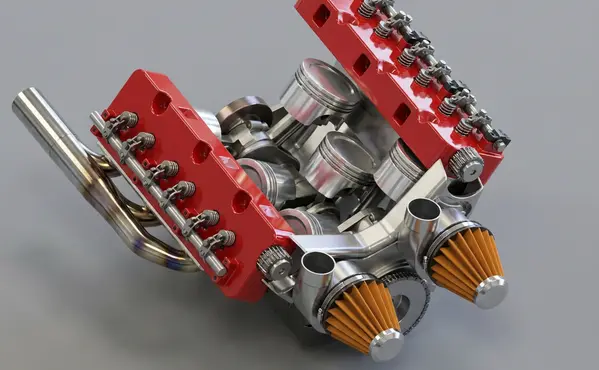
Screenshot your SolidWorks, Fusion 360, or CATIA viewport. RenderCAD produces photorealistic prototype visualizations in 30 seconds — no render farm, no material library setup, no waiting overnight for a single design review image.
Test a soft-touch rubber finish against anodized aluminum. Add an environment context to a bare prototype. Remove tooling marks from a concept render. RenderCAD lets industrial designers explore CMF (Color, Material, Finish) options in seconds — the kind of material study that would require hours of shader setup in SolidWorks Visualize or KeyShot.
RenderCAD's AI engine understands industrial design context — product form language, material properties, manufacturing finishes, and studio lighting conventions. It turns your SolidWorks or Fusion 360 viewport into the kind of photorealistic concept render that wins stakeholder approval and design awards.
No more building KeyShot scenes from scratch. No material library imports. No HDRI studio setup. RenderCAD gives you 2,500+ materials — metals, plastics, rubbers, ceramics, composites — and 300+ studio and contextual environments. Explore CMF options in seconds, not hours.
Show your prototype in context. Studio lighting for design reviews. Outdoor environments for field-use products. Dramatic fog for portfolio hero shots. 40+ conditions that transform a bare CAD screenshot into a presentation-ready concept image — no post-production pipeline required.
Patent-pending designs. Client NDA work. Pre-production prototypes. RenderCAD never touches your SolidWorks assemblies, Fusion 360 projects, or CATIA models. We render from a viewport screenshot — your parametric data, manufacturing specs, and engineering IP never leave your workstation.
Design exploration means dozens of iterations — material studies, color options, finish comparisons, angle variations. Queue your entire CMF matrix and let RenderCAD process it in parallel. Our API integrates with your design workflow for automated rendering of every configuration in your study.
RenderCAD sits on top of your CAD environment. Capture viewports, assemblies, and exploded views directly from your design session with our desktop app or browser extension. Zero plugin installs, zero compatibility issues.
Try NowCommon solutions for Furniture Designers
RenderCAD is an AI-powered rendering service that transforms your design images — CAD screenshots, sketches, photos, or concepts — into photorealistic renders in seconds. Upload an image, choose your settings, and receive a polished product visualization with no plugins or 3D model exports required.
No installation is required. RenderCAD runs entirely in your web browser. There is also an optional desktop app and browser extension for added convenience, but the full Render Studio is accessible from any modern browser.
RenderCAD accepts JPEG, JPG, PNG, WebP, BMP, and TIFF image files. You can upload screenshots from any design software — SolidWorks, Rhino, Fusion 360, Blender, or even scanned hand sketches.
Yes. New users receive 3 free render credits with no credit card required. This lets you test the full rendering quality and explore all features before choosing a subscription plan.
RenderCAD produces photorealistic renders in seconds. The Fast engine delivers the quickest results at 1 credit per render, while the Realistic engine takes slightly longer for higher quality output at 2 credits. 4K resolution is also available for an additional 2 credits.
Yes. RenderCAD has a mobile-friendly interface with touch-optimized controls, including touch support for the mask tool. You can render from a tablet or phone when you are away from your workstation.
No. RenderCAD is designed for anyone regardless of rendering expertise. The AI handles lighting, materials, shadows, and environment generation based on your uploaded image and optional settings.
You can upload by clicking the upload area, dragging and dropping files into the workspace, or pasting an image from your clipboard with Ctrl+V or Cmd+V. You can also capture your screen directly using the live viewport feature.
Yes. RenderCAD offers both dark and light themes that you can toggle to suit your preference and working environment.
RenderCAD features workspace auto-save, so your images and progress are preserved. Your render history is also maintained so you can return to previous results at any time.
RenderCAD uses AI to analyze your 2D image — a CAD screenshot, sketch, or product photo — and generate photorealistic output directly. Choose from Exact, Creative, or Freeform render styles, apply materials from 2,500+ textures, set a background from 300+ scenes, and receive your result in seconds.
No. RenderCAD works entirely from 2D images — screenshots, sketches, photos, or exported views. You never need to upload or share your actual model files, keeping your design data private and secure.
Yes. You can upload scanned or photographed sketches and the AI will interpret the design and generate a rendered visualization from it. This is useful for early concept stages before CAD modeling begins.
You can provide text instructions to guide the AI on materials, lighting, environment, mood, or any specific requirements. Describe what you want — for example, 'brushed aluminum body with soft-touch rubber grips, studio lighting' — and the AI applies those instructions to your render.
Yes. Your uploaded images and renders are stored securely and are only accessible to your account. RenderCAD does not share your designs publicly.
Yes. The AI can process images of complex products with intricate details, multiple materials, and varied geometry. For best results, use clear viewport captures with visible geometry and distinct material boundaries.
The AI analyzes your image to identify shapes, surfaces, and context. You can guide it further with text prompts, reference images from the material library, and conditions to achieve precise material representation.
RenderCAD continuously updates its AI rendering capabilities. As a cloud-based service, improvements are available to all users automatically without any software updates or downloads.
Yes. RenderCAD generates photorealistic product visuals suitable for concept visualization, material exploration, client presentations, and marketing assets — all without physical prototypes or studio setups.
You can upload via file browser, drag and drop, clipboard paste, the RenderCAD desktop app, the browser extension, or the live viewport capture feature that lets you screen-share your design software directly.
Yes. You can upload multiple images to the workspace simultaneously. They appear in a grid layout and can all be configured and rendered together.
Live viewport lets you share your screen or a specific application window directly in RenderCAD. You can then capture frames from the live feed, crop the capture region, select aspect ratios, and send those frames to the render workspace — all without saving and uploading screenshot files.
Yes. Copy a screenshot to your clipboard using your system screenshot tool or your CAD software's capture function, then paste it directly into the RenderCAD workspace using Ctrl+V or Cmd+V.
The desktop app integrates with your system to allow quick capture and upload from any CAD or design software. It streamlines the screenshot-to-render workflow without switching between windows.
The RenderCAD browser extension lets you capture and send images to your Render Studio workspace directly from web-based design tools or any browser content, making it easy to render references or online designs.
Your original uploads are preserved in the workspace alongside the rendered outputs. You can view, compare, edit, or re-render from the original at any time.
Yes. RenderCAD accepts photos alongside CAD screenshots and sketches. You can photograph a physical prototype and use the AI to visualize it with different materials, finishes, or environments.
Use clear, well-lit captures with visible geometry and material boundaries. Standard resolution screenshots from your design software work well. The AI produces better results when the input image clearly shows the product's form and details.
RenderCAD offers two engines: Fast (1 credit per render) for quick iterations and previews, and Realistic (2 credits per render) for higher quality output with support for reference images, masks, and conditions.
Use the Fast engine for rapid iterations, early concept exploration, quick material comparisons, and any situation where speed and credit efficiency matter more than maximum visual fidelity. It costs just 1 credit per render.
Use the Realistic engine when you need maximum quality for client presentations, portfolio work, marketing assets, or final delivery. It supports reference images, masks, conditions, and 4K resolution — features not available with the Fast engine.
No. Reference image support (custom uploads, material library, background library, and object removal) is only available with the Realistic engine. The Fast engine is designed for quick, standalone renders.
Only the Realistic engine supports 4K output resolution. The Fast engine renders at HD resolution. 4K rendering adds 2 additional credits to the base cost.
The Realistic engine supports over 40 surface conditions, from Pristine and Factory New to weathered, damaged, and extreme states. The Fast engine defaults to the Pristine condition and does not support condition selection.
Yes. You can render the same uploaded image with either engine at any time. This is a useful workflow — start with Fast for quick exploration, then switch to Realistic for final quality renders.
The Realistic engine is ideal for product photography replacement. It produces higher quality output and supports reference images for precise material and background control, giving you studio-quality results.
Yes. The Fast engine prioritizes speed and delivers results more quickly. The Realistic engine takes slightly longer because it processes more detail, references, and conditions for higher quality output.
No. Mask support is exclusive to the Realistic engine. If you need to target specific areas of your product for material changes or object removal, you need to use the Realistic engine.
RenderCAD offers three styles: Exact (preserves your design precisely), Creative (AI improves lighting and shadows while maintaining design intent), and Freeform (full prompt control with no system template applied).
Use Exact style when you need the AI to preserve your product design as closely as possible — for example, when showcasing a final design to stakeholders or when dimensional accuracy of the visual representation matters most.
Use Creative style when you want the AI to enhance your product image with improved lighting, shadows, and environmental effects. This is great for generating polished marketing visuals where some artistic interpretation adds appeal.
Freeform style gives you full control via your text prompt with no system template applied by RenderCAD. Use it when you have a very specific vision and want to direct every aspect of the render through your own detailed instructions.
For client presentations where design accuracy is critical, use Exact style. For marketing-oriented visuals that need to look impressive, Creative style adds professional lighting and shadow enhancements automatically.
Yes. You can render the same uploaded image with any style and compare results side by side. This lets you choose the best visual treatment for each use case — accuracy for engineering reviews, polish for marketing.
No. The render style does not change the credit cost. Cost is determined by the engine choice (Fast: 1 credit, Realistic: 2 credits) and resolution (4K adds 2 credits with the Realistic engine).
Freeform style is specifically designed for full prompt control, making it ideal for detailed material exploration. You can describe exact material specifications, lighting setups, and environments without any system template interfering with your instructions.
Yes, when using the Realistic engine. You can pair Creative style with material references, background references, and custom reference photos to guide the AI's creative enhancements while maintaining control over specific materials and settings.
RenderCAD offers HD resolution as standard (included in the base render cost) and 4K resolution as an upgrade (+2 additional credits, available with the Realistic engine only).
All rendered images are output in PNG format, which provides lossless quality ideal for product design work, further editing, and professional presentation.
Use 4K resolution for final deliverables, print-ready marketing materials, large-format displays, portfolio pieces, and any situation where maximum image detail is required. The added detail is especially valuable for products with fine textures and intricate details.
Yes. HD resolution provides excellent quality for on-screen presentations, web use, email sharing, and most digital contexts. Reserve 4K for print materials or when you need to crop into fine product details.
4K resolution adds 2 credits on top of the Realistic engine's base cost of 2 credits, totaling 4 credits per 4K render. It is only available with the Realistic engine.
No. 4K resolution is exclusive to the Realistic engine. The Fast engine renders at HD resolution only.
Yes. PNG provides lossless compression, preserving all detail from the AI render. This makes it suitable for print production, packaging design proofs, and high-quality marketing materials.
Renders are delivered in PNG format. You can use external tools to convert to other formats if needed, but PNG is the optimal format for preserving render quality without compression artifacts.
Reference images are additional visual inputs you provide alongside your main product image to guide the AI. They help the AI understand exactly what materials, backgrounds, or modifications you want applied to your render.
You can use up to 3 reference images per render when using the Realistic engine. Each reference slot supports a different type: Custom (your own upload), Material (from the library), Background (from the library), or Remove (object removal via mask).
There are four reference types: Custom (upload your own reference photo), Material (choose from 2,546 textures in the library), Background (select from 300+ background scenes), and Remove (mask areas for object removal).
Yes. Each reference slot has an optional prompt field where you can add specific instructions for how that reference should be applied to your product render.
Yes. Each reference slot includes access to the mask editor, allowing you to target the reference to specific areas of your product image rather than applying it to the entire image.
No. Reference image support is exclusive to the Realistic engine. The Fast engine does not support any reference inputs.
Yes. You can use up to 3 references per render, and each can be a different type. For example, you could use one Custom reference for material inspiration, one Material library texture, and one Background scene — all in a single render.
References give the AI concrete visual targets. Instead of relying solely on text descriptions, you can show the exact leather grain, metal finish, or studio environment you want. This dramatically improves accuracy for material-specific product visualization.
Yes. Using the Custom reference type, you can upload a photograph of any real-world material — a fabric swatch, metal sample, or wood grain — and the AI will use it as guidance for your product render.
In the reference image section, select the Custom reference type and upload your own image file. You can upload photos of materials, environments, competing products, or any visual reference that helps communicate your desired outcome.
Material swatches, finish samples, environment photos, mood board images, and existing product photography all make excellent custom references. The AI uses these as visual guidance to match the look and feel in your render.
Yes, you can upload any image as a custom reference for visual guidance. The AI uses the reference to understand the desired look, materials, and lighting — it does not copy the image itself.
Yes. Each reference slot includes a mask editor, so you can paint a mask on your main image to specify exactly where the custom reference should influence the render. This is useful for applying different materials to different parts of a product.
You can use up to 3 reference slots per render, and any or all of them can be Custom references. This lets you provide multiple visual guides for different aspects of your product render.
Yes. Each reference slot has an optional prompt field. You can describe how the AI should interpret your custom reference — for example, 'apply this wood grain to the tabletop surface only' — for more precise control.
Custom references help the AI approximate colors and materials from your uploaded image. For precise brand color matching, combine a custom reference photo showing the color with a detailed text prompt specifying the exact color and finish.
Custom references are uploaded per render session. To reuse a reference across multiple renders, keep the reference image file accessible and re-upload it as needed when configuring new renders.
The material library contains 2,546 (public domain) textures that you can apply to your product renders as reference images.
You can browse by category, filter by color (11 color options: black, white, gray, brown, red, orange, yellow, green, blue, purple, and pink), or search by name to find the exact texture you need.
The library includes a wide range of materials organized by category — metals, woods, fabrics, plastics, stone, concrete, leather, and many more. All 2,546 textures are licensed for unrestricted use.
Yes. Select a texture from the library that matches your desired product finish — brushed metal, matte plastic, natural wood grain, woven fabric — and the AI uses it as visual guidance to render that surface on your product.
Yes. The material library supports filtering by 11 colors: black, white, gray, brown, red, orange, yellow, green, blue, purple, and pink. This helps you quickly narrow down textures to match your product color scheme.
Yes. All 2,546 textures in the material library are licensed (public domain), meaning there are no restrictions on their use in commercial product renders.
Yes. When using a material reference, you can use the mask editor to paint the specific area of your product where you want the material applied. This allows multi-material product renders with different finishes on different parts.
A material reference provides the AI with an actual visual sample of the texture, grain, and color you want. This is more precise than text alone, especially for nuanced finishes like specific wood grains, fabric weaves, or metallic textures.
Yes. The material library includes a search function that lets you find textures by name. Search for 'walnut', 'carbon fiber', 'brushed aluminum', or any specific material to quickly locate relevant textures.
Yes. With up to 3 reference slots per render, you can mix material library selections with your own custom uploaded reference photos. For example, use a library metal texture for the body and a custom photo for a specific fabric accent.
RenderCAD's background library includes over 300 background scenes across categories including nature, studio, roads, interior, and exterior environments.
Background categories include nature (outdoor landscapes), studio (professional product photography setups), roads (automotive and transportation contexts), interior (room environments), and exterior (architectural and urban settings).
Yes. Like the material library, backgrounds can be filtered by color, category, and keyword search to quickly find the right environment for your product render.
Beyond the library, you can choose Auto (AI selects), Upload (your own background image), Custom Color (using an HSV picker), Solid backgrounds (White, Grey, or Gradient), or specify a custom hex color code.
Studio backgrounds from the library provide professional product photography aesthetics. For clean e-commerce-style images, Solid White or Solid Grey backgrounds create neutral product showcases. Gradient backgrounds add subtle depth.
Yes. Select the Upload option in the background settings to use your own background image. This is useful when you need to show your product in a specific environment, brand setting, or real-world context.
Yes. RenderCAD supports custom hex color codes for solid color backgrounds, giving you exact control for brand-matched product renders. You can also use the HSV picker for visual color selection.
The Auto option lets the AI choose an appropriate background based on your product image and any text instructions you provide. It is a good starting point when you want the AI to make a contextually relevant choice.
Yes. You can adjust background settings and re-render the same product image with a different background at any time. This makes it easy to generate product shots in multiple environments for marketing materials.
Yes. The nature category includes landscapes and outdoor environments that work well for products meant to be shown in outdoor contexts — camping gear, sporting goods, vehicles, or any product that benefits from a natural setting.
Master Background applies the same background to all images in a batch render. Instead of configuring backgrounds individually for each product image, you set it once and it applies consistently across every image.
Use Master Background when you need visual consistency across a product line — for example, rendering all color variants of a product against the same studio setup, or showing an entire collection in the same environment.
Yes. Master Background uses 1 reference slot per image in the batch. Since you have up to 3 reference slots total, you still have 2 remaining slots for materials or custom references on each image.
Yes. You can select any background from the 300+ options in the library, upload your own, use a custom color, or choose a solid background as the Master Background for your entire batch.
Master Background uses reference slots, which are only supported by the Realistic engine. It is not available with the Fast engine.
For product catalogs, Master Background ensures every product image has the same environment, lighting feel, and aesthetic. This creates a cohesive, professional look across dozens or hundreds of product renders.
Yes. You can change the Master Background setting and re-render all images in the batch. This lets you quickly generate an entire product range in different environments — studio, lifestyle, outdoor — with minimal effort.
Yes. All background options are available for Master Background, including custom hex colors, HSV picker colors, solid backgrounds, library selections, and uploaded custom background images.
Master Material applies the same material texture to all images in a batch render. Set a material once and it applies consistently to every product image in your workspace, ensuring uniform finish across a product line.
When you need to show the same material finish across an entire product family — such as the same brushed aluminum across a range of kitchen appliances — Master Material ensures perfect consistency without configuring each image individually.
Yes. Master Material uses 1 reference slot per image in the batch. With 3 total reference slots available, you still have 2 slots for backgrounds, custom references, or other modifications on each image.
Yes. Master Material supports masking, allowing you to paint the specific area on each product image where the material should be applied. This means you can apply a consistent metal finish to the body while leaving handles, buttons, or accents untouched.
Yes. You can select any of the 2,546 textures in the material library as your Master Material, ensuring every product in the batch receives the same surface treatment.
Yes, but each uses 1 reference slot. With both active, each image in your batch will use 2 of its 3 available reference slots, leaving 1 slot for additional customization per image.
No. Master Material uses reference slots, which require the Realistic engine. It is not available with the Fast engine.
Master Material excels when rendering product line variants (same material, different shapes), testing a material finish across a collection, or ensuring catalog-wide consistency for client presentation materials.
Conditions are surface effects that simulate real-world states on your product. RenderCAD offers over 40 conditions ranging from pristine factory finishes to heavy wear, environmental effects, and extreme states.
Clean conditions include Pristine, Factory New, Polished, Gleaming, and Glazed. These are ideal for showcasing products in their best possible state — fresh from manufacturing or retail display.
Surface imperfection conditions like Smudged, Dusty, Scuffed, and Micro-scratched add realistic everyday wear to your product renders. This is useful for showing how a product looks after typical consumer use.
Heavy wear conditions include Distressed, Chipped, Battered, and Abraded. These simulate significant use and damage, useful for durability testing visualization or vintage product aesthetics.
Conditions like Grimy, Weathered, Oxidized, Rusted, Patina, Scorched, Sun-bleached, Moldy, and Mossy simulate long-term environmental exposure. Light, Medium, and Heavy Wear options let you control the degree of aging.
Yes. By rendering the same product with progressive conditions — Factory New, then Light Wear, then Medium Wear, then Heavy Wear — you can create a visual timeline showing how a product ages, which is valuable for durability presentations.
Pristine, Factory New, Polished, and Gleaming conditions are ideal for premium products. They emphasize perfect surfaces, high-gloss reflections, and flawless finishes that communicate quality and luxury.
The full set of 40+ conditions is available with the Realistic engine. The Fast engine defaults to Pristine and does not support condition selection.
Conditions are applied to the entire render through the Realistic engine. To achieve localized wear effects on specific areas, you can use render iterations with masks to selectively modify portions of your product image.
Structural damage conditions include Cracked, Warped, Shattered, Torn, and Broken. These are useful for visualizing product failure modes, stress testing scenarios, or post-impact states for safety documentation.
RenderCAD offers Frosted, Wet, and Steaming conditions. These simulate products exposed to cold, rain, or heat — useful for showing how a product looks in different climate conditions.
Extreme conditions include Red-hot, Smoking, On Fire, Melting, and Electrified. While dramatic, these can be valuable for heat resistance demonstrations, safety documentation, or attention-grabbing marketing visuals.
Environmental conditions include Mud-covered, Dirt-covered, Sand-covered, and Snow-covered. These show products in outdoor and all-terrain contexts, ideal for rugged equipment and outdoor product marketing.
Environmental conditions help tell a story. Show outdoor products covered in mud or snow to communicate ruggedness. Show luxury products in Pristine or Gleaming condition to communicate quality. The condition becomes part of your product narrative.
Yes. The Wet condition adds realistic water droplets and surface moisture, creating the kind of dramatic product shots often seen in beverage advertising, skincare marketing, or premium product photography.
The Frosted condition simulates ice crystals and frost formation on surfaces, useful for cold-chain products, refrigeration equipment, beverage containers, or any product designed for low-temperature environments.
Yes. Conditions like Red-hot, Melting, and On Fire can visualize extreme scenarios for safety documentation, training materials, or failure mode demonstrations without physically damaging products.
Yes. When using the Realistic engine, you can pair environmental conditions with appropriate backgrounds. For example, Snow-covered condition with a winter landscape background creates a cohesive outdoor product scene.
The mask editor includes a Brush tool (adjustable size 5-150px), Eraser, Lasso (freehand selection), Inversion (flip masked/unmasked areas), and Clear (remove all masking). Touch input is supported for tablet use.
Masking lets you paint over specific areas of your product image to tell the AI where to apply changes. For example, mask just the handle of a device to change its material while keeping the rest unchanged.
The Lasso tool lets you draw a freehand selection outline around an area, which is then filled as a mask. This is faster than painting with a brush for large or complex-shaped regions of your product.
Mask inversion flips the selected and unselected areas. If you masked a small detail, inverting selects everything except that detail. This is useful when it is easier to mask what you want to keep than what you want to change.
Yes. The brush size is adjustable from 5 to 150 pixels, letting you work on fine details like button edges or seams (small brush) or large surface areas like product bodies (large brush).
Yes. The mask tool has full touch support, so you can use it on a tablet with a stylus for precise masking. This is especially useful for detailed product design work on the go.
Yes. Each reference slot includes its own mask editor. This means you can paint exactly where each reference material, background, or custom image should influence the render, enabling multi-material product compositions.
Use the Clear function in the mask editor to remove all masking at once. You can also use the Eraser tool to selectively remove parts of your mask for fine adjustments.
Yes. Use the brush or lasso tool to mask individual components — a handle, lid, base, or trim piece — and apply different materials or references to each. Render in iterations to build up a complex multi-material product visualization.
No. Masking is optional. Without a mask, references and conditions apply to the entire image. Masking is only needed when you want to target changes to specific areas of your product.
Object removal uses the Remove reference type. Mask the area containing the unwanted object, select Remove as the reference type, and the AI will fill in the masked area, effectively erasing the object from your product image.
You can remove background clutter, unwanted objects, watermarks, logos, stray elements, support structures from CAD views, or any visual element that distracts from your product. The AI fills the removed area naturally.
Yes. Object removal uses the reference system, which is only available with the Realistic engine at 2 credits per render.
The mask editor provides a brush (5-150px), eraser, and lasso for precise selection. For best results, mask slightly beyond the edges of the object you want to remove to ensure clean removal.
Yes. Paint your mask over all areas you want removed, and the AI will handle them in a single render pass. You can also use render iterations to remove objects progressively for more control.
Yes. If your CAD screenshot includes grid lines, axis indicators, selection handles, or other viewport artifacts, you can mask and remove them to produce a clean product image before or after rendering.
The AI intelligently fills the removed area based on the surrounding context. It matches colors, textures, and patterns to create a seamless result, as if the object was never there.
Yes. Since you have up to 3 reference slots per render, you can use one slot for object removal and the remaining slots for material or background references, all in the same render.
The image editor includes Brush, Eraser, Fill, Lasso, Crop (with multiple aspect ratios), Text, Shapes (rectangle, circle, line), a Layers system, 50-state undo/redo, Zoom (5-500%), Pan, and the ability to import additional images.
The crop tool offers free-form cropping plus preset aspect ratios: 1:1, 4:3, 3:2, 16:9, 21:9, and 9:16. These cover square social media posts, standard screens, widescreen, ultrawide, and vertical mobile formats.
Yes. You can edit your original uploaded image using the full image editor before sending it to the AI for rendering. This lets you crop, annotate, clean up, or compose images before processing.
Yes. The image editor works on both original uploads and rendered output images. After rendering, you can edit the result to make adjustments, add annotations, or prepare the image for final delivery.
The image editor supports a layers system, allowing you to work with multiple image layers for composition. Import additional images as layers to combine elements, add logos, or create composite product scenes.
The image editor supports 50-state undo and redo, giving you extensive freedom to experiment with edits and easily reverse changes without losing your work.
Yes. The Text tool lets you add text labels, annotations, or branding elements directly to your product images within RenderCAD's image editor.
The editor supports zoom from 5% to 500%, allowing you to zoom way out for an overview or zoom in extremely close for pixel-precise detail work on your product images.
Yes. You can save your edits as an overwrite of the original image or as a new image in your workspace, preserving the original for reference.
Yes. The import function lets you bring additional images into the editor as new layers. This is useful for compositing multiple product views, adding reference graphics, or building presentation images.
Render iterations let you re-render an existing output image. Instead of starting from scratch, you take a previous render result and refine it further — adjusting materials, fixing details, or adding new elements.
Iterations let you build up quality progressively. Start with a base render, then use masks to refine specific areas — improve a material finish here, fix an AI artifact there — until the product visualization meets your exact requirements.
Yes. During iterations, you can mask specific regions to focus the AI's attention. This is ideal for fixing small artifacts, changing a material on one component, or adding detail to a specific area without affecting the rest.
No. RenderCAD supports unlimited render iterations. You can refine a product visualization as many times as needed, each iteration building on the previous result.
Yes. Each iteration is a new render and costs credits based on the engine and resolution you select — the same as any other render (Fast: 1 credit, Realistic: 2 credits, plus 2 for 4K).
Yes. If a render has a small artifact or imperfection, mask that specific area and re-render just that section. The AI will regenerate the masked area while preserving everything else, effectively cleaning up the artifact.
Yes. Mask the component you want to change, apply a new material reference, and iterate. This lets you swap the handle material, change a panel finish, or modify any specific section of your product render.
Iterations preserve the overall quality of your existing render and only modify the masked areas. Re-rendering from scratch processes the entire image anew. Iterations are more efficient when you are happy with most of the render and only need targeted improvements.
Yes. RenderCAD's video feature generates animated product showcase videos from a single rendered image. Choose your duration, camera movement, product motion, and style to create professional product videos.
RenderCAD offers 4-second (4 credits), 6-second (6 credits), and 8-second (8 credits) video options. Choose based on the complexity of the motion and the platform requirements for your product video.
Videos are available in 720p (included in the base credit cost) and 1080p (+1 additional credit). 1080p is recommended for professional product presentations and marketing use.
RenderCAD supports MP4, WebM, and GIF output formats. MP4 is the most universally compatible for product videos, WebM works well for web embedding, and GIF is ideal for short product loops in emails or social media.
Two styles are available: Exact (preserves your product render precisely in the animation) and Creative (the AI enhances lighting and effects during the video sequence).
Yes. Use the Turntable product motion option to create classic 360-degree product rotation videos. This is one of the most popular choices for e-commerce, product catalogs, and client presentations.
Video credit costs are based on duration: 4s costs 4 credits, 6s costs 6 credits, 8s costs 8 credits. Add 1 credit for 1080p resolution. Camera movements and product motions are included in the base cost.
Yes. The various duration options and output formats are designed for social media use. Create short 4-second loops for Instagram Stories, 6-second features for product feeds, or 8-second showcase videos for LinkedIn and YouTube.
No. RenderCAD generates product videos from a single 2D rendered image. The AI creates the illusion of camera movement and product motion without any 3D model data.
Yes. You can pair any camera movement with any product motion to create dynamic product showcase videos. For example, combine a Slow Push-In camera with Hero Spin product motion for an engaging reveal.
RenderCAD offers over 20 camera movements: Auto, Fixed, Slow Push-In, Slow Pull-Back, Rack Focus, Dolly Zoom, Truck Left, Truck Right, Pedestal Up, Pedestal Down, Flyover, Cinematic Orbit, Spiral, Pan Swivel, Handheld, Crash Zoom, Low Angle Rise, Dutch Angle, Top-Down Spin, Follow Cam, and 180° Arc.
Slow Push-In creates dramatic product reveals by gradually closing in on your product. Cinematic Orbit provides a professional rotating view. Low Angle Rise makes products look imposing and premium — choose based on the emotion you want to convey.
Cinematic Orbit moves the camera in a smooth arc around the product, creating the classic revolving product showcase shot used in commercial advertising and luxury product presentations.
Dolly Zoom simultaneously moves the camera closer while zooming out (or vice versa), creating a dramatic perspective shift. This attention-grabbing technique is great for product launch videos or dramatic reveals.
Top-Down Spin captures the product from above while rotating, ideal for flat-lay style product showcases, packaging top-views, or compact product presentations where the top surface is a key design element.
Handheld adds subtle, organic camera shake that creates a documentary or behind-the-scenes feel. Use it for lifestyle product content, social media videos, or when you want a less polished, more authentic aesthetic.
The 180° Arc sweeps the camera in a half-circle around the product, showing it from multiple angles in a single smooth shot. This is excellent for products with interesting design details on multiple sides.
Follow Cam simulates a camera tracking alongside the product as if following its movement. This works well with dynamic product motions like Slide In or Roll for energetic product introductions.
Yes. The Fixed camera keeps the viewpoint static while any product motion occurs. This creates clean, focused product videos where all attention is on the product's movement rather than camera dynamics.
Crash Zoom rapidly zooms into the product for a dramatic, high-energy effect. It is ideal for attention-grabbing social media content, product teasers, or emphasizing a specific product detail.
RenderCAD offers over 30 product motions: Static, Idle, Move in Place, Levitating, Vibrating, Pulsing, Turntable, Roll, Tumble, Hero Spin, Drop, Slide In, Pop Up, Explode, Assemble, Mechanical, Dynamic, Liquid Splash, Condensation, Cloth Wave, Inflate, Squish, Open & Close, Fold/Unfold, and Dispense Action.
Turntable rotates your product smoothly around its vertical axis, creating the classic 360-degree product showcase. This is the industry standard for e-commerce product displays and catalog presentations.
Hero Spin creates an attention-grabbing rotation with dramatic pacing — typically starting slow, accelerating, and then settling. It is designed for hero product shots and promotional content.
Explode separates the product into its component parts, spreading them outward to reveal internal structure. This is ideal for products where you want to showcase build quality, internal components, or layered construction.
Assemble shows product components coming together, the reverse of Explode. This is perfect for assembly demonstrations, build sequence visualizations, or marketing content that emphasizes craftsmanship.
Liquid Splash creates a dynamic liquid effect around your product, perfect for beverages, waterproof products, skincare items, or any product where liquid interaction is part of the brand story.
Open & Close animates a product opening and closing — a lid, cover, or compartment. This is useful for showcasing packaging designs, electronics with hinged components, or any product with an opening mechanism.
Fold/Unfold animates a product folding or unfolding, ideal for foldable electronics, collapsible products, transforming designs, or packaging that unfolds to reveal contents.
Condensation adds moisture droplets forming on the product surface, perfect for cold beverages, refrigerated products, or any item you want to convey as fresh and chilled in your marketing video.
Dispense Action simulates a product dispensing its contents — a pump pressing, a spray activating, or a cap opening. This is ideal for cosmetics, cleaning products, food packaging, and any dispensing mechanism.
Yes. Static keeps your product completely still while the camera does the work. Combine Static with Cinematic Orbit or Slow Push-In for clean, elegant product videos where the focus is on the product's design rather than motion.
Yes. RenderCAD offers a Seamless Loop end frame option that uses crossfade blending (adjustable from 0 to 2 seconds) to create videos that loop continuously without a visible cut — perfect for digital displays and social media.
End frame options include None (video ends naturally), Seamless Loop (crossfade for continuous looping), From History (use a previous render as the end frame), and Upload (provide a custom end frame image).
When selecting Seamless Loop, you can adjust the crossfade duration from 0 to 2 seconds. Longer crossfades create smoother transitions but reduce the distinct content duration within the video.
From History lets you select a previously rendered image as the end frame. The video will animate from your current render to the selected historical render, creating a before/after or variant transition effect.
Yes. The Upload end frame option lets you provide your own image as the final frame. The video will animate from your product render to your custom image, useful for logo transitions or specific final compositions.
GIF and WebM handle seamless loops natively in web browsers and social media. MP4 can loop but may show a brief pause depending on the player. For web-embedded product loops, GIF or WebM is recommended.
Yes. Seamless looping product videos are ideal for digital signage, trade show displays, retail screens, and website hero sections where continuous product showcases run without visible interruption.
Yes. Use the From History or Upload end frame option to set a different product render as the final frame. The video will smoothly animate between the two variants — useful for showing color or material options.
RenderCAD offers four tiers: Trial (3 free credits, no card required), Starter ($20/month, 150 credits), Professional ($60/month, 500 credits), and Enterprise ($175/month, 2,000 credits). All paid plans include commercial use rights, unlimited exports, and full quality output.
The Starter plan costs $20/month and includes 150 credits, email support, 30-day render retention, commercial use rights, unlimited exports, and full quality output.
The Professional plan costs $60/month and includes 500 credits, priority support, batch processing, API access, 90-day render retention, commercial use rights, unlimited exports, and full quality output.
The Enterprise plan costs $175/month and includes 2,000 credits, 24/7 support, custom integrations, a dedicated account manager, API access, 365-day render retention, commercial use rights, unlimited exports, and full quality output.
Yes. The Trial tier gives you 3 free credits with no credit card required. You can render product images at full quality to evaluate RenderCAD before committing to a subscription.
Yes. All RenderCAD subscriptions can be cancelled at any time. There are no long-term contracts or cancellation fees.
No. Credits do not roll over between billing cycles. Each month you receive your plan's full credit allocation as a fresh balance.
For individual designers, the Starter plan ($20/month, 150 credits) covers regular rendering needs. If you do frequent batch rendering or need API access, the Professional plan ($60/month, 500 credits) offers better value per credit.
For teams with high volume rendering needs, the Enterprise plan ($175/month, 2,000 credits) offers the best per-credit value along with 24/7 support, custom integrations, a dedicated account manager, and 365-day retention.
RenderCAD subscriptions are billed monthly. All plans offer the flexibility of month-to-month billing with no long-term commitment required.
A Fast engine render costs 1 credit. A Realistic engine render costs 2 credits. Adding 4K resolution to a Realistic render adds 2 more credits (4 total). Credits provide a simple, predictable cost structure.
Video costs are based on duration: 4-second videos cost 4 credits, 6-second videos cost 6 credits, and 8-second videos cost 8 credits. Upgrading to 1080p resolution adds 1 additional credit.
Start with the Fast engine (1 credit) for concept exploration and iterations. Switch to Realistic (2 credits) for final quality renders. Reserve 4K (4 credits) for print-ready or large-format deliverables. This tiered approach maximizes the value of each credit.
The Starter plan (150 credits) provides up to 150 Fast engine renders, or 75 Realistic engine renders, or a mix of both plus video renders depending on your workflow.
The Professional plan (500 credits) provides up to 500 Fast renders, or 250 Realistic renders, or 125 4K renders, or various combinations including video renders.
The Enterprise plan (2,000 credits) provides up to 2,000 Fast renders, or 1,000 Realistic renders, or 500 4K renders, or various combinations to suit high-volume production workflows.
No. The render style (Exact, Creative, or Freeform) does not change the credit cost. Credits are determined by the engine (Fast vs Realistic) and resolution (HD vs 4K) only.
Yes. Each iteration is a new render and costs credits based on the engine and resolution selected — the same pricing as any fresh render. Plan your iterations strategically to manage credit usage.
Yes. Batch processing is available on the Professional and Enterprise plans. You can upload multiple product images to your workspace and render them together with shared or individual settings.
Master Background applies the same background to every image in your batch, ensuring consistent environmental context across your entire product range without configuring each image individually.
Master Material applies the same material texture to every image in your batch. Combined with masking, you can ensure the same finish appears on the same product component across all variants in a product line.
Yes. Upload all product images to your workspace, configure shared settings with Master Background and Master Material, then batch render the entire set. This is the fastest way to produce consistent product catalog visuals.
Yes. While Master Background and Master Material apply globally, each image retains its own available reference slots for individual customization. You can add unique materials, masks, or modifications per image within the batch.
Batch processing is available on the Professional ($60/month, 500 credits) and Enterprise ($175/month, 2,000 credits) plans. The Starter and Trial plans do not include batch processing.
Batch rendering with shared settings ensures every product in a line has identical background, lighting feel, and material consistency. This is essential for professional catalogs, e-commerce stores, and brand presentations.
Video generation is handled per image rather than as a batch operation. However, you can create videos from multiple rendered images sequentially using consistent camera and motion settings for uniform results across a product line.
The RenderCAD desktop app is an optional application that integrates with your operating system for quick image capture and upload from any design software. It streamlines the workflow between your CAD tools and RenderCAD's Render Studio.
The browser extension lets you capture and send images directly to your Render Studio workspace from any web browser content. It is useful for quickly rendering web-based references, online designs, or screenshots from browser-based tools.
Live viewport lets you share your screen or a specific application window directly within RenderCAD. You can capture frames from the live feed, select crop regions and aspect ratios, and send captures directly to your render workspace.
Live viewport eliminates the save-export-upload cycle. While working in your CAD software, you screen-share to RenderCAD, crop the view you want, and capture it instantly. This makes real-time rendering alongside your design workflow possible.
Yes. The live viewport includes crop controls and aspect ratio selection, so you can frame exactly the portion of your screen or application window that you want to capture and render.
The live viewport supports various aspect ratio selections for cropping your screen capture, letting you match the output format needed for your product renders.
No. The desktop app is optional. The full Render Studio is accessible through any modern web browser. The desktop app and browser extension are convenience tools for faster workflows.
Yes. Live viewport works by screen sharing, so it is compatible with any application visible on your screen — SolidWorks, Rhino, Fusion 360, Blender, Photoshop, or any other software Furniture Designers might use.
Yes. RenderCAD supports a pop-out window feature, allowing you to detach the render workspace from your main browser tab for more flexible multi-monitor setups alongside your design software.
Yes. API access is available on the Professional ($60/month) and Enterprise ($175/month) plans. The API allows programmatic submission of render jobs, enabling integration with your existing tools and automated workflows.
API access is included in the Professional and Enterprise plans. The Trial and Starter plans do not include API access.
The API enables automated rendering pipelines — for example, automatically rendering new product designs as they are exported from your CAD software, bulk-processing a catalog of product images, or integrating renders into a product management system.
Yes. The Enterprise plan ($175/month) includes custom integrations along with a dedicated account manager who can help tailor RenderCAD to your team's specific workflow and toolchain requirements.
Yes. The API is designed for programmatic batch operations. Submit multiple render jobs, specify engine, style, references, and other parameters per image, and retrieve results automatically.
Yes. Design teams and e-commerce platforms can use the API to automate product visualization. Upload product images programmatically, apply consistent settings, and retrieve rendered results for catalog integration.
RenderCAD uses API tokens with Bearer authentication. You can generate and manage your API tokens from your account settings, and include them in API requests for secure, authenticated access.
Yes. The API provides the foundation for custom integrations. Build internal tools, plugins for your design software, automated pipelines, or customer-facing visualization features powered by RenderCAD's rendering capabilities.
Each rendered image has individual actions including download. Click the download option on any image to save the full-quality PNG file to your device.
Per-image actions include download, edit (open in the image editor), modify settings, re-render, create video, delete, and report. These give you full control over each render in your workspace.
No. All subscription plans include unlimited exports. You can download as many rendered images as you produce without additional charges.
Render retention depends on your plan: Starter has 30-day retention, Professional has 90-day retention, and Enterprise has 365-day retention. Download important renders within your retention period.
Yes. Use the modify or re-render actions on any image to adjust settings and generate a new render. This lets you explore different materials, backgrounds, conditions, or engines without re-uploading.
Yes. RenderCAD maintains a render history so you can browse, compare, and return to previous results. This is useful for tracking the evolution of a design across multiple render iterations.
Yes. Use the 'create video' action on any rendered image to generate an animated product video directly from that render, without needing to re-upload or re-render the base image.
Yes. Each rendered image includes a delete action. Remove unwanted renders to keep your workspace organized and focused on your current product design projects.
Design in your CAD software, capture a screenshot, upload to RenderCAD (via drag-and-drop, paste, desktop app, or live viewport), configure materials and background, render with your preferred engine, refine with iterations if needed, then download or create video for your deliverable.
Use live viewport to screen-share your CAD software into RenderCAD. As you navigate different views or design options, capture each view and render it in real-time during the meeting. The Fast engine delivers results in seconds for immediate visual feedback.
Upload your product image once, then render it multiple times with different material references or text prompts — chrome, matte black, natural wood, brushed aluminum. Compare all variants side by side in the workspace to build a compelling material options presentation.
Yes. Upload an early sketch, render it to validate the concept, iterate with different materials and backgrounds, refine with masks and iterations, then create a turntable video — all within a single session without leaving RenderCAD.
Use Master Background and Master Material in batch rendering to ensure every product in your range has the same environmental context and material consistency. This creates catalog-ready product photography from CAD screenshots.
Yes. RenderCAD generates photorealistic product images from CAD screenshots, sketches, or design images — no physical prototypes, studio equipment, or photographers needed. It is especially valuable during early design phases when physical samples do not yet exist.
Upload your scanned or photographed sketch, use the Creative style to let the AI enhance it, then iterate: add materials via references, refine with masks, adjust the background, and polish. Each iteration brings the visualization closer to a finished product image.
Yes. RenderCAD works alongside your existing design workflow. Use it for rapid concept visualization, quick client feedback loops, and high-volume catalog work. Simply screenshot or export an image from any tool and upload it to RenderCAD.
Upload multiple viewport captures (front, side, top, perspective) as separate images and render each one. Apply consistent settings using Master Background and Master Material to maintain visual coherence across all views of your product.
RenderCAD uses AI to generate realistic material appearances based on your inputs — text prompts, reference images, and material library selections. For maximum accuracy, combine a material library texture with a detailed text description of the exact finish you need.
Select a matching metal texture from the 2,546-texture material library, or upload a photo of the actual metal sample as a custom reference. Add a text prompt describing the finish (e.g., 'satin brushed stainless steel') for the most accurate result.
Yes. Render the same product image multiple times with different material references or prompts — gloss, matte, satin, metallic, pearlescent — to compare finish options side by side before committing to physical samples.
Use a text prompt describing the transparency level and material type (e.g., 'clear acrylic', 'frosted glass', 'translucent polycarbonate'). The Creative or Freeform styles work well for complex transparent material effects.
Yes. Upload a reference photo showing the texture pattern, or select a similar texture from the material library. The AI will apply the textured surface to your product render, capturing details like knurling patterns, leather grain, or fabric weave.
Describe the finish in your text prompt ('soft-touch matte rubber coating') and optionally provide a material reference showing the desired texture. The AI understands tactile material properties and renders them with appropriate surface characteristics.
Yes. Use mask-based iterations to apply different materials to different parts of your product. Mask one component, apply its material, then mask another component and apply a different material. Build up multi-material renders through successive iterations.
Conditions like Polished, Gleaming, and Glazed enhance the perception of premium finishes. Conversely, Dusty, Scuffed, or Weathered conditions show real-world material behavior over time. Conditions add environmental realism on top of the base material.
Yes. RenderCAD works from any 2D image — CAD screenshots, digital sketches, or hand drawings. You can create photorealistic renders of products that exist only as concepts, long before any physical prototype is built.
Generate photorealistic renders of your concept in seconds. Show the renders to stakeholders, test audience reactions, compare variants, and validate design directions — all without spending time or money on physical prototypes.
Yes. As your design progresses from rough sketch to refined CAD model, upload each version to RenderCAD and render it. Track the visual evolution of your concept across stages to document the design journey.
Upload a clear photo or scan of your sketch. Use the Creative style to let the AI interpret and enhance the drawing, and provide a detailed text prompt describing the intended materials and environment. The AI will transform the sketch into a photorealistic product visualization.
Yes. Render the same product image with different color instructions in the text prompt, or use different material references from the library. Generate an entire palette of colorways in minutes to present a complete color range to clients.
Absolutely. Generate polished product visuals, create turntable videos with Hero Spin motion, and produce consistent catalog-style renders — all from CAD screenshots or concept sketches — to make your pitch professional and compelling.
Yes. Use the background library or upload your own environment photos to place your product in real-world contexts. Render the same product in a kitchen, office, outdoor setting, or retail shelf to test which context resonates most with your target audience.
Iterations let you make progressive improvements. Start with a base render of your concept, then use masks to refine specific areas — change a material, adjust a proportion, fix details — building toward a polished final visualization through targeted modifications.
Yes. All paid subscription plans include full commercial use rights. You can use rendered images and videos in marketing materials, product listings, client deliverables, print media, and any other commercial context.
No. All paid plans provide unlimited exports with commercial use rights and full quality output. There are no additional licensing fees or usage restrictions on your rendered assets.
All 2,546 textures in the material library are licensed (public domain), meaning they have no usage restrictions. Your renders that incorporate these textures are fully yours to use commercially.
Support varies by plan: Starter includes email support, Professional includes priority support, and Enterprise includes 24/7 support plus a dedicated account manager. All support tiers can help with rendering questions, account issues, and workflow optimization.
Yes. The Enterprise plan ($175/month) includes a dedicated account manager along with 24/7 support, custom integrations, and API access, providing personalized assistance for your team's product visualization workflow.
Yes. With commercial use rights on all paid plans, you can include RenderCAD renders in any client deliverable — presentations, proposals, marketing assets, product listings, and printed materials.
Yes. Your uploaded images and renders are stored securely and are only accessible to your account. RenderCAD does not share your designs publicly or use them for purposes outside of your rendering requests.
RenderCAD renders can supplement your visual documentation. However, for formal patent or IP filings, consult with your legal advisor regarding the specific requirements for technical illustrations in your jurisdiction.
Render retention varies by plan: Starter retains renders for 30 days, Professional for 90 days, and Enterprise for 365 days. Download any renders you need to keep permanently within your plan's retention window.
Account sharing policies depend on your plan. The Enterprise plan is designed for team use with custom integrations and dedicated support. Contact RenderCAD's sales team for multi-user and team licensing options.