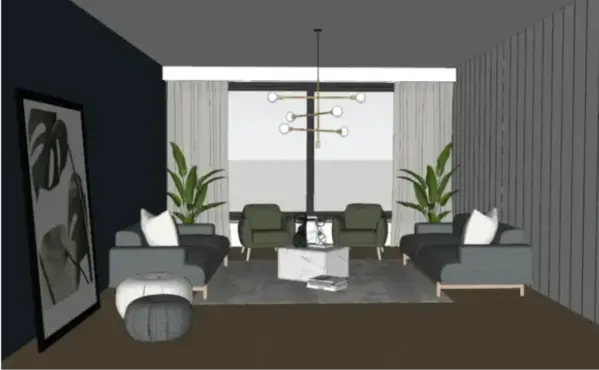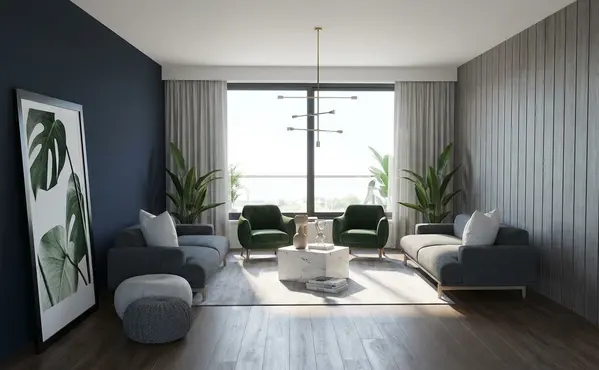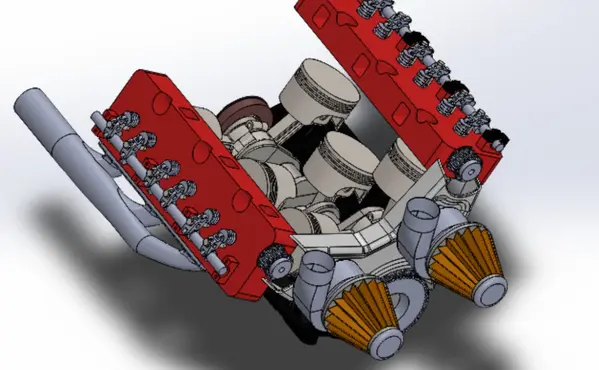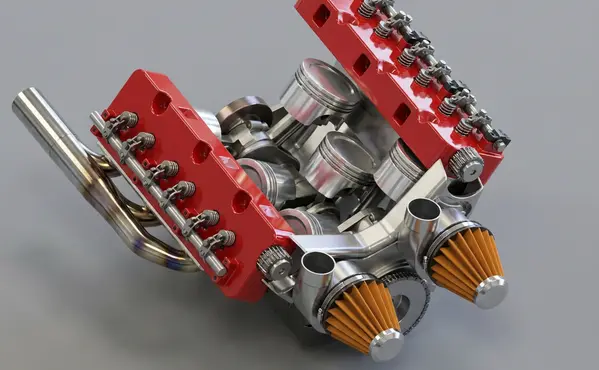
Create photorealistic product images and videos.
30 seconds. Zero configuration.
Event designers operate under brutal deadlines where a client expects to see three stage layout options by tomorrow morning and the trade show booth concept needs vendor sign-off by end of week. The approval workflow in events is uniquely compressed — there is no luxury of a months-long design development phase, and lighting simulation matters enormously because the wrong spot rig placement ruins the entire experience. RenderCAD fits this pace by producing venue-accurate renders with realistic lighting conditions in seconds rather than hours, letting designers iterate on booth configurations or stage set pieces in real time during client calls. The video generation feature is especially powerful for event work, giving clients a walkthrough of the proposed space that communicates scale and atmosphere far better than static plans ever could.
Traditional architectural rendering is a bottleneck that costs firms weeks and thousands of dollars per project. Setting up V-Ray or Lumion scenes, tweaking lighting rigs, and waiting hours for a single high-resolution output—it all adds up. RenderCAD replaces that entire pipeline with a screenshot-based workflow that delivers photorealistic architectural visualizations in roughly 30 seconds.
Whether you're working on exterior elevations in Revit, interior walkthroughs in SketchUp, or massing studies in Rhino, the process is the same: capture your viewport, choose your settings, and render. No file exports, no scene assembly, no UV mapping. Your source model never leaves your machine, which matters when client NDAs are on the line.
Early-stage concepts need fast visualization to test ideas. Late-stage presentations need polish to win approvals. RenderCAD handles both. Use the 40+ condition presets to show a façade in morning light, golden hour, overcast sky, or rain-slicked pavement. Switch between seasons in seconds—show the client their building in snow without rebuilding a single material.
For interiors, the 2,500+ material library includes architecture-specific textures: exposed concrete, brushed steel, frosted glass, terrazzo, marble veining, warm timber, and dozens of brick variations. Apply them with the mask tool to swap a floor finish or wall treatment without re-rendering from scratch. Iteration that used to take a full afternoon now takes minutes.
Winning a commission often comes down to how well you communicate the design. RenderCAD's AI engine maintains the proportions, massing, and spatial relationships of your model while adding photorealistic lighting, materials, and environmental context. The result looks like a finished architectural photograph, not an obvious AI generation.
Use bulk processing to generate a complete presentation set—street view, aerial, courtyard, lobby, and unit interiors—in a single session. Export at HD or 4K resolution for print-quality boards or digital presentations. For real estate marketing, create lifestyle renders that show furnished spaces with natural lighting, ready for brochures, listing sites, or investor decks.
Architectural visualization should accelerate your design process, not stall it. RenderCAD gives architects and designers a rendering tool that fits into the way they already work—inside their modeling software, on their schedule, without the overhead of a dedicated visualization team.
Screenshot your elevation, section, or perspective view. RenderCAD transforms it into a client-ready architectural visualization — exterior façades, interior atmospheres, or site context renders — in under 30 seconds.
Swap cladding from brick to timber. Add landscaping to a barren site plan. Remove construction scaffolding from your elevation. RenderCAD gives architects precise material and environment control — test concrete finishes, glazing options, and façade materials without going back to Revit or SketchUp.
RenderCAD's AI engine understands architectural context — building massing, natural light behavior, material weathering, and landscape integration. It transforms your Revit sections, SketchUp perspectives, and Rhino views into presentation-quality visualizations that read like professional arch-viz renders.
Forget building environment scenes from scratch. No HDRI setup, no landscape modeling, no entourage placement. RenderCAD gives you 300+ architectural environments — urban contexts, natural landscapes, studio settings — and 2,500+ materials including concrete, glass, timber, and stone finishes. Pick and render.
Golden hour on a façade. Rain-slicked streets reflecting your building. Morning fog around a hillside residence. 40+ atmospheric conditions let architects show clients exactly how their project will feel in the real world — seasons, weather, time of day — all without Photoshop compositing.
Architectural IP is valuable — building designs, structural details, client-specific layouts. RenderCAD never touches your Revit models, SketchUp files, or Rhino geometry. We work from a viewport screenshot only. Your BIM data, construction documents, and design intelligence stay in your secure environment.
Elevations. Sections. Perspectives. Interior views. Exterior contexts. Queue every presentation view from your project and render them simultaneously. RenderCAD's bulk processing handles entire project deliverables in parallel — the full set of client presentation images, done while you refine the next design iteration.
RenderCAD floats on top of your architecture software. Capture elevations, sections, and perspectives directly from your design environment with our desktop app or browser extension. No plugin conflicts, no version incompatibilities.
Try NowCommon solutions for Event & Stage Designers
RenderCAD is an AI-powered rendering service that transforms your CAD screenshots, sketches, and design images into photorealistic visualizations. Upload your image, choose your settings, and receive a rendered result in seconds — no plugins, exports, or rendering software required.
No. RenderCAD runs entirely in your web browser. There is also an optional desktop app and browser extension for added convenience, but the full Render Studio is accessible from any modern browser.
RenderCAD accepts JPEG, JPG, PNG, WebP, BMP, and TIFF image files. You can upload screenshots from any CAD, BIM, or design software — no special export format is needed.
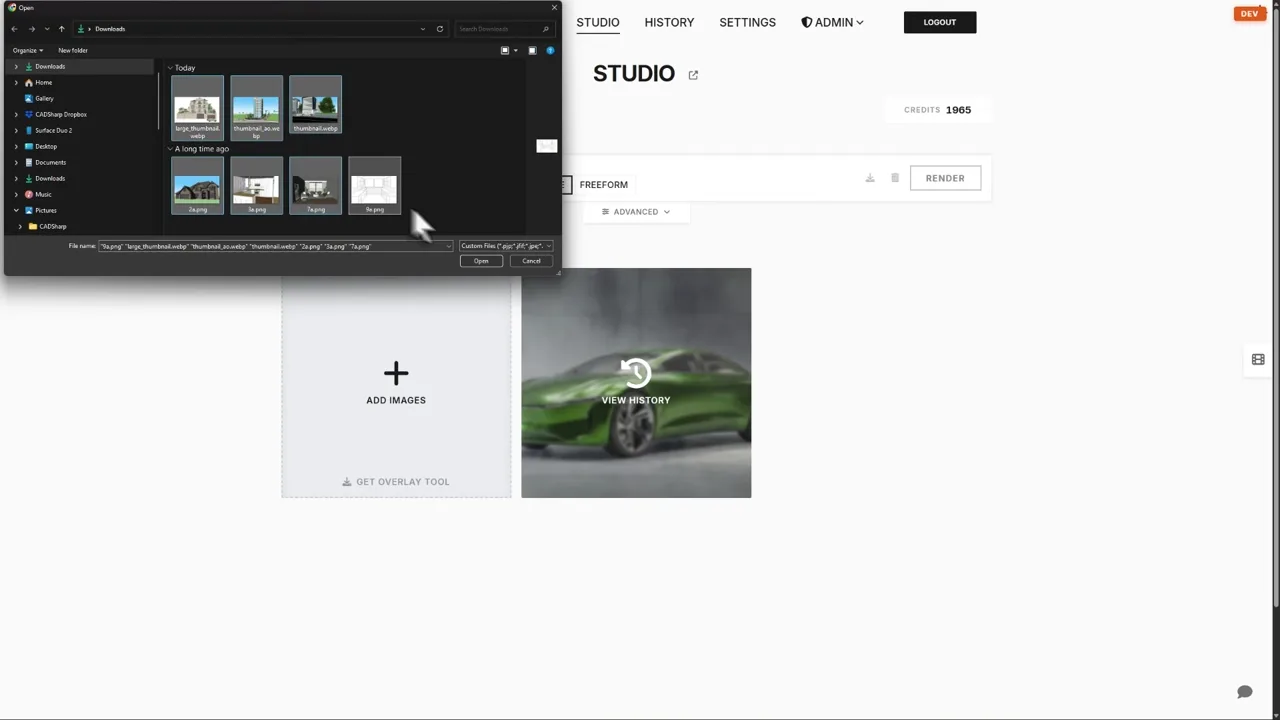
You can upload by clicking the upload area, dragging and dropping files into the workspace, or pasting an image from your clipboard. You can also capture your screen directly using the live viewport feature.
Yes. New users receive 3 free render credits with no credit card required. This lets you test the full rendering quality before choosing a subscription plan.
Render times vary by engine and settings. The Fast engine produces results in seconds at 1 credit per render, while the Realistic engine takes slightly longer for higher quality output at 2 credits. 4K resolution is also available for an additional 2 credits.
Yes. RenderCAD's Render Studio has a mobile-friendly interface with touch-optimized controls, so you can render from a tablet or phone when you are away from your workstation.
No. RenderCAD is designed for anyone regardless of rendering expertise. The AI handles lighting, materials, and environment generation based on your uploaded image and optional text instructions.
RenderCAD uses AI to analyze your 2D image — a CAD screenshot, sketch, or photo — and generate photorealistic output directly. Upload your image, choose render style, materials, backgrounds, and conditions, then receive your result in seconds with no 3D model export required.
No. RenderCAD works from 2D images — screenshots, sketches, photos, or exported views. You never need to upload or share your actual model files.
Yes. You can upload scanned or photographed sketches and the AI will interpret the design and generate a rendered visualization from it.
The AI analyzes your image to identify structures, materials, and spatial context. You can guide it further with text instructions in the details field, which supports up to 1,000 characters.
The details field lets you provide up to 1,000 characters of text instructions to guide the AI. You can describe materials, lighting, environment, mood, or any specific requirements for your render.
Your uploaded images and renders are stored securely and are only accessible to your account. RenderCAD does not share your designs publicly.
Yes. The AI can process images of complex buildings, interiors, and structures. For best results, use clear viewport captures with visible geometry and materials.
RenderCAD continuously updates its AI rendering capabilities. As a cloud-based service, improvements are available to all users automatically without any software updates.
You can upload via file browser, drag and drop, clipboard paste, the RenderCAD desktop app, the browser extension, or the live viewport capture feature that lets you screen-share your design software.
Yes. You can upload multiple images to the workspace simultaneously. They appear in a grid layout and can all be rendered in a single batch operation.
Live viewport lets you share your screen or a browser tab directly in RenderCAD. You can then capture frames from the live feed, crop and adjust the capture region, and send those frames to the render workspace.
The desktop app integrates with your system to allow quick capture and upload from any CAD software. It can streamline the screenshot-to-render workflow without switching between windows.
The RenderCAD browser extension lets you capture and send images to your Render Studio workspace directly from web-based tools or any browser content.
Uploaded images should be standard resolution screenshots or photos. Very large files may take slightly longer to process, but common viewport capture sizes work without issue.
Yes. Copy a screenshot to your clipboard in your CAD software (or using your system screenshot tool) and paste it directly into the RenderCAD workspace using Ctrl+V or Cmd+V.
Your original uploads are preserved in the workspace alongside the rendered outputs. You can toggle between viewing the original and rendered versions of each image.
RenderCAD offers two engines: Fast (1 credit per render) for quick iterations and previews, and Realistic (2 credits per render) for higher quality output with better material detail and lighting.
Use the Fast engine for rapid iterations, early concept exploration, quick comparisons between options, and any situation where speed matters more than maximum visual fidelity.
Use the Realistic engine for final client presentations, marketing materials, portfolio pieces, and any render where material accuracy and lighting quality are priorities.
Yes. You can render the same image with both engines to compare results. Each render uses the credit cost of the selected engine.
The Fast engine does not support reference images, masks, or 4K resolution. It also defaults conditions to Pristine. Use the Realistic engine for the full feature set.
Reference images, mask editing, custom materials, custom backgrounds via reference slots, object removal, 4K resolution, and non-default conditions all require the Realistic engine.
A 4K render costs 4 credits total: 2 credits for the Realistic engine (required for 4K) plus 2 additional credits for the 4K resolution upgrade.
Yes. The Realistic engine produces noticeably better material textures, more accurate lighting, and finer detail. For quick concept checks, the Fast engine is perfectly adequate.
RenderCAD offers three render styles: Exact (preserves your original design precisely), Creative (the AI improves lighting, shadows, and fixes minor issues), and Freeform (full prompt control without a system template).
Use Exact mode when you need the render to closely match your original design with precise colors, geometry, and proportions preserved. This is ideal for final presentations and design documentation.
Creative mode gives the AI more freedom to improve the image — enhancing lighting, adding realistic shadows, correcting minor imperfections, and improving overall visual quality while keeping your core design intact.
Freeform mode gives you full prompt control with no system template applied. This is useful for experimental renders, artistic interpretations, or when you want to heavily guide the AI output with your own detailed instructions.
Yes. You can render the same image in all three styles to see which produces the best result for your specific use case. Each render consumes credits based on the engine selected.
For client presentations, Exact mode is recommended when the design must be accurately represented. Creative mode works well for mood studies and concept presentations where enhanced atmosphere is desired.
No. The render style does not change the credit cost. Cost is determined by the engine (Fast or Realistic) and resolution (HD or 4K) selections.
Yes. Reference images, materials, backgrounds, and masks work with all render styles when using the Realistic engine.
RenderCAD offers HD resolution (included with all renders) and 4K resolution (an additional 2 credits, available with the Realistic engine only) for print-quality output.
Use 4K for large-format prints, high-resolution presentation boards, detailed close-up views, and any output where fine material detail and sharpness matter at large viewing sizes.
Rendered images are output as PNG files, which preserve full quality without compression artifacts.
Rendered images are provided as PNG. You can convert to other formats using any image editor if needed for specific workflows.
Yes. HD resolution is well-suited for screen presentations, websites, social media, and most digital display use cases. Choose 4K for print materials or when zooming into fine details.
Rendered images on paid plans (Starter, Professional, Enterprise) are not watermarked. All plans include full-quality output.
Rendered files are stored securely on Cloudflare R2 cloud storage and are accessible through your RenderCAD account. Storage retention varies by plan: 30 days for Starter, 90 days for Professional, and 365 days for Enterprise.
Yes. The workspace includes a Download All as ZIP feature that packages all your rendered images from the current session into a single downloadable archive.
Reference images are additional visual inputs you can attach to a render to guide the AI. Each render supports up to 3 reference image slots that can be used for custom images, materials, backgrounds, or object removal.
You can use up to 3 reference image slots per render. Each slot can serve a different purpose: custom reference, material, background, or remove (object removal).
There are four reference types: Custom (upload your own reference image), Material (choose from the 2,546-texture library), Background (choose from the 300+ background library), and Remove (remove a masked object from the image).
In the render settings, you can add reference images by uploading a custom image, selecting from the material or background library, or choosing the remove option. Each reference has its own slot with optional mask and prompt.
Yes. Each reference slot has an optional text prompt field where you can describe how the reference should be applied, giving the AI more specific guidance.
Yes. Each reference image slot includes a mask editor that lets you paint which region of your original image the reference should affect, using brush, eraser, and lasso tools.
Yes. Reference images, masks, and object removal features require the Realistic engine (2 credits per render). The Fast engine does not support reference slots.
Yes. Upload a photo of any real-world material — stone, fabric, wood, metal, or any surface — and the AI will use it to guide the material appearance in your render.
When all 3 slots are used, you have maximum control over the render. For example, you could use one slot for a custom material, one for a background scene, and one for object removal — all on the same render.
Yes. Reference slots can be added, edited, or removed at any time before rendering. Each slot is independent and can be configured or cleared individually.
The RenderCAD material library contains over 2,546 textures covering a wide range of surfaces including wood, stone, metal, fabric, concrete, brick, glass, and many more.
Select a reference slot and choose Material as the type. This opens the material library where you can browse, filter, and search textures. Selecting one assigns it to that reference slot for your render.
Yes. The material library includes a category dropdown filter to narrow results by material type such as wood, stone, metal, fabric, and more.
Yes. There are 11 color filters available: black, white, gray, brown, red, orange, yellow, green, blue, purple, and pink. This helps you quickly find materials that match your design palette.
Yes. The material library has a search field that lets you find textures by name, category, or color keywords.
Yes. All textures in the material library are-licensed, meaning they are free for commercial use with no attribution required.
Yes. Instead of selecting from the library, you can upload your own texture image as a custom reference. This is useful when you need to match a specific material specification.
Yes. Use the mask editor on the material reference slot to paint the specific region where you want the material applied. Only the masked area will be affected by the material reference.
The library includes materials commonly used in architecture such as concrete, exposed brick, natural stone, marble, terrazzo, wood planking, metal cladding, glass, ceramic tile, slate, granite, and many more.
Use the category filter to select wood materials, or search for specific species like oak, walnut, cedar, or maple. You can also filter by color to narrow down the tone you need.
Yes. The material library displays thumbnail previews of each texture. You can browse the paginated gallery to find the right material before selecting it for your render.
Yes. Each material selection occupies one of the 3 available reference slots per render. Plan your reference usage accordingly when combining materials with backgrounds or other references.
The background library contains over 300 curated backgrounds and scenes, organized into categories including nature, studio, roads, interior, and exterior environments.
RenderCAD offers several background options: Auto (AI selects an appropriate background), Library (choose from 300+ backgrounds), Upload (your own background image), Custom Color (HSV color picker), and Solid Colors (white, grey, gradient).
Select Background as a reference type in one of your reference slots, then browse the background library. You can filter by category and color, or search by name to find the right scene.
Yes. Backgrounds are organized into categories including nature, studio, roads, interior, and exterior. Use the category dropdown to narrow your search.
Yes. The same 11 color filters (black, white, gray, brown, red, orange, yellow, green, blue, purple, pink) are available for backgrounds to match your desired color palette.
Yes. Instead of using the library, you can upload your own background image. This is useful when you need to place a design in a specific real-world context or site photo.
When set to Auto, the AI selects an appropriate background based on the content of your image and any text instructions you provide. This is the default option.
Yes. RenderCAD offers solid color options including white, grey, and gradient backgrounds. You can also specify any custom hex color for a precise solid background.
Yes. The Custom Color option provides an HSV color picker with an eyedropper tool, letting you select any exact color for your background.
When using the library or upload background options through a reference slot, yes, it uses one of your 3 reference slots. The Auto, Solid Color, and Custom Color background options do not use a reference slot.
Master Background lets you set a single background that automatically applies to all images in your workspace during batch rendering. It uses one reference slot on each image but ensures consistent scene placement across your entire project.
In the global settings area of the Render Studio, select your desired background. When enabled, this background will be applied as a reference to every image when you render the batch.
Yes. The Master Background occupies one of the 3 available reference slots on each image. This means each image can still use up to 2 additional reference slots for materials, custom references, or object removal.
Yes. You can edit individual image reference slots to override or adjust the background for specific images while keeping the master setting for the rest of the batch.
Master Background is ideal when you need to present multiple design variations in the same environment — such as showing different facade options for the same building site, or multiple furniture layouts in the same room setting.
Yes. You can select any background from the 300+ background library, upload a custom background image, or use other background options as your master selection.
Yes, but keep in mind each uses one reference slot per image. Using both together leaves 1 remaining reference slot per image for additional customization.
Master Background uses reference slots which require the Realistic engine. It will not apply when rendering with the Fast engine.
Master Material lets you set a single material or texture that automatically applies to all images in your workspace during batch rendering. It uses one reference slot per image but ensures material consistency across your project.
In the global settings area of the Render Studio, select a material from the 2,546-texture library or upload your own. This material will be applied as a reference to every image in your batch.
Yes. The Master Material slot can be edited so that it only affects the masked region of each image, rather than the entire surface. This gives you precise control over where the material is applied.
Yes. Master Material occupies one of the 3 reference slots on each image. You can still use the remaining slots for backgrounds, custom references, or object removal.
Master Material is ideal when presenting the same design in different material finishes — such as showing a product in marble, wood, and concrete, or testing different facade materials across multiple building views.
Yes. You can change the Master Material selection at any time and re-render the batch to compare different material options across all your images quickly.
Yes. Each image's Master Material reference slot can have its own mask painted, allowing you to target specific areas of each image while using the same base material across the batch.
No. Master Material uses reference slots which require the Realistic engine (2 credits per render).
Conditions are surface and environmental effects you can apply to your render. RenderCAD offers over 40 conditions across 8 categories, from pristine clean finishes to extreme states like on fire or snow-covered.
Conditions are organized into 8 categories: Clean & New, Surface Imperfections, Heavy Wear & Damage, Accumulation & Age, Structural Damage, Moisture & Temperature, Extreme States, and Environmental Coverage.
The Clean & New category includes Pristine, Factory New, Polished, Gleaming, and Glazed — ideal for showing brand-new construction, freshly installed materials, or showroom-quality finishes.
Surface Imperfections include Smudged, Dusty, Scuffed, and Micro-scratched — useful for showing realistic lived-in spaces or materials with minor use marks.
Heavy Wear & Damage conditions include Distressed, Chipped, Battered, and Abraded — great for showing aged buildings, industrial aesthetics, or renovation before-states.
This category includes Grimy, Weathered, Oxidized, Rusted, Patina, Scorched, Light/Medium/Heavy Wear and Tear, Sun-bleached, Moldy, and Mossy — covering a wide range of aging and environmental accumulation effects.
Structural Damage includes Cracked, Warped, Shattered, Torn, and Broken — useful for renovation planning, damage assessment visualization, or dramatic artistic effects.
This category includes Frosted, Wet, and Steaming — useful for showing buildings and spaces in different weather conditions or climate contexts.
Extreme States include Red-hot, Smoking, On Fire, Melting, and Electrified — useful for dramatic visualization, special effects, or showing extreme environmental conditions.
Environmental Coverage includes Mud-covered, Dirt-covered, Sand-covered, and Snow-covered — perfect for showing buildings and designs in different environmental contexts and seasons.
Yes. The condition selector includes a search function so you can quickly find any condition by name rather than browsing through categories.
Yes. The selected condition is applied globally to the rendered image, affecting all visible surfaces. For localized effects, you can use mask tools with render iterations to refine specific areas.
Yes. The Auto condition lets the AI decide the appropriate surface treatment based on your image and text instructions, without forcing a specific condition.
The Fast engine defaults all conditions to Pristine. To use specific conditions, select the Realistic engine.
Select the Snow-covered condition from the Environmental Coverage category. The AI will add realistic snow accumulation to surfaces, roofs, and surrounding areas in your render.
Yes. The On Fire condition from the Extreme States category adds realistic fire and flame effects to your render. This can be useful for emergency planning visualizations or dramatic presentations.
Select the Wet condition from the Moisture & Temperature category. This adds realistic water effects to surfaces including wet reflections and rain-soaked materials.
Yes. The Frosted condition adds realistic frost and ice formation to surfaces, useful for winter visualization and cold-climate architectural presentations.
The Red-hot condition from the Extreme States category renders surfaces with a heated, glowing appearance. This can be useful for industrial or artistic visualization.
Yes. The Mud-covered and Dirt-covered conditions from Environmental Coverage add realistic accumulation to surfaces, useful for showing construction-phase buildings or natural settings.
Use the Sand-covered condition to add realistic sand and dust accumulation. Combined with an appropriate desert background, this creates convincing arid-environment visualizations.
Yes. The Mossy condition adds natural moss and organic growth to surfaces. Combined with the Weathered or Patina conditions, this creates a convincing aged or abandoned aesthetic.
The mask tool lets you paint specific regions of your image to control where reference images, materials, or removal effects are applied. It provides brush, eraser, and lasso tools for precise region selection.
The mask editor includes a Brush tool (to add mask regions), an Eraser tool (to remove mask regions), and a Lasso tool (for freehand selection with marching ants animation). You can also invert or clear the entire mask.
Yes. The brush size is adjustable from 5 to 150 pixels using a slider or your mouse scroll wheel, allowing both broad strokes and fine detail work.
The lasso tool lets you draw a freehand selection area. Once you close the selection, the enclosed region becomes part of the mask. This is faster than painting large areas with the brush.
Yes. The mask editor includes an inversion function that swaps masked and unmasked areas. This is useful when it is easier to select what you want to exclude rather than include.
Use the Clear Mask function to remove all mask painting and start fresh. You can also use the Eraser tool to selectively remove parts of an existing mask.
Each reference slot has its own independent mask. The mask defines where that specific reference (material, background, or removal) is applied to your image. Only the masked region is affected.
Yes. The mask editor supports touch input, allowing you to paint masks using finger gestures on tablets and phones.
Set a reference slot to Remove type, then use the mask editor to paint over the object you want removed. The AI will fill in the masked area with appropriate surrounding content.
Yes. Each of the 3 reference slots has its own independent mask. You can target different regions of your image with different references, materials, or removal operations simultaneously.
Add a reference slot and set its type to Remove. Then use the mask editor to paint over the object you want removed. The AI will replace the masked area with contextually appropriate content.
You can use the Remove reference type with a mask to remove unwanted overlays, watermarks, or interface elements from your source images before or during rendering.
Yes. Use the mask tool to paint over the elements you want removed, set the reference to Remove type, and the AI will fill in the area with appropriate background or surface content.
Yes. Mask the construction equipment or temporary elements and use the Remove reference type. The AI will replace those areas with contextually appropriate content.
You can render an image, then use render iterations to re-render the output with a Remove mask applied to any AI artifacts or unwanted elements. This refinement process can be repeated until you are satisfied.
You would use two reference slots: one with a Remove mask for the unwanted element, and another with a material or custom reference for what you want in its place. This uses 2 of your 3 reference slots.
No. Object removal is a reference slot type that is included in the Realistic engine cost (2 credits). There is no additional charge beyond the standard render cost.
Yes. Paint your mask to cover all the objects you want removed in a single reference slot. The AI will remove everything within the masked region.
The built-in image editor provides pre-processing tools for quick image adjustments before rendering. It includes brush, eraser, fill, lasso, crop, text, shapes, layers, and more — with 50 levels of undo/redo.
The editor includes a Brush tool (free drawing with adjustable color, size, opacity, and feather), an Eraser tool, a Fill (bucket) tool, and basic Shape tools (rectangle, circle, line).
Yes. The image editor includes a crop tool with multiple aspect ratio presets: free, 1:1, 4:3, 3:2, 16:9, 21:9, and 9:16. This lets you frame your image exactly as needed before rendering.
Yes. The editor has a full layers system where you can add, delete, reorder, and toggle visibility of layers. This is useful for compositing multiple elements before rendering.
The image editor maintains a history of up to 50 states, so you can undo and redo up to 50 steps of your editing work.
Yes. The Text tool lets you add text layers to your image, which is useful for adding annotations, labels, or design notes before rendering.
The editor supports zoom from 5% to 500%, with mouse wheel zoom, fit-to-window, and manual zoom controls. Pan mode lets you navigate around large images.
Yes. You can import images via file upload, drag and drop, or paste from clipboard directly into the editor canvas, allowing you to composite multiple images together.
Yes. You can open either your original upload or the rendered output in the image editor for additional adjustments, cleanup, or preparation for render iterations.
Yes. You can save changes to overwrite the current image or save as a new image in your workspace. Both options keep your editing work preserved.
Render iterations let you take an existing rendered image and render it again, building on the previous output. This allows you to refine results, remove AI artifacts, add new materials to specific areas, or progressively improve quality.
After your initial render completes, use the re-render or modify option on the rendered image. The output becomes the new input, and you can apply new settings, masks, references, or conditions.
Yes. This is one of the primary uses of render iterations. Mask the area with artifacts, set a reference to Remove, and re-render. The AI will clean up the masked region while preserving the rest of the image.
Yes. In a render iteration, add a material reference with a mask targeting the area you want to change. The AI will apply the new material only to the masked region of your already-rendered image.
There is no limit to the number of render iterations you can perform. Each iteration costs credits based on the engine and resolution settings used.
Yes. Each render iteration is a new render and costs credits based on the engine (1 for Fast, 2 for Realistic) and resolution (+2 for 4K) selected.
Yes. Your render history preserves all previous versions, so you can compare iterations and choose the result you prefer.
Use iterations when the initial render is close but needs refinement — fixing small AI imperfections, changing a material in one area, adjusting a background edge, or progressively building up detail and accuracy.
Yes. RenderCAD's Image-to-Video feature converts rendered stills into animated video sequences with camera movement and object motion options.
You can create videos at 4 seconds (4 credits), 6 seconds (6 credits), or 8 seconds (8 credits).
Videos can be rendered at 720p (included in the base cost) or 1080p (adds 1 additional credit to the total cost).
Videos can be downloaded in MP4, WebM, and GIF formats. The format conversion happens in your browser from the rendered video.
Two video styles: Exact (preserves the appearance of the original render with no warping) and Creative (the AI adds dynamic effects and motion to the scene).
Yes. The Seamless Loop end frame option creates videos that loop smoothly back to the start. You can also adjust a crossfade setting from 0 to 2 seconds for smoother transitions.
The crossfade setting (0 to 2 seconds) controls how gradually the video blends from the end back to the beginning. Higher values create smoother, more gradual loop transitions.
Yes. You can upload a custom end frame image or select one from your render history. This lets you create videos that transition between two specific states.
Four end frame options: None (video ends on last frame), Seamless Loop (loops back to start with optional crossfade), From History (select from render history), and Upload (custom end frame image).
Video rendering is available on paid plans (Starter, Professional, Enterprise) and is not available during the free trial period.
Yes. The video creation panel includes a custom details field where you can describe desired motion, mood, or specific effects for your video.
Yes. Video rendering continues in the background, so you can continue working in the Render Studio while your video processes.
RenderCAD recommends a 16:9 aspect ratio for videos. The system will warn you if your source image uses a different ratio, as results may vary with non-standard proportions.
RenderCAD offers over 20 camera movement presets including Auto, Fixed Angle, Slow Push-In, Slow Pull-Back, Rack Focus, Dolly Zoom, Truck Left/Right, Pedestal Up/Down, Flyover, Cinematic Orbit, Spiral, Pan Swivel, Handheld, Crash Zoom, Low Angle Rise, Dutch Angle, Top-Down Spin, Follow Cam, and 180° Arc.
For architectural exteriors, Flyover, Cinematic Orbit, and Slow Push-In work well to showcase the building from different angles. Low Angle Rise can add drama by looking upward at a facade.
Slow Push-In simulates walking into a space, while Truck Left/Right creates a panning reveal. Pan Swivel works well for showing a wide interior from a fixed position.
Auto lets the AI choose an appropriate camera movement based on the content of your image. This is a good starting point if you are unsure which movement to select.
Yes. Camera movement and product/object motion can be set independently for the same video, creating dynamic scenes with both camera and subject movement.
Cinematic Orbit creates a smooth rotating movement around the subject, as if the camera is circling the building or object. This is popular for architectural showcase videos.
Dolly Zoom creates a vertigo-like effect where the camera zooms while moving, changing the perspective relationship. This creates a dramatic visual effect sometimes used in cinematic architecture presentations.
Handheld adds subtle, natural camera shake to simulate a person holding the camera. This creates a more realistic, documentary-style feel for your architectural video.
RenderCAD offers over 30 product motion presets across categories including Presentation (Static, Idle, Move in Place, Levitating, Vibrating, Pulsing), Rotation (Turntable, Roll, Tumble, Hero Spin), Arrivals (Drop, Slide In, Pop Up), Technical (Explode, Assemble, Mechanical), Action (Dynamic), Liquids (Liquid Splash, Condensation, Cloth Wave, Inflate, Squish), and Functional (Open & Close, Fold/Unfold, Dispense Action).
For architectural models, Turntable provides a clean 360° rotation, while Idle adds subtle movement that keeps the video dynamic without distracting from the design.
Yes. Motion presets like Open & Close and Fold/Unfold can be applied to create animations showing architectural elements opening, sections unfolding, or spaces being revealed.
The Explode preset separates elements of the subject apart, which can be useful for showing the component layers of a building section, wall assembly, or design detail.
Yes. The Turntable motion preset rotates the subject smoothly, creating a classic 360° view that is ideal for presenting architectural models, products, and design objects.
Hero Spin creates a dramatic, cinematic rotation that emphasizes the subject with a dynamic presentation style. It is more dramatic than a simple turntable rotation.
Yes. The Static motion preset keeps the subject completely still while only the camera moves. This is ideal when you want to showcase the architecture without any object motion.
The Liquids & Soft Body category includes Liquid Splash, Condensation, Cloth Wave, Inflate, and Squish motions. These can be used for creative effects on curtains, fabrics, water features, and other soft elements.
Select Seamless Loop as the end frame option when creating a video. The video will smoothly loop back to the starting frame. Use the crossfade slider (0 to 2 seconds) to control the blend transition.
The crossfade controls how gradually the video transitions from the end back to the beginning. A 0-second crossfade creates a direct cut, while a 2-second crossfade creates a smooth, gradual blend between end and start.
Yes. The From History option lets you select any previously rendered image as the end frame. This is useful for creating transition videos between two different design states.
Yes. The Upload option lets you provide any image as the end frame. The video will animate from your source render to this uploaded end frame.
Yes. Seamless loops are ideal for lobby displays, trade show screens, website backgrounds, and any presentation context where a continuously playing video creates an engaging visual presence.
For web use, WebM or GIF formats support seamless playback loops natively in browsers. MP4 works for most presentation software with loop playback enabled.
RenderCAD offers three paid plans: Starter ($20/month, 150 credits), Professional ($60/month, 500 credits), and Enterprise ($175/month, 2,000 credits). New users also receive 3 free trial credits.
The Starter plan costs $20 per month and includes 150 render credits, email support, 30-day render retention, commercial use rights, and unlimited exports.
The Professional plan costs $60 per month and includes 500 render credits, priority support, 90-day render retention, batch processing, API access, commercial use rights, and unlimited exports.
The Enterprise plan costs $175 per month and includes 2,000 render credits, 24/7 support, 365-day render retention, custom integrations, a dedicated account manager, API access, commercial use rights, and unlimited exports.
Yes. New users receive 3 free render credits with no credit card required. This allows you to test rendering quality before committing to a subscription.
No. Credits do not roll over. Unused credits expire at the end of each billing cycle and are replaced with your fresh monthly allocation.
Yes. All plans are month-to-month with no contracts. You can cancel at any time and billing stops immediately.
For individual professionals, the Starter plan with 150 credits is a solid starting point. Teams or heavy users rendering frequently should consider Professional (500 credits) or Enterprise (2,000 credits) for the best value per credit.
Yes. All plans — including the free trial — include commercial use rights and unlimited exports at full quality.
Render retention varies by plan: 30 days on Starter, 90 days on Professional, and 365 days on Enterprise. Download your renders within your retention window to keep them permanently.
API access is included with the Professional and Enterprise plans. Starter and trial users do not have API access.
Yes. The Enterprise plan includes a dedicated account manager along with 24/7 support, custom integrations, and 365-day render retention.
A Fast engine render costs 1 credit. A Realistic engine render costs 2 credits. Adding 4K resolution to a Realistic render adds 2 more credits, for a total of 4 credits per 4K image.
Videos cost 4 credits (4 seconds), 6 credits (6 seconds), or 8 credits (8 seconds) at 720p resolution. Adding 1080p resolution costs 1 additional credit.
Use the Fast engine for initial concept exploration and quick comparisons. Switch to Realistic for final presentations. Batch similar renders together and use Master Background/Material to maintain consistency efficiently.
With the Starter plan (150 credits) using the Realistic engine (2 credits each), you can create 75 HD realistic renders per month.
With the Professional plan (500 credits) using the Realistic engine (2 credits each), you can create 250 HD realistic renders per month.
With the Starter plan (150 credits) and the Fast engine (1 credit each), you can create up to 150 renders per month.
Yes. Your current credit balance is displayed in the Render Studio with a credit gauge that shows your remaining credits and updates in real-time as you render.
No. Using reference images, masks, and conditions is included in the Realistic engine cost (2 credits per render). There is no additional charge for these features.
No. Object removal uses a reference slot and is included in the Realistic engine render cost. No additional credits are charged.
Yes. RenderCAD tracks your monthly usage so you can monitor your credit consumption and plan accordingly for your rendering workload.
Yes. Upload multiple images to your workspace and use the Render All button to process them all in a single batch. Progress tracking shows the status of each image.
Upload all your images to the workspace grid, configure your global settings (engine, style, background, material, condition), and click Render All. Each image is queued and processed with the selected settings.
Yes. The Download All as ZIP feature packages all your rendered images from the current workspace into a single downloadable archive for easy retrieval.
Yes. When you set a Master Background, it automatically applies to every image in your batch, ensuring consistent scene placement across all renders.
Yes. When you set a Master Material, it applies to every image in your batch, ensuring consistent material treatment across all renders.
Yes. The workspace shows individual status indicators for each image, a main progress bar for the overall batch, queue position, and estimated wait times.
Yes. The Clear All function removes all images from your workspace after a confirmation prompt. Your workspace auto-saves, so this action is immediate.
The Render All button is available to all users. Batch processing as a highlighted feature is listed on the Professional and Enterprise plans, which include higher credit allocations to support bulk workflows.
Yes. RenderCAD offers a desktop application that integrates with your system for quick image capture and upload from any CAD or design software.
The RenderCAD browser extension lets you capture and send images to your Render Studio workspace directly from any browser tab, including web-based design tools and applications.
Live viewport lets you share your screen or a browser tab directly in RenderCAD. You can see a live feed, select a crop region, adjust the aspect ratio, and capture frames to send to the render workspace.
Live viewport supports Custom, 1:1, 4:3, 3:2, 16:9, 21:9, and 9:16 aspect ratios for the capture region, matching common presentation and output formats.
Yes. Since live viewport uses screen sharing, it works with any software visible on your screen — Revit, SketchUp, ArchiCAD, Rhino, AutoCAD, Blender, or any other application.
Yes. RenderCAD works with any design software including Revit. You can upload Revit viewport screenshots, use the desktop app for quick capture, or use live viewport to share your Revit window directly.
Yes. RenderCAD works with SketchUp and any other design software. Upload SketchUp viewport screenshots or use the live viewport feature for real-time capture from your SketchUp workspace.
Yes. RenderCAD is software-agnostic — it works with any application that produces visual output. Screenshot your viewport from ArchiCAD, Rhino, AutoCAD, or any other tool and upload to RenderCAD.
Yes. API access is available on the Professional and Enterprise plans. The API allows you to integrate rendering capabilities into your own applications and automated workflows.
The API lets you submit images for rendering, configure render settings, retrieve results, and manage your render queue programmatically. This enables automated batch workflows and custom integrations.
API access is included with the Professional ($60/month) and Enterprise ($175/month) plans. It is not available on the Starter plan or trial.
Yes. The Enterprise plan includes custom integration support, and the API allows you to connect RenderCAD with your project management, asset management, or design automation tools.
Yes. With API access on Professional or Enterprise plans, you can automate image submission, render configuration, and result retrieval — streamlining repetitive rendering tasks.
Yes. The Enterprise plan includes custom integration support and a dedicated account manager to help you build tailored workflows for your team.
Rendered images are output as high-quality PNG files, preserving full detail and color accuracy without compression artifacts.
Yes. Each rendered image has a Download button that lets you save the file directly to your device.
Yes. The Download All as ZIP feature packages all rendered images from your current workspace into a single archive for easy bulk download.
Render retention depends on your plan: 30 days on Starter, 90 days on Professional, and 365 days on Enterprise. Download renders within your retention period to keep them permanently.
Yes. The workspace lets you toggle between the original and rendered views for each image, making it easy to compare before and after side by side.
Yes. Your workspace state, settings, and images auto-save to your browser's local storage. When you return to the Render Studio, your workspace is restored as you left it.
Yes. Your render history is available in the workspace, allowing you to review past renders, re-render with new settings, use previous results as video end frames, or reference past work.
Yes. RenderCAD can be opened in a floating pop-out window, which is useful for keeping the Render Studio accessible alongside your design software.
Start with a clear viewport screenshot from your design software. Use the Fast engine for initial concept testing, then switch to Realistic with reference materials and backgrounds for final presentations. Use Master Background for consistency across multiple views.
Use high-contrast viewport captures with visible geometry. Add detailed text instructions describing materials, lighting, and mood. Select appropriate conditions, and use reference images for specific material matching when accuracy is critical.
Yes. Upload your design views and use batch rendering with different materials, backgrounds, and conditions to rapidly generate comparison sets. This allows real-time design option exploration during client meetings.
Upload the same image multiple times, then apply different materials from the library or custom references to each copy. Render the batch to produce a material comparison set in seconds.
Yes. Upload the same viewport twice and use different text instructions — such as describing daytime or evening lighting — along with appropriate background selections to produce day and night comparison renders.
Use conditions like Snow-covered for winter, along with appropriate background scenes. For autumn, include leaf-related descriptions in your text instructions. Render the same view multiple times with different seasonal settings.
Yes. RenderCAD can produce high-quality visualizations for design competitions. Use the Realistic engine with 4K resolution for maximum quality output suitable for large-format presentation boards.
Yes. RenderCAD can generate visualizations that show how a proposed design will look in its context, which can support planning applications and community presentations. Use Exact mode for accurate representation.
Use Master Background and Master Material for consistent settings across all views. Apply the same conditions and use similar text instructions to ensure all renders from a project share a cohesive visual style.
Yes. Screenshot your Revit, ArchiCAD, or any BIM viewport and upload to RenderCAD. The AI processes the 2D image regardless of which software generated it. No plugin or export is needed.
Upload a screenshot of your interior design — from any software or even a sketch — and describe the desired materials, lighting, and mood in the details field. The AI generates a photorealistic interior visualization.
Yes. Upload multiple versions of your interior layout and render each one. You can also use render iterations with masks to modify specific furniture or elements in an existing render.
Upload your kitchen design view and describe materials in the details field — countertop material, cabinet finish, appliances, and lighting style. Use the material library for specific texture references.
Upload your bathroom layout and describe the tile, fixtures, lighting, and overall mood. Materials like marble, ceramic, and natural stone are well-represented in the material library.
Yes. Describe the lighting in your text instructions — ambient, task, accent, or decorative lighting — and the AI will interpret appropriate illumination. Use Creative mode for enhanced lighting effects.
Upload your open-plan design view and describe the different zones, materials, and lighting transitions. The AI handles the spatial relationships and material transitions across the open layout.
Yes. RenderCAD handles commercial interiors including retail stores, restaurants, offices, and hospitality spaces. Describe the commercial context and materials in your text instructions.
Use the material library to select specific textures, then apply them via reference slots with masks to see exactly how a material will look in your interior design context.
Upload your exterior elevation or 3D view and describe the environment, time of day, and weather in the details field. Use backgrounds from the library to place the building in an appropriate context.
Yes. Upload a photo of the actual site as a custom background reference, or select from the 300+ background library for urban, suburban, natural, or other environmental contexts.
Describe the landscape elements in your text instructions — trees, shrubs, paths, water features. Use Creative mode for the AI to enhance vegetation and outdoor atmosphere.
Yes. Select an urban background from the library or upload a site photo. Describe the surrounding context in your text instructions for the AI to generate appropriate urban environment elements.
Use conditions like Wet for rain, Frosted for cold, and Snow-covered for winter. Combine with appropriate text instructions describing sky, atmosphere, and weather effects.
Yes. Upload an aerial perspective view from your design software and describe the viewing angle and environment. The AI can process overhead and elevated viewpoints.
Describe the time of day and lighting quality in your text instructions — such as golden hour, warm light, long shadows. The AI interprets these lighting descriptions to create atmospheric renders.
Yes. Use Master Background to quickly swap between different site contexts for the same building design. This is efficient for showing how a design adapts to different environments.
Yes. All plans — including the free trial — include full commercial use rights. You can use rendered images and videos in client presentations, marketing materials, publications, and any commercial context.
Yes. You retain full rights to the images and videos you create with RenderCAD, including the right to use them commercially.
Yes. RenderCAD renders are fully licensed for professional use in client presentations, project proposals, design competitions, marketing materials, and publications.
Starter includes email support, Professional includes priority support, and Enterprise includes 24/7 support with a dedicated account manager.
Yes. RenderCAD supports both dark and light themes. Your preference is saved and persisted across sessions.
Yes. Each rendered image has a Report Issue option that lets you flag problems for the RenderCAD team to review and address.
Yes. RenderCAD is designed for professional use, with commercial licensing, team-friendly plans, API access for workflow integration, and quality output suitable for client-facing presentations.
For team usage, the Enterprise plan offers the highest credit allocation (2,000 credits/month) and includes a dedicated account manager and custom integration support.
Clear, well-lit viewport screenshots with visible geometry and materials produce the best results. Avoid heavily cluttered views or very dark images. Orthographic and perspective views both work well.
More detail generally produces better results. Describe specific materials, lighting quality, time of day, atmosphere, and any particular requirements. You have up to 1,000 characters in the details field.
Use Exact mode when accuracy to the original design is critical. Use Creative mode when you want enhanced atmosphere and lighting for more emotionally impactful presentations.
Use Master Background and Master Material settings, apply the same conditions, and use similar text instructions across all images in your batch. This ensures visual cohesion.
Use render iterations when the initial result is close but needs localized fixes — small artifacts, material changes in one area. Start fresh when you want to try fundamentally different settings.
Use Fast engine for exploration and concept testing (1 credit), reserve Realistic engine for final outputs (2 credits), and use batch rendering with Master settings to efficiently process multiple images.
Yes. Use the Modify option on any image to re-render with different engine, style, reference, condition, or background settings. Each re-render costs credits based on the selected settings.
Common ratios like 16:9, 4:3, or custom project-specific ratios all work well. For video creation, 16:9 is recommended. Use the image editor crop tool to adjust ratios before rendering if needed.