Explore a presentation direction from a chosen Corona VFB image.
Start with a flat PNG or JPEG made from the chosen Corona view. Page media shows general RENDERCAD examples, not Corona footage, VFB screenshots, scene files, or Corona output.


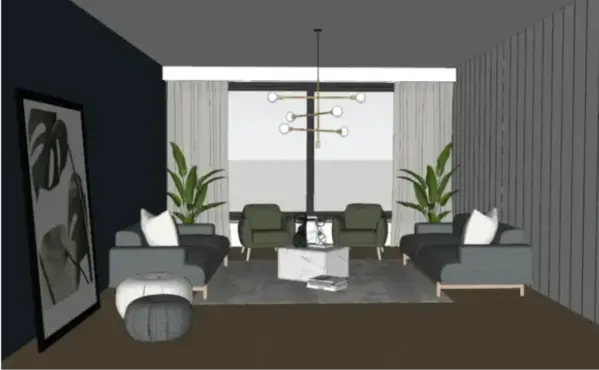
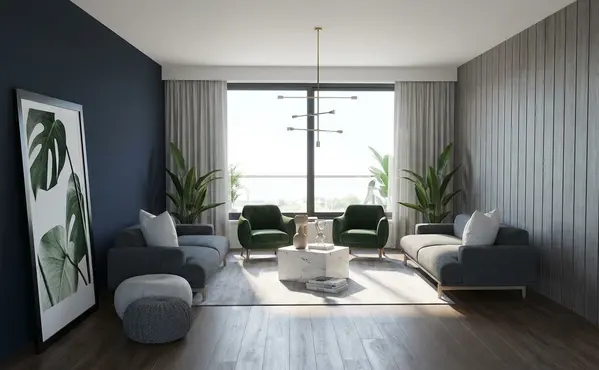


Chaos Corona 15 for 3ds Max is a CPU renderer for Autodesk 3ds Max 2018 or newer on 64-bit Windows 10 or newer; Chaos recommends Windows 11. Production and Interactive Rendering share Corona's engine. The VFB handles post-processing, history, regions, and configured LightMix. CXR files retain render data for later work in Corona Image Editor. Corona 15 can also open Veras from the VFB.
Use this workflow after the camera, visible form, material separation, lighting, and surrounding context already read clearly in Corona. A clean VFB image can support a focused discussion about atmosphere, styling, planting, furniture, facade character, or product-in-room presentation before another production pass.
Corona 15 already provides Veras as an integrated VFB option. RENDERCAD is a separate web workflow, not that integration. It receives one flat image and can explore its own presentation directions. The .max scene, cameras, Corona Physical Materials, lights, LightMix setup, CXR data, and render elements remain in 3ds Max and Corona.
Run Corona Interactive Rendering for look development or Production Rendering for a controlled source. Choose the intended camera and make the composition, visible geometry, material zones, and lighting easy to read. Set the useful LightMix state, allow enough rendering or denoising for a clean image, and avoid interface clutter or temporary test objects.
Save or capture the visible VFB result as a flat PNG or JPEG, then upload it to RENDERCAD with one presentation goal. Compare the result with the source image. Return to the 3ds Max scene for camera, geometry, material, light, animation, or output changes, and keep CXR files and render elements for Corona Image Editor or compositing work.
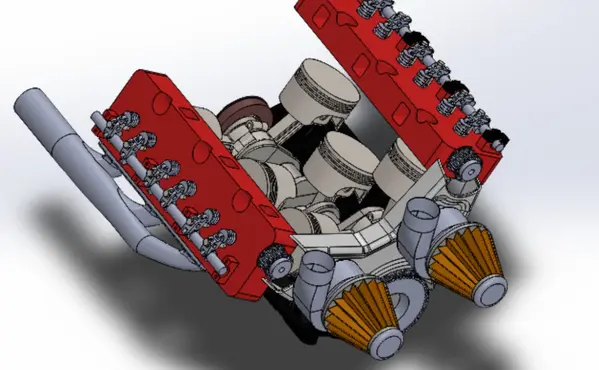
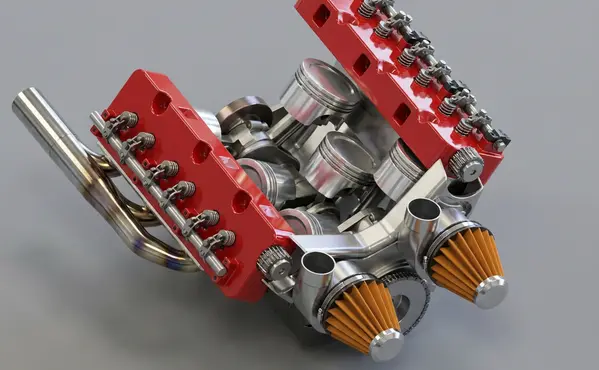
This example uses an Onshape model, not Corona or 3ds Max. Generated motion starts from a finished still and does not use a 3D scene or camera path.
Brush over the generated image and describe a visual adjustment to a surface, object, opening, or background. This does not edit the 3ds Max scene.
Corona 15 offers Veras inside the VFB. RENDERCAD is a separate flat-image workflow with its own image models; compare either result with the source Corona view.
| Feature | RENDERCAD | Chaos Corona 15 for 3ds Max |
|---|---|---|
| Engine | Generative image models | CPU production and interactive renderer; optional AI denoisers can use supported GPUs |
| Output | Images + optional video | Stills, animations, CXR files, image formats, and 3ds Max render elements |
| Resolution | HD / 4K | Render Setup output size or per-camera resolution override |
| Image Speed | About 60 seconds | Depends on scene, resolution, passes or noise target, denoising, and CPU hardware |
| Generated motion | Generated image-to-video | Animation renders frame by frame; time depends on scene, frames, settings, and hardware |
| Scene Set Up | Flat image + prompt | 3ds Max scene, camera, geometry, Physical Materials, lights, environment, LightMix, and render settings |
| Input | PNG or JPG | 3ds Max scene and linked model, texture, proxy, environment, and asset data |
| Hardware | Cloud processing | 3ds Max 2018 or newer on 64-bit Windows 10 or newer; Chaos recommends Windows 11 |
| Install | Web app | Corona plug-in, Chaos license, and local 3ds Max installation |
| Cost | From $9/mo | Current Chaos subscription plans |
Corona renders the editable 3ds Max scene and retains cameras, materials, LightMix, CXR, and passes. RENDERCAD starts from one flat image and a prompt.
Choose the intended camera, settle the visible LightMix state, and render a clean beauty view with readable form, material separation, and lighting. Remove interface clutter and temporary test objects before capture.
 ™
RENDERCAD™
™
RENDERCAD™
Upload a PNG or JPEG in the browser, or capture the selected VFB image with the desktop app. RENDERCAD does not open .max, CXR, or render-element files.
Get StartedChaos Corona for 3ds Max files, VFB preparation, and output
No. This workflow accepts one flat PNG or JPEG. The 3ds Max scene, CXR data, LightMix controls, render elements, masks, Cryptomatte data, and Corona settings do not transfer with that image.
Use the cleanest image that fits the decision. Interactive Rendering is useful during look development; a denoised Production Render is usually stronger when material response, reflections, fine detail, and final framing matter.
Only the visible LightMix result appears in the pixels. The configured LightMix and LightSelect data remain in Corona and can persist in CXR for Corona Image Editor. RENDERCAD cannot rebalance those original light groups.
This page covers Corona 15 in 3ds Max, where Arnold is the default renderer. Cinema 4D uses a separate Corona plug-in, Vantage is a separate GPU renderer, and V-Ray offers different CPU and GPU paths. Corona 15 can open Veras from the VFB for AI ideation.
Not when the deliverable depends on the exact scene. Use Corona for the controlled camera, geometry, Physical Materials, lights, render settings, CXR, render elements, denoising, color work, stills, and native animation output.
Not necessarily. A generated image can change visible geometry, texture scale, object detail, openings, reflections, labels, and context. Compare it with the source Corona image and return to the scene for exact changes.
No. Corona Physical Material controls how a surface responds to light in the render. Confirm the real product, dimensions, build-up, and performance in the project model, drawings, and specifications.
RENDERCAD can create optional image-to-video motion from the still, but it is not a 3ds Max camera move or Corona animation. Newly revealed areas, geometry, materials, and reflections can change between frames.