Sign in

RenderCAD vs Nuke RayRender — AI Rendering Alternative & Comparison

Create photorealistic product images and videos.
30 seconds. Zero configuration.

Try Now

Desktop | Browser Extension | Web App

How RenderCAD Compares to Nuke RayRender

The ray tracing renderer built into Foundry Nuke compositing software.

Nuke RayRender is a VFX compositing renderer with premium pricing. RenderCAD delivers AI renders from any screenshot in 30 seconds at $20/mo.

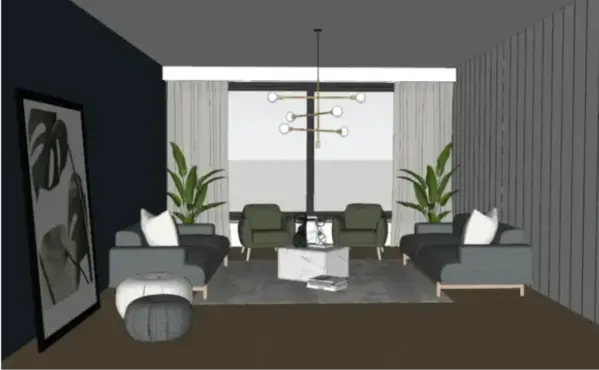
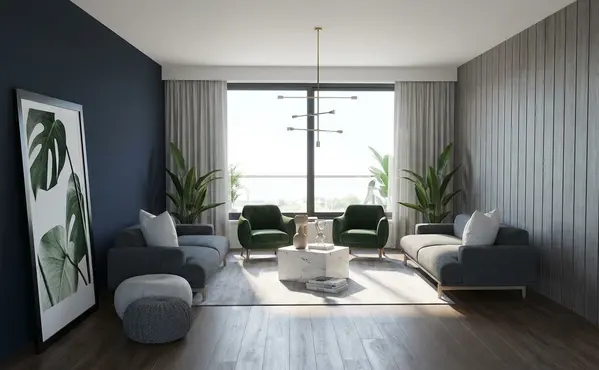
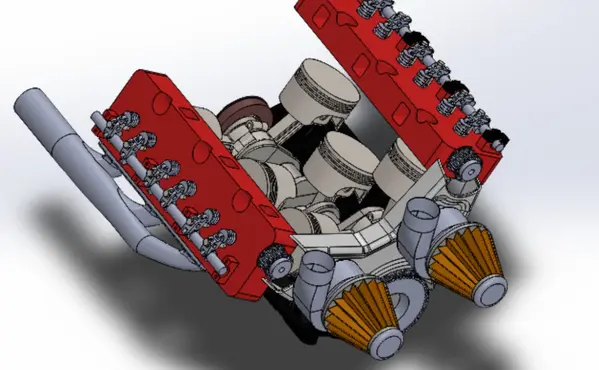
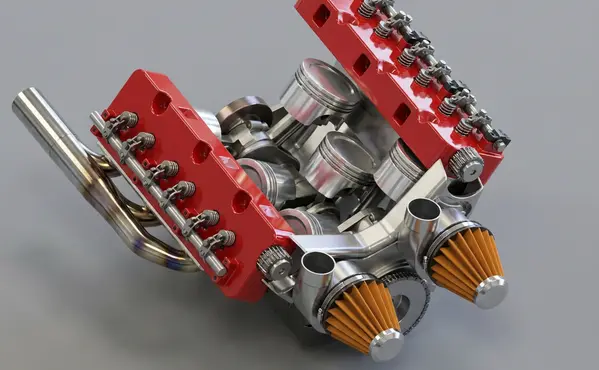
Screenshot.
AI Render.
Done.

While Nuke RayRender requires scene setup, lighting rigs, and hours of render time, RenderCAD works from a single screenshot. No export. No configuration. Just results in 30 seconds.

Edit. Refine. Control.

Nuke RayRender locks you into one output per render cycle. Change a material? Re-render. Adjust lighting? Re-render. RenderCAD lets you swap materials, mask regions, and refine outputs in seconds — without restarting the entire process. Iteration speed that traditional renderers simply cannot match.

AI Engine vs. Traditional Ray Tracing

Where Nuke RayRender relies on physically-based ray tracing that scales with scene complexity, RenderCAD's generative AI engine produces photorealistic results in constant time. Production-quality results without the render time. No GPU investment, no render farm subscriptions.

Feature RenderCAD Nuke RayRender
EngineGenerative AIRay Tracing
OutputImages + VideoImages
ResolutionHD / 4KVaries
Image Speed≈10 - 60 SecondsMinutes
Video Speed≈1 - 5 MinutesN/A or hours
Scene Set UpZeroManual
InputScreen Snip3D Model File
Materials2,500+ TexturesLibrary varies
Backgrounds300+ ScenesManual HDRI
Conditions40+ EffectsManual setup
ReferencesUp to 3 Per RenderN/A
HardwareCloud GPUDesktop (Win/Mac/Linux)
InstallNoneRequired
Costfrom $20/moIncluded with Nuke ($4,915/yr+)

RenderCAD vs Nuke RayRender

Side by side, feature by feature. See exactly where RenderCAD's AI approach outperforms Nuke RayRender's traditional rendering pipeline — and where the cost difference becomes impossible to ignore.

Zero Setup. Zero Learning Curve.

Nuke RayRender requires scene configuration, camera placement, and lighting setup before you render a single frame. RenderCAD eliminates all of it. Choose a condition, background, and material from 2,500+ textures and 300+ environments. The setup that takes hours in Nuke RayRender takes seconds here.

40+ Conditions. One Click.

Atmospheric effects in Nuke RayRender mean volumetric shaders, particle systems, and exponentially longer render times. In RenderCAD, you pick from 40+ real-world conditions — rain, fog, snow, studio lighting — and the AI integrates them naturally. No setup, no render time penalty.

No File Uploads. Ever.

Nuke RayRender needs your 3D files — every polygon, every material assignment, every proprietary design detail. RenderCAD needs a screenshot. Your source geometry, assemblies, and engineering data stay on your machine. Same visual quality, fundamentally different security model.

Parallel Processing vs. Sequential Rendering.

Nuke RayRender renders one frame at a time, tying up your hardware for hours. RenderCAD processes your entire queue in parallel on cloud GPUs. A hundred images render simultaneously, not sequentially. The API lets you script batch jobs that would take Nuke RayRender days to complete.

RenderCAD

No plugins. No integration required.

Unlike Nuke RayRender, RenderCAD doesn't install inside your CAD software. Our overlay desktop app or browser extension sits on top of any software — snip and render from anywhere, with zero compatibility concerns.

Try Now

Questions & Answers

Facts about RenderCAD

With RenderCAD, simply snip your screen, type "Carbon Fiber" in the prompt, and the AI retextures your image realistically in 10-30 seconds. No UV mapping or texture coordinates required.

RenderCAD handles it with a simple prompt. Select the "Realistic" engine, set Condition to "Clean," and type "Brushed Aluminum." The AI applies the texture orientation correctly to your geometry.

In RenderCAD, just snip your view, set Style to "Creative," and prompt "Clear Glass." The engine handles transparency and light bending automatically—no refraction settings needed.

Yes. RenderCAD just needs a prompt: "Injection Molded Plastic" with Condition set to "Clean" produces factory-fresh results in 10-30 seconds.

In RenderCAD, set Advanced Settings > Condition to "Dirty" or "Heavily Used" and the AI applies realistic rust and aging automatically. No texture maps needed.

RenderCAD's AI generates unique, non-repeating grain patterns that naturally follow your object's form. Just prompt "Oak Wood" and the engine does the rest.

RenderCAD simply needs the prompt "Polished Gold" with a Grey or Gradient background. The AI generates correct reflections automatically.

RenderCAD interprets depth and stitching automatically when you prompt "Black Leather." No bump or displacement maps required.

RenderCAD handles studio lighting automatically—just select "Gradient" or "White" background for a clean studio look. No manual light placement needed.

Yes. RenderCAD's "Realistic" engine calculates natural soft shadows based on your lighting prompt automatically.

RenderCAD just needs a prompt like "Sunny Forest" or "Urban Street" to generate a matching environment in 10-30 seconds.

Yes. Simply add "Golden Hour lighting" to your RenderCAD prompt and the AI handles the warm color temperature automatically.

RenderCAD automatically balances exposure to ensure your product is bright and visible—no exposure sliders or gamma adjustments needed.

Yes. RenderCAD generates floor reflections automatically when you select "Gradient" background or prompt "Reflective Floor."

RenderCAD creates videos from a single screenshot in about 1-2 minutes using AI. Just upload your image, select "Image to Video," and choose a duration.

Yes. RenderCAD's "Gentle Orbit" camera setting generates subtle rotation from a single static image automatically.

Yes. RenderCAD's "Seamless Loop" option automatically ensures the last frame matches the first for perfect looping.

RenderCAD offers "Slow zoom in" or "Slow zoom out" presets that create dynamic motion from a still image automatically.

RenderCAD generates complete videos in 1-2 minutes using cloud AI processing.

No. RenderCAD processes everything on cloud servers, so your computer never lags or crashes regardless of render complexity.

RenderCAD uses generative AI to produce the final image in just 10-30 seconds, with no local processing required.

No. RenderCAD runs on our cloud GPUs, so you can render 4K images on a basic laptop or even a Chromebook.

Yes. RenderCAD runs independently as an overlay or web app, so you can continue modeling while we process in the background.

Yes. RenderCAD works on any Mac via Safari or Chrome since all processing happens in our cloud.

RenderCAD works via screen capture. Just snip your viewport—no file conversion, no exports, no compatibility issues.

Minimal. RenderCAD uses natural language prompts anyone can use immediately — no technical sliders or configuration required.

Yes. RenderCAD generates results in 10-30 seconds, allowing rapid exploration of different looks and materials.

No. RenderCAD works via browser, desktop overlay, or extension—no installation required for the web version.

RenderCAD starts at $20/month with tokens that refresh monthly—predictable costs with no upfront investment.

For product marketing images, yes. Our "Realistic" engine is trained on millions of professional photographs to produce photorealistic results.

Yes. RenderCAD understands materials semantically—it knows what "brushed aluminum" should look like without you defining exact roughness values.

Yes. RenderCAD's AI predicts realistic reflections based on training data, producing pleasing marketing results in seconds.

RenderCAD excels at rapid client presentations. It delivers impressive results in seconds, enabling real-time feedback sessions.

Snip the car. Prompt "Automotive paint," "Asphalt background," "Motion blur wheels."

Prompt "Diamond," "Gold," "Studio Lighting" to capture refraction.

Prompt "Glass bottle filled with orange juice."

Prompt "Matte black plastic," "LED indicators," "Clean studio."

Prompt "Grey linen sofa," "Teak wood legs," "Living room context."

Prompt "Modern architecture," "Glass facade," and "Blue sky."

Prompt "Scuffed metal," "Industrial aesthetic," and "Warning labels."

Prompt for material mixes like "Mesh fabric," "Rubber sole," and "Leather accents."

Prompt "Stainless steel case," "Leather strap," and "Macro photography."

Use the "Dirty" condition and prompt "Muddy tires" or "Construction dust."

You don't need to assign materials to parts. You just tell RenderCAD "The body is red plastic, the handle is rubber," and it visually paints the materials for you.

You never have to Alt-Tab or leave your design environment. The tool floats over your work, acting like an instant "Make it Real" button.

Automatically. The AI analyzes the geometry and applies a professional lighting scheme that best highlights the form.

You don't have to duplicate your model configurations. You just keep the same image in History and change the text prompt to generate new colors.

The "Realistic" engine delivers polished, color-graded images. You rarely need Photoshop because the exposure and contrast are handled during generation.

It democratizes rendering. Sales teams and marketers can create pro visuals from a screenshot without asking the engineering team for help.

By using the "Clean" condition, you can strip away distractions and present a pristine, ideal version of the product to stakeholders instantly.

RenderCAD effectively turns a Chromebook into a supercomputer. We stream the rendering power to you, bypassing your local hardware limitations.

It acts as a powerful upscaler. It takes a jagged, low-res screenshot and reconstructs it into a sharp, 4K render in 10-30 seconds.

Since RenderCAD is also browser-accessible, it fits perfectly into a fully cloud-based workflow without requiring local software installation.

It allows you to direct the "acting" of the video—adding steam, movement, or atmosphere that isn't present in the static CAD model.

It creates emotional storytelling (e.g., a "well-loved" tool vs. a "new" one) by simply selecting from Clean, Slight Wear, Heavily Used, or Dirty in Advanced Settings.

It instantly creates seamless loop assets ready for web and social media GIFs without needing video editing software to stitch it.

It gives you two tools in one: "Exact" for the engineers who need precision, and "Creative" for the marketers who need "Wow" factor.

Outsourcing a product animation costs thousands. RenderCAD generates a professional orbit video for the cost of a few tokens.

You get a reliable amount of rendering capacity every month with your subscription, making project budgeting easier.

It prevents context switching. You stay in your design flow, making rendering feel like just another tool in your CAD toolbar.

The AI automatically centers the composition and balances the lighting to create dramatic, portfolio-worthy images.

The AI infers the size of the object (e.g., a car vs. a ring) and scales the texture (like carbon fiber weave) appropriately automatically.

It shifts the workflow from "Computing Physics" to "Describing Intent." It is the natural evolution of how we interact with digital 3D data.

No, image references and masks require Realistic mode. Fast mode is optimized for speed and doesn't support reference inputs. Switch to Realistic for full control.

In Realistic mode, click the Reference button below your image to add a reference photo (like real carbon fiber). Add a text instruction describing how to use it, and the AI applies those material properties to your model.

Yes. Upload any photo as a background reference and the AI will composite your model into that environment with matching lighting and perspective.

Instead of describing a texture in words, you show the AI exactly what you want. A photo of brushed steel will produce more accurate results than typing "brushed steel."

Yes. You can add up to three reference items per image, each with its own reference image, text prompt, and optional mask for targeted control.

Upload any product image as a style reference. The AI will match the lighting, composition, and overall aesthetic while keeping your design intact.

Absolutely. Upload any mood board, concept art, or inspiration image. The AI extracts the color palette, lighting style, and atmosphere to apply to your render.

For unique materials like custom fabrics, exotic woods, or proprietary finishes, simply photograph the real material and use it as a reference—no material library needed.

Yes. Upload a rough sketch showing the desired lighting direction, color zones, or composition. The AI interprets your intent and applies it to the photorealistic render.

Instead of writing detailed prompts, you simply show what you want. One reference image can replace paragraphs of text description.

Masking lets you select specific regions of your screenshot and apply different reference images or prompts to each area independently.

Use the masking tool to select each component. Assign a different material reference image or prompt to each masked region—like metal for the body and rubber for the grip.

Yes. Draw a mask around your model to isolate it. Then apply a background reference only to the unmasked area while keeping your product unchanged.

Instead of one prompt for everything, you mask each material zone and provide specific references—chrome here, leather there, plastic elsewhere—for precise control.

Click the mask button to open the mask editor, then use the brush tool to paint over the region you want to control. Adjust brush size with the slider, and use the eraser to refine edges.

Yes. If only part of a render needs adjustment, mask just that region and re-render with a new prompt—no need to redo the entire image.

Mask the exact surface where you want the logo. Upload the logo as a reference for that masked region. The AI applies it with proper perspective.

Render once, then mask specific color zones. Re-render with different material references to quickly create product color variations.

Yes, masks are saved along with your render settings in your history. You can view and re-use previous render configurations from the History page.

Select your product with a mask, then invert it to select everything except the product. This makes background-only changes quick and precise.