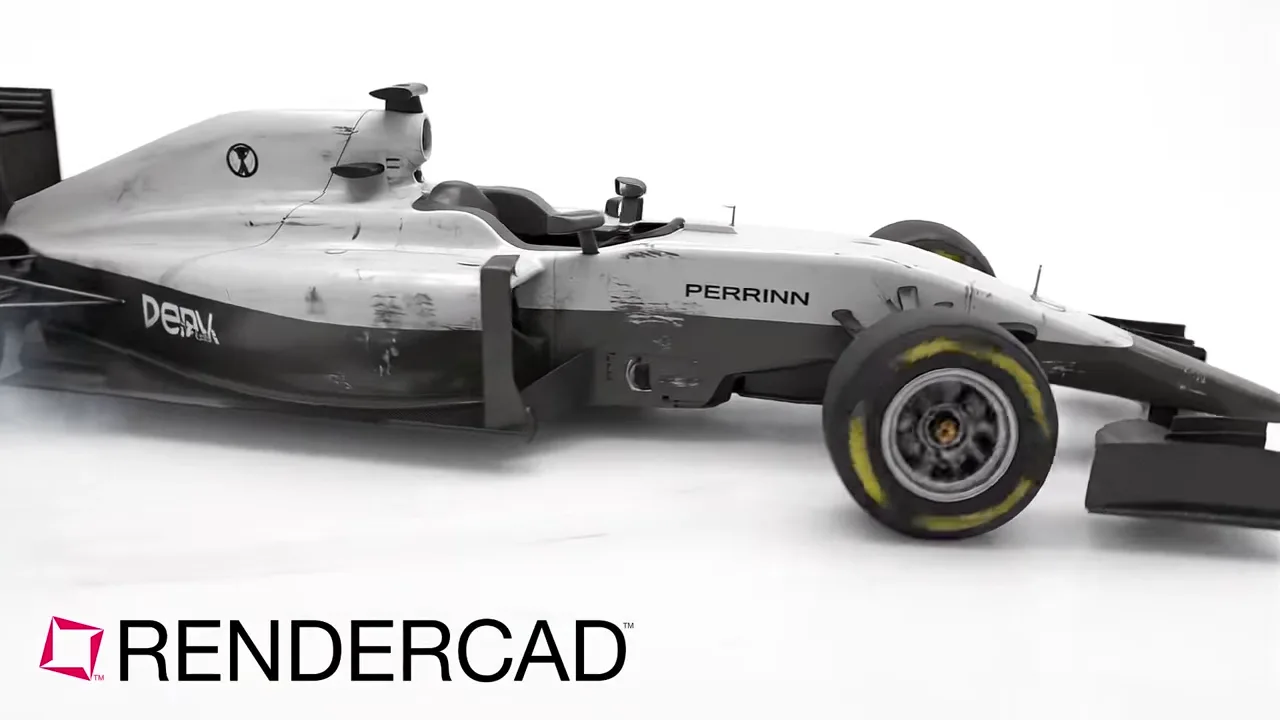
Create stunning photorealistic images and videos from any CAD system, real life photo, or even a quick napkin sketch.
60 SECONDS. ZERO CONFIGURATION. STUNNING RESULTS.
MoonRay is DreamWorks' open-source production path-tracing renderer for animation, VFX, and high-end scene rendering. It is built for prepared 3D scenes, Universal Scene Description or RDL pipeline data, physically based materials, volumes, AOVs, and local or distributed rendering rather than quick viewport-to-image cleanup.
MoonRay is a strong fit for studios and technical artists who can prepare complete 3D scenes, shaders, cameras, lights, render passes, and infrastructure around a production path tracer. RENDERCAD fits a different moment: when a CAD, product, or architectural viewport already communicates the design and the team wants a polished still or short visual without exporting geometry, rebuilding materials, or maintaining a renderer pipeline. Use MoonRay for controlled animation and VFX rendering; use RENDERCAD for fast presentation visuals from existing design images.
MoonRay rewards a full scene pipeline. It can integrate through Hydra in supported DCC environments, render with physically based layered materials, handle volumes, output EXR, deep image, AOV, and Cryptomatte style passes, and scale across local, multi-machine, or cloud render sessions when a team has the technical setup. That depth is valuable for animation and VFX shots, but it is more process than many CAD or product teams need for a single review image. RENDERCAD starts from the image already on screen - a CAD viewport, product concept, architectural view, or presentation screenshot - and generates refined render output in the browser. It is not a replacement for MoonRay's shader API, render passes, distributed batch rendering, or studio pipeline control; it is the lighter option when the practical job is improving a design view for review, sales, or marketing without creating a production render scene.
Screenshot the CAD viewport you already have, render in the browser, and download a client-ready still or video without exports, plugins, or GPU setup.
Modeled by CADSharp in Onshape. Rendered with RENDERCAD.
Add | Change | or Remove referenced objects with the stroke of a brush.
Tired of keeping up with the latest gen AI models? RENDERCAD is powered by a proprietary ensemble of the most cutting-edge AI engines, always up to date and fine-tuned to strictly maintain your design intent.
| Feature | RENDERCAD | MoonRay |
|---|---|---|
| Engine | Generative AI | Path Tracing |
| Output | Images + Video | Varies by tool |
| Resolution | HD / 4K | Varies |
| Image Speed | ≈10 - 60 Seconds | Interactive previews to offline batch renders |
| Video Speed | ≈1 - 5 Minutes | Varies by workflow |
| Scene Set Up | Zero | Varies by workflow |
| Input | Screen Snip | Varies by tool |
| Materials | 2,600+ Textures | Library varies |
| Backgrounds | 1300+ Backgrounds | Tool-dependent |
| Conditions | 40+ Effects | Tool-dependent |
| References | Up to 3 Per Render | Varies |
| Hardware | Cloud (None Required) | Desktop and pipeline builds (Linux/macOS/container) |
| Install | None | Varies (web or app) |
| Cost | from $20/mo | Open source |
Side by side, feature by feature. See how RENDERCAD's AI approach compares with MoonRay's rendering workflow.
Skip the setup tax. Pick the condition, material, and background with just a click while RENDERCAD handles the heavy lifting. No lighting rigs, no environment setup, no 45-minute wait; get photorealistic results in seconds.
 ™
RENDERCAD™
™
RENDERCAD™
We bring the tools directly to you. Overlay your system with our web app. Desktop app & browser extension are being redesigned and will be back soon.
Get StartedCommon questions about RENDERCAD vs MoonRay
Minimal. RENDERCAD uses natural language prompts anyone can use immediately - no technical sliders, shader graphs, or render settings to learn.
RENDERCAD starts at $20/month with credits that refresh monthly - predictable costs with no upfront investment or perpetual license fees.
For product marketing, client presentations, and concept work - yes. The Realistic engine is designed to improve lighting, materials, and presentation quality while keeping the original design recognizable.
Yes. RENDERCAD understands materials semantically - it knows what brushed aluminum should look like without you defining roughness values, IOR, or shader parameters.
RENDERCAD generates unique, non-repeating grain patterns that follow your object's form. Prompt "Oak Wood" and the engine handles scale, direction, and variation automatically.
With RENDERCAD, upload your image or snip your screen, type "Carbon Fiber" in the prompt, and the AI retextures your image realistically in 10-60 seconds. No UV mapping or texture coordinates required.
Yes. Add "Golden Hour" to your prompt and the AI handles warm color temperature, long shadows, and soft light automatically.
Prompt "Sunny Forest" or "Urban Street" and RENDERCAD generates a matching environment in 10-60 seconds. No scene file or environment map setup.
RENDERCAD creates videos from a single image in 1-2 minutes using AI. Upload a CAD screenshot, real photo, or hand drawing, select Image to Video, and choose a camera movement - no animation timeline required.
Yes. The Gentle Orbit camera setting generates subtle rotation from a single static image automatically.
Yes. RENDERCAD runs independently as a browser app or overlay, so you continue modeling while renders process in the background.
No. RENDERCAD runs on cloud GPUs, so you can render 4K images on a basic laptop or even a Chromebook. Your computer never slows down.
Trusted by Architects, Product Designers, and Engineering Teams