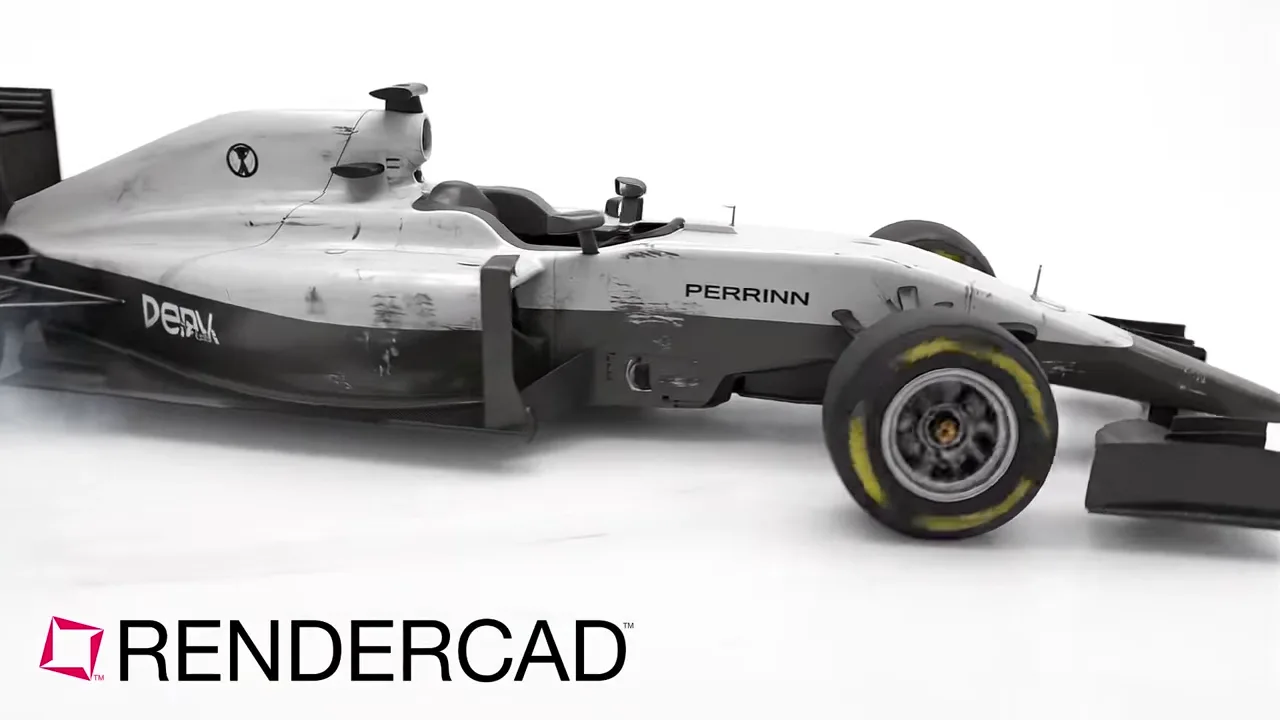
Create stunning photorealistic images and videos from any CAD system, real life photo, or even a quick napkin sketch.
60 SECONDS. ZERO CONFIGURATION. STUNNING RESULTS.
3ds Max Scanline is Autodesk 3ds Max's standard scanline renderer for prepared Max scenes. It supports classic materials, maps, antialiasing, shadows, wireframe output, reflection and refraction maps, and motion-blur controls for fast draft, technical, stylized, or legacy scene output.
3ds Max Scanline is useful when a model is already set up in 3ds Max and the goal is a fast render using classic Scanline materials, maps, shadow settings, wireframe looks, or legacy scene behavior. RENDERCAD is a better fit when the useful input is a CAD viewport, product angle, architectural screenshot, or design image and the team wants a polished visual without opening 3ds Max, rebuilding lights and materials, or tuning renderer controls. Scanline gives Max artists direct scene control; RENDERCAD gives designers a faster image-to-render path.
Scanline starts from a full 3ds Max scene. The user needs modeled geometry, cameras, lights, assigned materials, maps, shadow choices, output size, and renderer settings before producing an image. That makes it practical for established Max files, older assets built around Standard materials, quick draft frames, stylized wireframe output, and animation workflows where predictable local scene rendering matters more than physically based realism. RENDERCAD starts from the visible design rather than the Max scene graph. A user can upload a CAD viewport, model screenshot, architectural view, or product image and generate a more presentation-ready still without converting assets, maintaining a 3ds Max license, matching legacy material behavior, or managing local render settings. Use Scanline when the deliverable depends on editable 3ds Max scene control or compatibility with older Scanline materials. Use RENDERCAD when the practical job is fast client, marketing, or design-review imagery from an existing view.
Screenshot the CAD viewport you already have, render in the browser, and download a client-ready still or video without exports, plugins, or GPU setup.
Modeled by CADSharp in Onshape. Rendered with RENDERCAD.
Add | Change | or Remove referenced objects with the stroke of a brush.
Tired of keeping up with the latest gen AI models? RENDERCAD is powered by a proprietary ensemble of the most cutting-edge AI engines, always up to date and fine-tuned to strictly maintain your design intent.
| Feature | RENDERCAD | 3ds Max Scanline |
|---|---|---|
| Engine | Generative AI | Scanline raster renderer |
| Output | Images + Video | Varies by tool |
| Resolution | HD / 4K | Varies |
| Image Speed | ≈10 - 60 Seconds | Fast previews to longer final frames |
| Video Speed | ≈1 - 5 Minutes | Varies by workflow |
| Scene Set Up | Zero | Varies by workflow |
| Input | Screen Snip | Varies by tool |
| Materials | 2,600+ Textures | Library varies |
| Backgrounds | 1300+ Backgrounds | Tool-dependent |
| Conditions | 40+ Effects | Tool-dependent |
| References | Up to 3 Per Render | Varies |
| Hardware | Cloud (None Required) | Windows desktop through 3ds Max |
| Install | None | Varies (web or app) |
| Cost | from $20/mo | Included with Autodesk 3ds Max access |
Side by side, feature by feature. See how RENDERCAD's AI approach compares with 3ds Max Scanline's interactive visualization workflow.
Skip the setup tax. Pick the condition, material, and background with just a click while RENDERCAD handles the heavy lifting. No lighting rigs, no environment setup, no 45-minute wait; get photorealistic results in seconds.
 ™
RENDERCAD™
™
RENDERCAD™
We bring the tools directly to you. Overlay your system with our web app. Desktop app & browser extension are being redesigned and will be back soon.
Get StartedCommon questions about RENDERCAD vs 3ds Max Scanline
Yes. The Seamless Loop option ensures the last frame matches the first for perfect looping - ready for social media, websites, and displays.
RENDERCAD creates videos from a single image in 1-2 minutes using AI. Upload a CAD screenshot, real photo, or hand drawing, select Image to Video, and choose a camera movement - no animation timeline required.
RENDERCAD still-image jobs usually complete in about 10 - 60 seconds. Competing real-time tools may preview quickly, but final output speed still depends on scene complexity, hardware, export settings, and output quality.
Yes. RENDERCAD runs independently as a browser app or overlay, so you continue modeling while renders process in the background.
RENDERCAD works from 2D images. Upload a CAD screenshot, real photo, or hand drawing - no file conversion, no exports, no compatibility issues.
Minimal. RENDERCAD uses natural language prompts anyone can use immediately - no technical sliders, shader graphs, or render settings to learn.
RENDERCAD excels at rapid client presentations. It delivers impressive photorealistic results in seconds, enabling real-time feedback sessions during design reviews.
For product marketing, client presentations, and concept work - yes. The Realistic engine is designed to improve lighting, materials, and presentation quality while keeping the original design recognizable.
Yes. Select the Realistic engine, set Condition to Clean, and type "Brushed Aluminum." The AI applies correct texture orientation to your geometry automatically.
RENDERCAD generates unique, non-repeating grain patterns that follow your object's form. Prompt "Oak Wood" and the engine handles scale, direction, and variation automatically.
RENDERCAD handles studio lighting automatically - select a Gradient or White background for a clean studio look. No manual light placement or HDRI setup needed.
Yes. Add "Golden Hour" to your prompt and the AI handles warm color temperature, long shadows, and soft light automatically.
Trusted by Architects, Product Designers, and Engineering Teams