Develop a presentation direction from a prepared BIM section, elevation, detail, or room view.
Start with one clear BricsCAD BIM view saved as a flat PNG or JPEG. Page media shows general RENDERCAD architecture examples and an Onshape motion example, not BricsCAD footage, project data, or output.


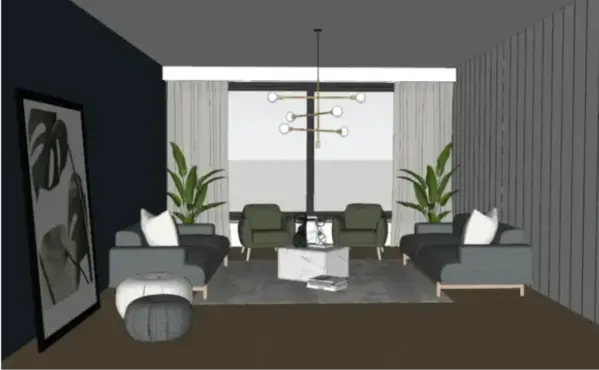




BricsCAD BIM adds building classifications, spaces, compositions, profiles, BIMIFY, and generated documentation to a native DWG workflow. Use a prepared model-space view, section, elevation, detail, or interior view when a building decision needs a visual explanation. RENDERCAD interprets one flattened image; it does not open or update the BIM project.
Start with the building question, not a generic camera. A model-space perspective can explain massing or facade rhythm; a BIM Space can lead to an interior elevation; a bounded section or detail can isolate a junction. Classification, story, space, and composition cues give each view a specific job in the review.
Use RENDERCAD when that prepared view needs a separate presentation treatment for a client meeting, option board, or project update. Explore light, finish character, landscape, furniture context, or visual hierarchy while keeping the source beside the result. Continue editing dimensions, schedules, classifications, documentation, and IFC information in BricsCAD BIM and the project records.
Open the relevant DWG and use BIMIFY, classifications, spaces, layer states, section planes, and visibility controls to isolate one story, room, facade, or assembly. Select the model state or generated drawing view that carries the decision. Remove selections, temporary geometry, tool panels, and annotations that do not help the intended audience.
Save the selected view to PNG or JPEG with enough resolution for its edges and cues to remain legible. In RENDERCAD, state the audience and one visual direction, such as a quiet client image, warmer room option, or clearer facade study. Compare the result with the DWG and generated documentation, then return to BricsCAD BIM for any project-data change.
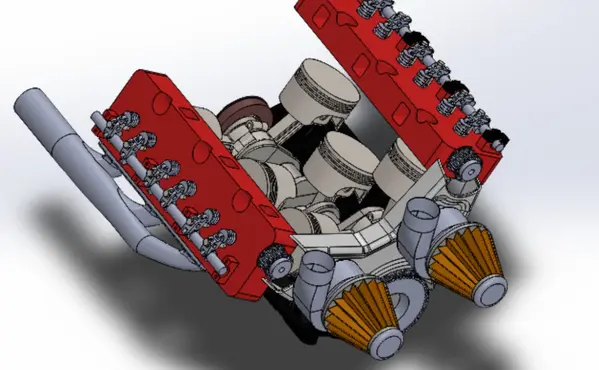
This general RENDERCAD motion example uses an Onshape model, not BricsCAD BIM. Generated motion begins with a finished presentation image.
Mark part of the presentation image and request a visual adjustment. This changes pixels, not the DWG model, classifications, spaces, compositions, sections, drawings, or IFC data.
Try another image model for a different atmosphere, finish treatment, landscape context, or interior mood. Compare every interpretation with the selected BricsCAD BIM view before sharing it.
| Feature | RENDERCAD | BricsCAD BIM |
|---|---|---|
| Engine | Generative image models | Native rendering plus classified DWG building modeling and BIM documentation |
| Output | Presentation images + optional generated video | DWG models, documentation, schedules, IFC exchange, and locally rendered BMP, JPG, or PNG stills |
| Resolution | HD / 4K | Rendered output uses a chosen pixel width and height or the current viewport size |
| Image Speed | About 60 seconds | Varies with output size, render settings, scene content, and local hardware |
| Optional motion | Generated image-to-video | Model-based animation output varies with frame count, render quality, scene complexity, and local hardware |
| Scene Set Up | Flat PNG or JPEG + prompt | Building elements, spaces, classifications, sections, materials, and views |
| Input | One PNG or JPEG | Native DWG models with editable BIM information |
| Hardware | Cloud processing | Installed Windows, macOS, or Linux desktop application |
| Install | Web app | BricsCAD desktop application activated at the BIM or Ultimate license level |
| Cost | From $9/mo | Subscription or perpetual license; single-user and network options available |
BricsCAD BIM authors the classified DWG building and its documentation. RENDERCAD interprets one flattened view as separate presentation imagery.
Choose the useful model state, section, elevation, interior view, layer visibility, and composition colors. Keep important openings and spatial cues readable, then remove selections, panels, and unrelated geometry.
 ™
RENDERCAD™
™
RENDERCAD™
Upload an exported PNG or JPEG in the browser, or capture the selected on-screen region with the desktop app. RENDERCAD receives pixels rather than DWG, BIM, or IFC data.
Get StartedBricsCAD BIM views, project data, and presentation output
No. Export or capture one flat PNG or JPEG. The native DWG, linked content, classifications, spaces, compositions, documentation, and IFC information remain in BricsCAD BIM.
Choose the view that explains one decision: an exterior perspective, room view, generated section or elevation, interior elevation, or bounded detail. Remove surrounding geometry that weakens the focus.
Keep them only when the audience needs them to understand the proposal. Otherwise, use a clean model view and retain the documented drawing separately for exact dimensions and annotations.
No. RENDERCAD receives visible pixels only. Element classes, spatial locations, BIM properties, material compositions, section definitions, and other editable project information remain in the DWG.
No. Check dimensions, schedules, quantities, section output, drawing updates, classifications, and IFC exchange in BricsCAD BIM. The presentation image cannot inspect or validate structured project information.
BricsCAD is the wider DWG product family. Pro covers general 2D and 3D CAD, BIM adds building modeling and documentation tools, and Ultimate includes BIM with broader BricsCAD toolsets.
Check openings, levels, proportions, facade rhythm, material boundaries, room layout, fixtures, and important assembly relationships. Return to BricsCAD BIM whenever the model or documentation needs correction.
No. It animates a flat presentation still and contains no model geometry, cameras, object paths, section states, BIM data, or drawing information. Use BricsCAD's Animation Editor when timing or object paths matter.